Sun Yuan-Xin, Li Hui, Feng Qi, Li Xin, Yu Ying-Yi, Zhou Li-Wei, Gao Yan, Li Guo-Sheng, Ren Juan, Ma Chun-Hong, Gao Cheng-Jiang, Peng Jun
Department of Hematology, Qilu Hospital, Shandong University, Jinan, China.
Department of Rheumatology, People's Hospital of Bao'an, Shenzhen, China.
Oncotarget. 2017 Jan 24;8(4):6142-6154. doi: 10.18632/oncotarget.14046.
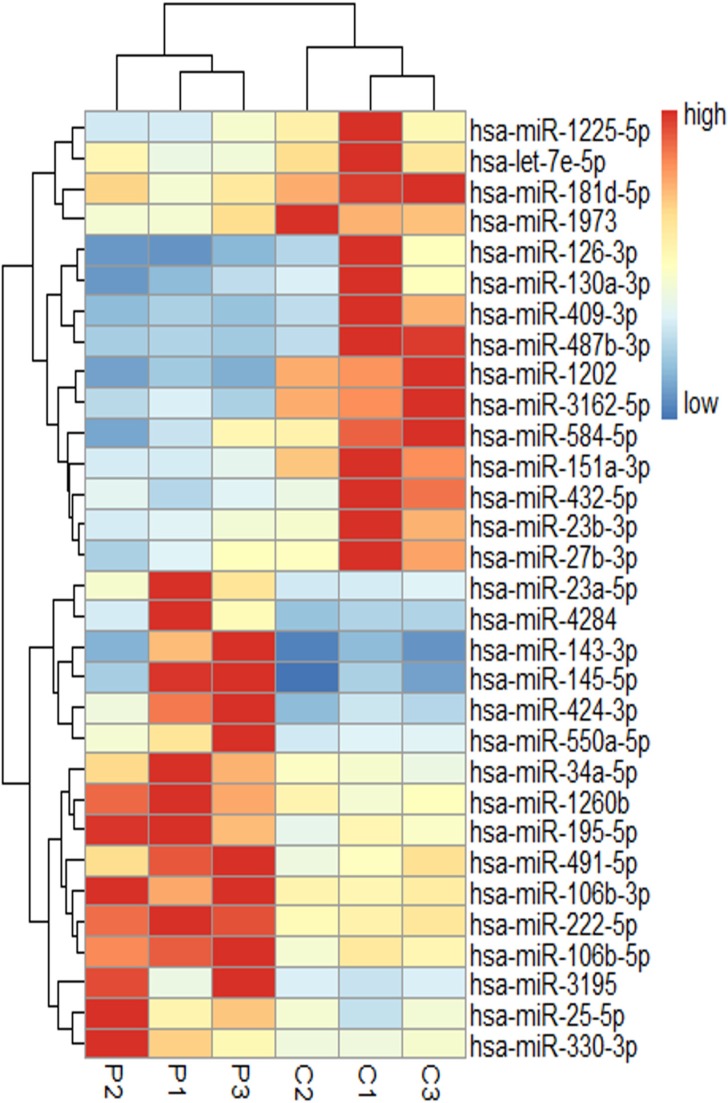
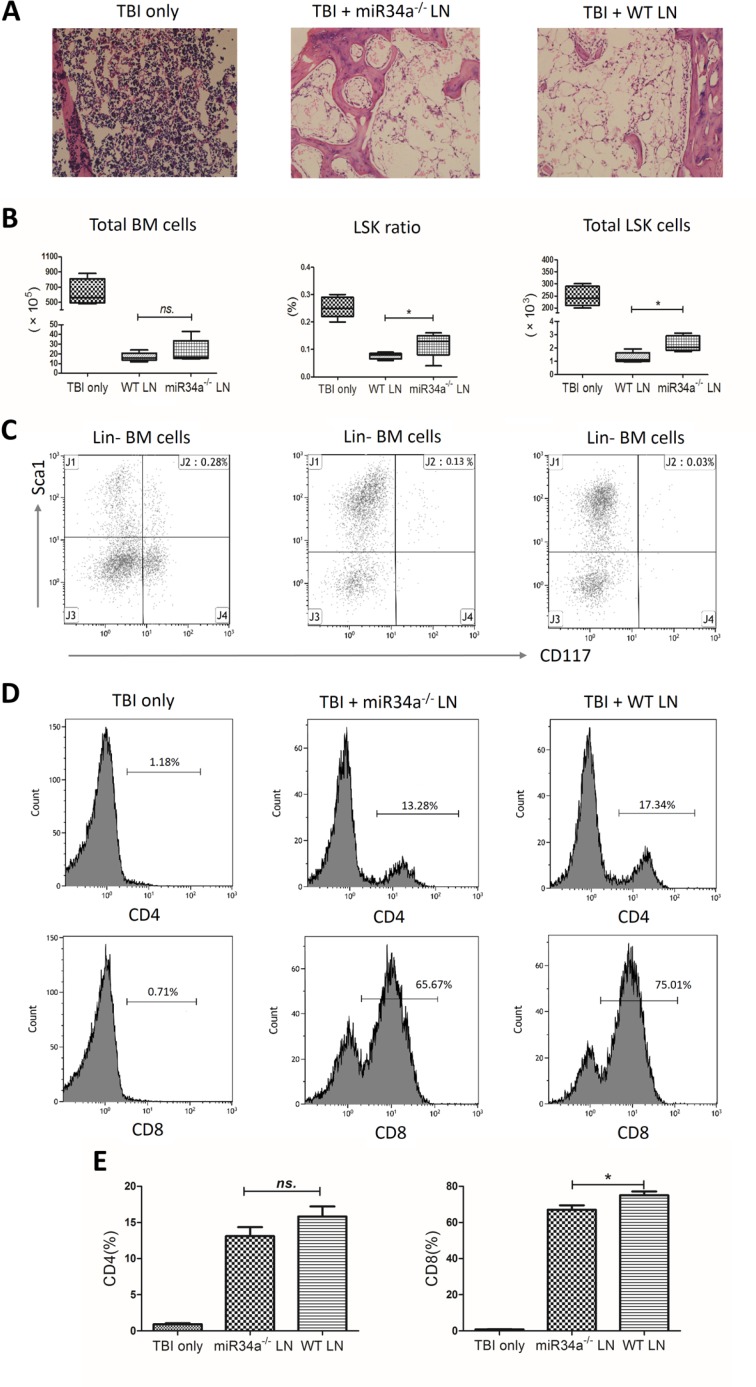
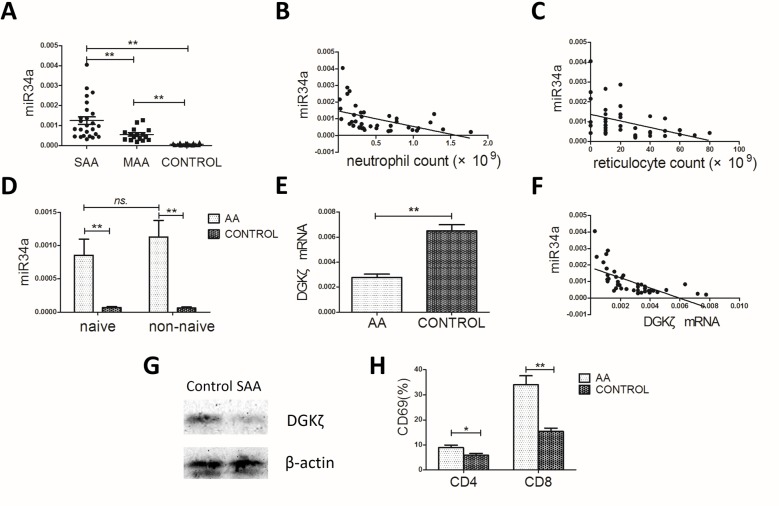
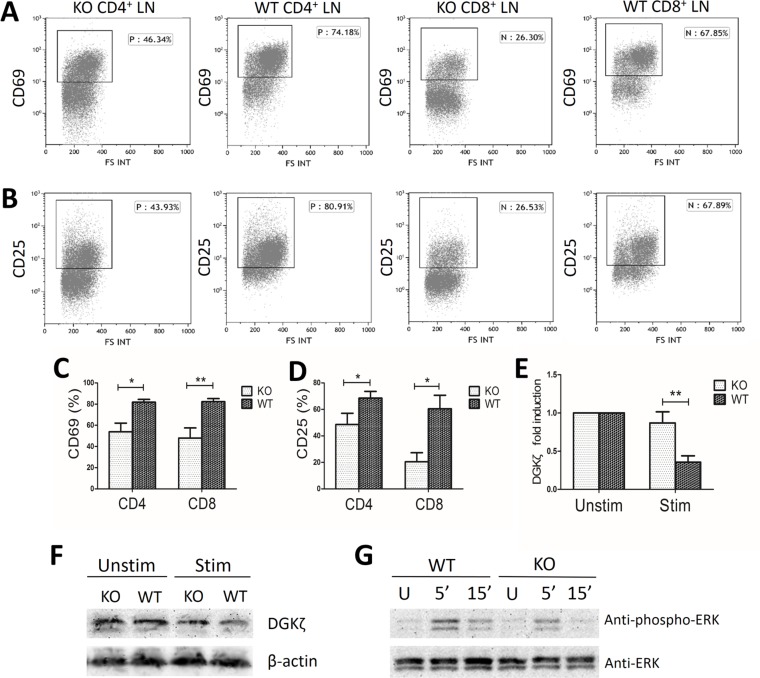
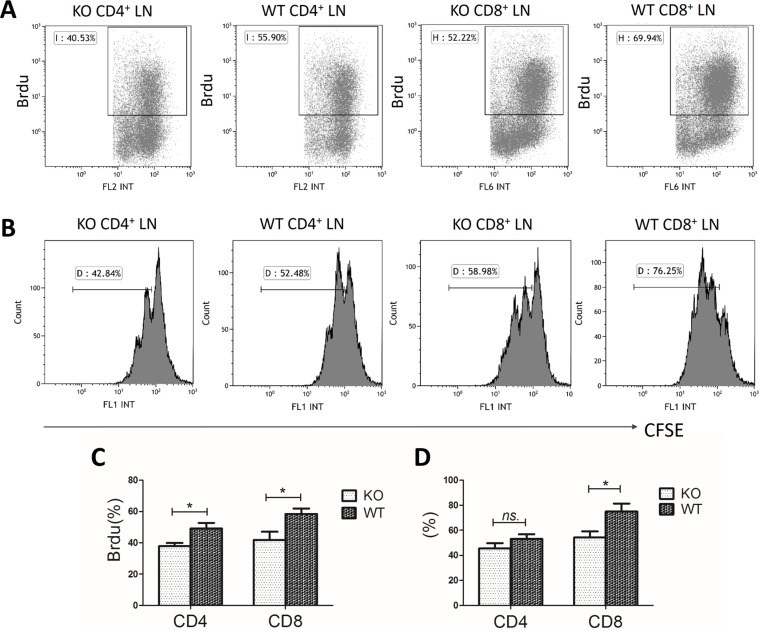
Acquired aplastic anemia is an idiopathic paradigm of human bone marrow failure syndrome, which involves active destruction of hematopoietic stem cells and progenitors by cytotoxic T cells in the bone marrow. Aberrant expression of microRNAs in T cells has been shown to lead to development of certain autoimmune diseases. In the present study, we performed a microarray analysis of miRNA expression in bone marrow CD3+ T cells from patients with aplastic anemia and healthy controls. Overexpression of miR34a and underexpression of its target gene diacylglycerol kinase (DGK) ζ in bone marrow mononuclear cells were validated in 41 patients and associated with the severity of aplastic anemia. Further, the level of miR34a was higher in naïve T cells from patients than from controls. The role of miR34a and DGKζ in aplastic anemia was investigated in a murine model of immune-mediated bone marrow failure using miR34a-/- mice. After T-cell receptor stimulation in vitro, lymph node T cells from miR34a-/- mice demonstrated reduced activation and proliferation accompanied with a less profound down-regulation of DGKζ expression and decreased ERK phosphorylation compared to those from wild-type C57BL6 control mice. Infusion of 5 × 10⁶ miR34a-/- lymph node T cells into sublethally irradiated CB6F1 recipients led to increased Lin-Sca1+CD117+ cells and less vigorous expansion of CD8+ T cells than injection of same number of wild-type lymph node cells. Our study demonstrates that the miR34a/DGKζ dysregulation enhances T-cell activation in aplastic anemia and targeting miR34a may represent a novel molecular therapeutic approach for patients with aplastic anemia.
获得性再生障碍性贫血是人类骨髓衰竭综合征的一种特发性范例,它涉及骨髓中细胞毒性T细胞对造血干细胞和祖细胞的主动破坏。T细胞中微小RNA的异常表达已被证明会导致某些自身免疫性疾病的发生。在本研究中,我们对再生障碍性贫血患者和健康对照者骨髓CD3 + T细胞中的miRNA表达进行了微阵列分析。在41例患者的骨髓单个核细胞中验证了miR34a的过表达及其靶基因二酰基甘油激酶(DGK)ζ的低表达,并与再生障碍性贫血的严重程度相关。此外,患者初始T细胞中miR34a的水平高于对照组。使用miR34a-/-小鼠在免疫介导的骨髓衰竭小鼠模型中研究了miR34a和DGKζ在再生障碍性贫血中的作用。与野生型C57BL6对照小鼠相比,体外T细胞受体刺激后,miR34a-/-小鼠的淋巴结T细胞显示出激活和增殖减少,同时DGKζ表达的下调程度较小,ERK磷酸化降低。将5×106个miR34a-/-淋巴结T细胞注入亚致死剂量照射的CB6F1受体小鼠体内,与注射相同数量的野生型淋巴结细胞相比,导致Lin-Sca1 + CD117 +细胞增加,CD8 + T细胞的扩增活力降低。我们的研究表明,miR34a / DGKζ失调增强了再生障碍性贫血中的T细胞活化,靶向miR34a可能代表再生障碍性贫血患者的一种新型分子治疗方法。