Bernabeu-Mora Roberto, García-Guillamón Gloria, Montilla-Herrador Joaquina, Escolar-Reina Pilar, García-Vidal José Antonio, Medina-Mirapeix Francesc
Division of Pneumology, Hospital Morales Meseguer; Department of Physical Therapy, University of Murcia; Physiotherapy and Disability Research Group, Instituto Murciano de Investigación Biosanitaria Virgen de la Arrixaca (IMIB), Murcia, Spain.
Department of Physical Therapy, University of Murcia.
Int J Chron Obstruct Pulmon Dis. 2016 Dec 14;11:3199-3205. doi: 10.2147/COPD.S118109. eCollection 2016.
Hospitalization is common for acute exacerbation of COPD, but little is known about its impact on the mental health of caregivers.
The aim of this study was to determine the rates and predictors of depressive symptoms in caregivers at the time of hospitalization for acute exacerbation of COPD and to identify the probability and predictors of subsequent changes in depressive status 3 months after discharge.
This was a prospective study. Depression symptoms were measured in 87 caregivers of patients hospitalized for exacerbation at hospitalization and 3 months after discharge. We measured factors from four domains: context of care, caregiving demands, caregiver resources, and patient characteristics. Univariate and multivariate multiple logistic regressions were used to determine the predictors of depression at hospitalization and subsequent changes at 3 months.
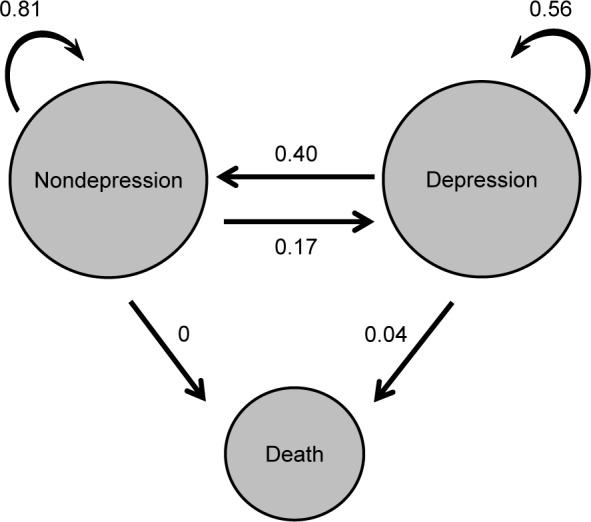
A total of 45 caregivers reported depression at the time of hospitalization. After multiple adjustments, spousal relationship, dyspnea, and severe airflow limitation were the strongest independent predictors of depression at hospitalization. Of these 45 caregivers, 40% had a remission of their depression 3 months after discharge. In contrast, 16.7% of caregivers who were not depressive at hospitalization became depressive at 3 months. Caregivers caring >20 hours per week for patients with dependencies had decreased odds of remission, and patients having dependencies after discharge increased the odds of caregivers becoming depressed.
Depressive symptoms are common among caregivers when patients are hospitalized for exacerbation of COPD. Although illness factors are determinants of depression at hospitalization, patient dependence determines fluctuations in the depressive status of caregivers.
慢性阻塞性肺疾病(COPD)急性加重期患者住院治疗很常见,但关于其对照顾者心理健康的影响却知之甚少。
本研究旨在确定COPD急性加重期患者住院时照顾者抑郁症状的发生率及预测因素,并确定出院3个月后抑郁状态后续变化的可能性及预测因素。
这是一项前瞻性研究。对87名因病情加重住院患者的照顾者在住院时及出院后3个月进行抑郁症状测量。我们从四个领域测量了相关因素:护理背景、护理需求、照顾者资源和患者特征。采用单因素和多因素多元逻辑回归分析来确定住院时抑郁的预测因素以及3个月后的后续变化。
共有45名照顾者在住院时报告有抑郁症状。经过多次调整后,配偶关系、呼吸困难和严重气流受限是住院时抑郁最强的独立预测因素。在这45名照顾者中,40%在出院3个月后抑郁症状缓解。相比之下,住院时无抑郁症状的照顾者中有16.7%在3个月时出现抑郁。每周照顾依赖患者超过20小时的照顾者症状缓解的几率降低,出院后患者存在依赖会增加照顾者抑郁的几率。
COPD急性加重期患者住院时,照顾者中抑郁症状很常见。虽然疾病因素是住院时抑郁的决定因素,但患者的依赖程度决定了照顾者抑郁状态的波动。