Wang Yanbo, Liang Hongwei, Zhou Geyu, Hu Xiuting, Liu Zhengya, Jin Fangfang, Yu Mengchao, Sang Jianfeng, Zhou Yong, Fu Zheng, Zhang Chen-Yu, Zhang Weijie, Zen Ke, Chen Xi
State Key Laboratory of Pharmaceutical Biotechnology, Jiangsu Engineering Research Center for MicroRNA Biology and Biotechnology, NJU Advanced Institute for Life Sciences (NAILS), School of Life Sciences, Nanjing University, 163 Xianlin Avenue, Nanjing 210046, Jiangsu, China.
Department of Thyroid and Breast Surgery, Affiliated Drum Tower Hospital of Nanjing University Medical School, 321 Zhongshan Road, Nanjing 210008, Jiangsu, China.
Cell Death Differ. 2017 Mar;24(3):421-432. doi: 10.1038/cdd.2016.136. Epub 2016 Dec 23.
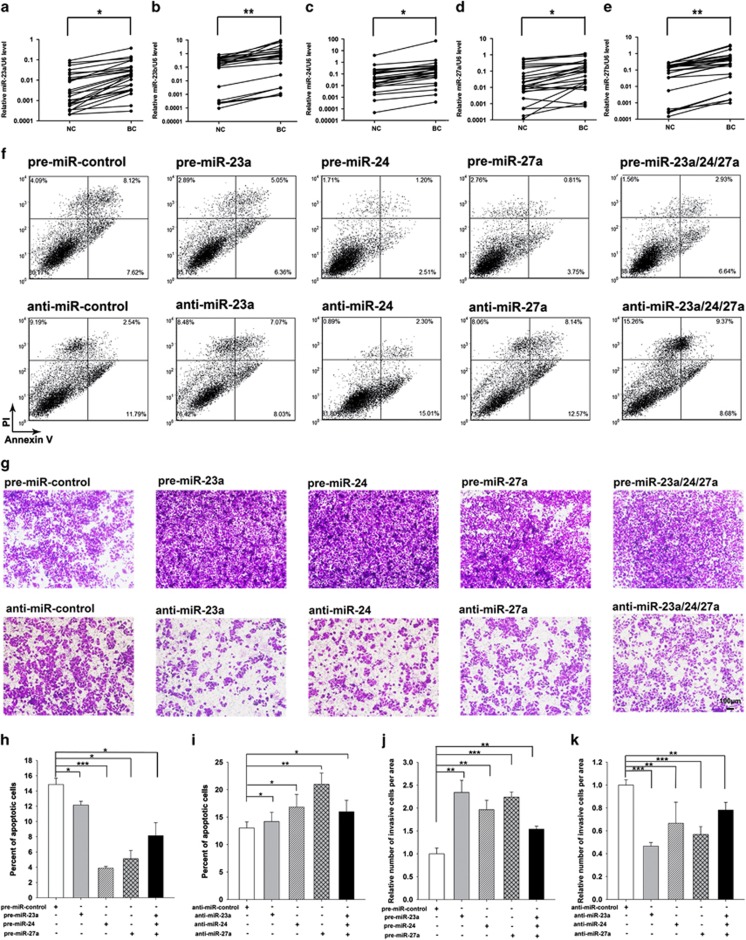
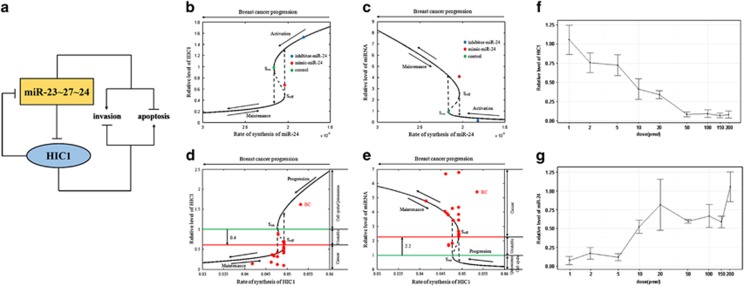
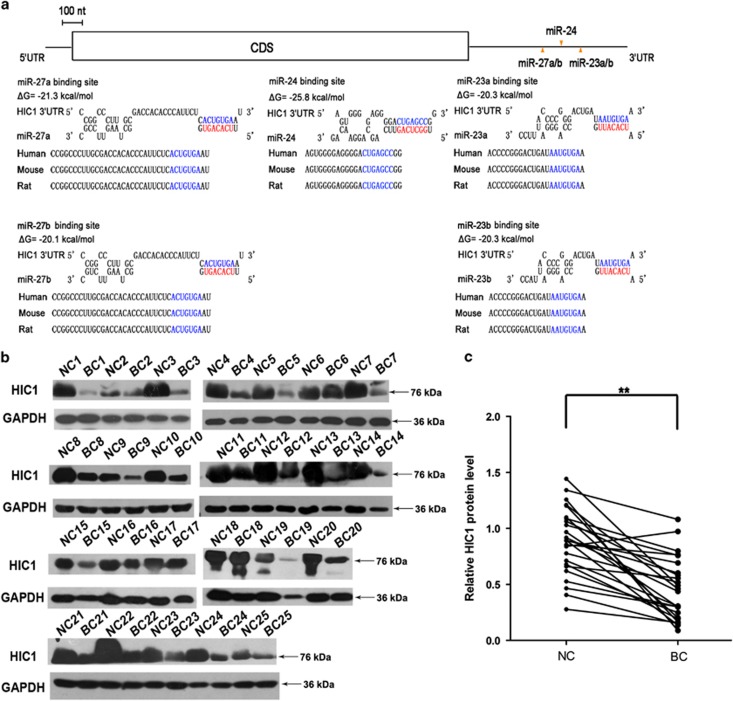
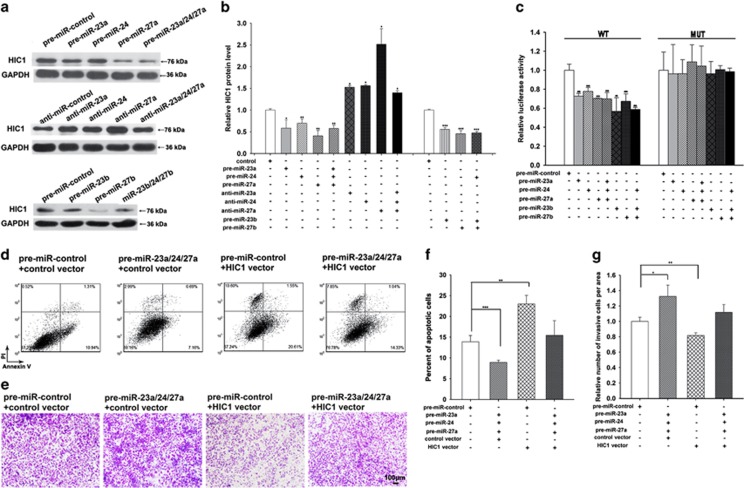
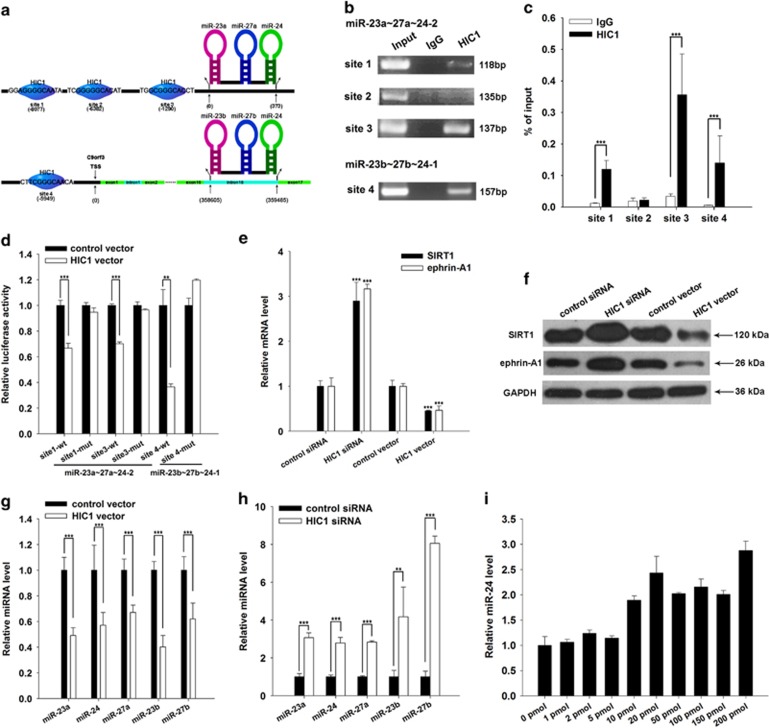
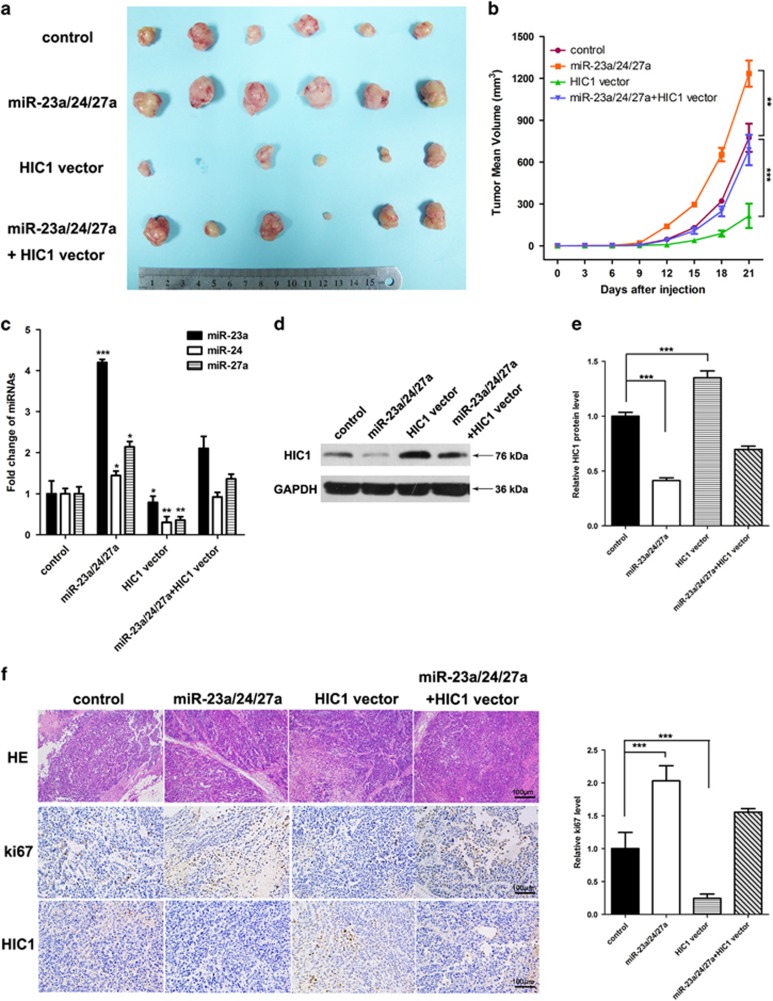
MicroRNAs (miRNAs) have emerged as a major regulator of the initiation and progression of human cancers, including breast cancer. However, the cooperative effects and transcriptional regulation of multiple miRNAs, especially miRNAs that are present in clusters, remain largely undiscovered. Here we showed that all members of the miR-232724 clusters are upregulated and function as oncogenes in breast cancer and simultaneously target HIC1. Furthermore, we found that HIC1 functions as a transcriptional repressor to negatively control the expression of miR-232724 clusters and forms a double-negative (overall positive) feedback loop. This feedback regulatory pathway is important because overexpression of miR-232724 clusters can remarkably accelerate tumor growth, whereas restoration of HIC1 significantly blocks tumor growth in vivo. A mathematical model was created to quantitatively illustrate the regulatory circuit. Our finding highlights the cooperative effects of miRNAs in a cluster and adds another layer of complexity to the miRNA regulatory network. This study may also provide insight into the molecular mechanisms of breast cancer progression.
微小RNA(miRNA)已成为包括乳腺癌在内的人类癌症发生和发展的主要调节因子。然而,多种miRNA,尤其是成簇存在的miRNA的协同作用和转录调控,在很大程度上仍未被发现。在此,我们表明miR-232724簇的所有成员在乳腺癌中均上调并作为癌基因发挥作用,同时靶向HIC1。此外,我们发现HIC1作为转录抑制因子负向调控miR-232724簇的表达,并形成一个双负(总体为正)反馈环。这种反馈调节途径很重要,因为miR-232724簇的过表达可显著加速肿瘤生长,而HIC1的恢复则在体内显著阻断肿瘤生长。我们创建了一个数学模型来定量说明该调控回路。我们的发现突出了成簇miRNA的协同作用,并为miRNA调控网络增添了另一层复杂性。这项研究也可能为乳腺癌进展的分子机制提供见解。