Degani Genny, Altomare Alessandra A, Colzani Mara, Martino Caterina, Mazzolari Angelica, Fritz Guenter, Vistoli Giulio, Popolo Laura, Aldini Giancarlo
University of Milan, Department of Biosciences, Via Celoria 26, 20133 Milano, Italy; Department of Pharmaceutical Sciences, Via Mangiagalli 25, 20133 Milano, Italy.
Department of Pharmaceutical Sciences, Via Mangiagalli 25, 20133 Milano, Italy.
Redox Biol. 2017 Apr;11:275-285. doi: 10.1016/j.redox.2016.12.017. Epub 2016 Dec 18.
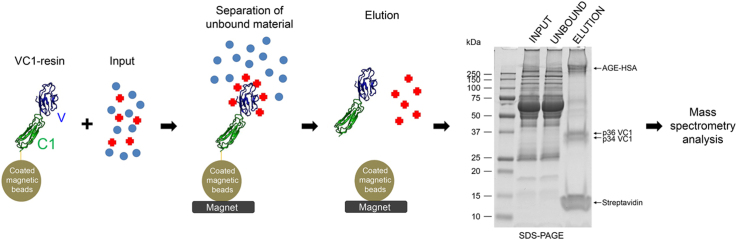
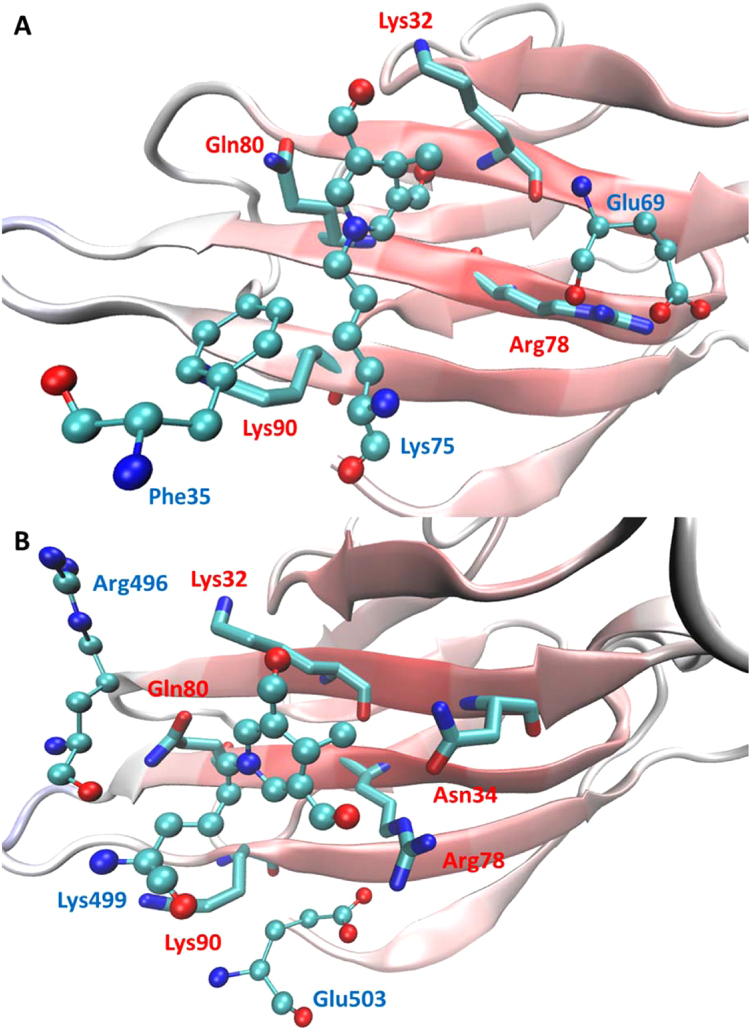
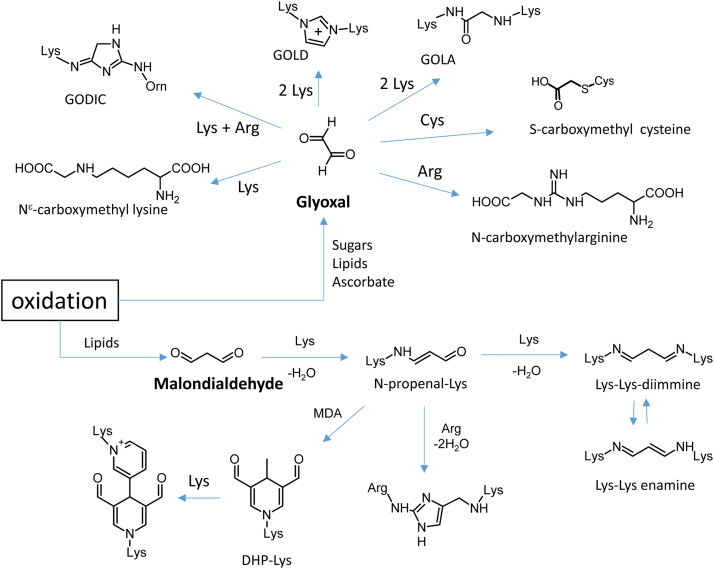
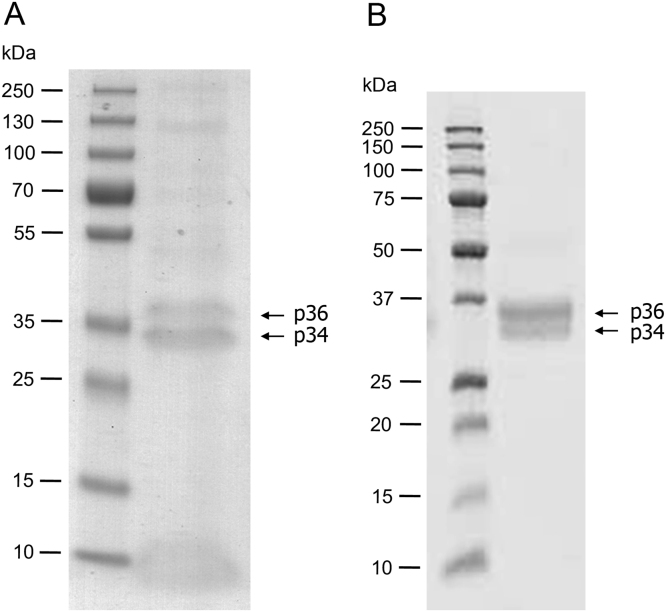
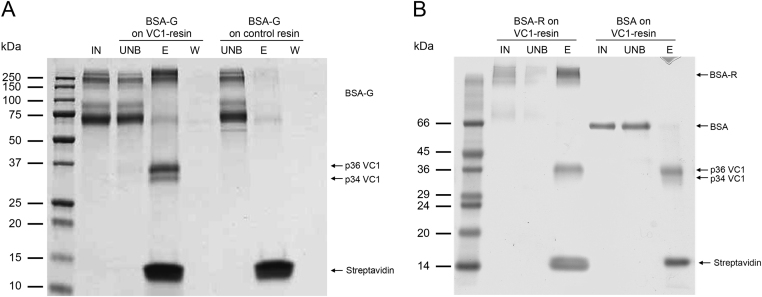
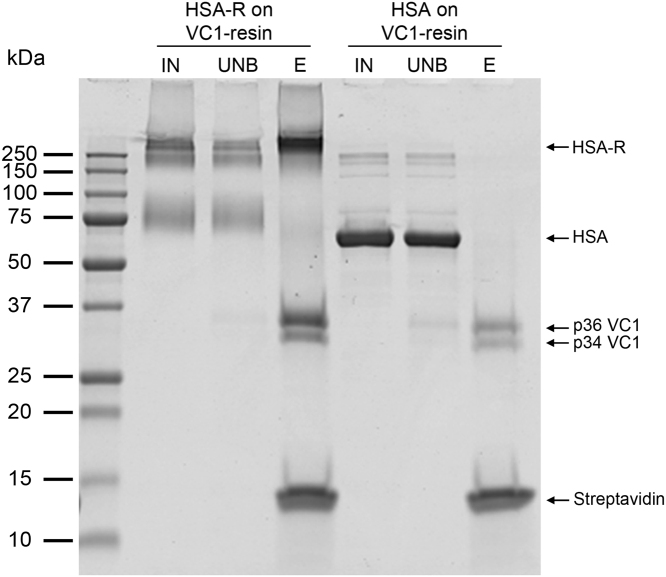
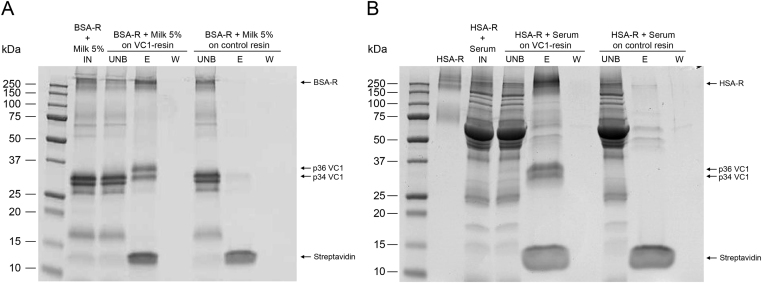
The Advanced Glycation and Lipoxidation End products (AGEs and ALEs) are a heterogeneous class of compounds derived from the non-enzymatic glycation or protein adduction by lipoxidation break-down products. The receptor for AGEs (RAGE) is involved in the progression of chronic diseases based on persistent inflammatory state and oxidative stress. RAGE is a pattern recognition receptor (PRR) and the inhibition of the interaction with its ligands or of the ligand accumulation have a potential therapeutic effect. The N-terminal domain of RAGE, the V domain, is the major site of AGEs binding and is stabilized by the adjacent C1 domain. In this study, we set up an affinity assay relying on the extremely specific biological interaction AGEs ligands have for the VC1 domain. A glycosylated form of VC1, produced in the yeast Pichia pastoris, was attached to magnetic beads and used as insoluble affinity matrix (VC1-resin). The VC1 interaction assay was employed to isolate specific VC1 binding partners from in vitro generated AGE-albumins and modifications were identified/localized by mass spectrometry analysis. Interestingly, this method also led to the isolation of ALEs produced by malondialdehyde treatment of albumins. Computational studies provided a rational-based interpretation of the contacts established by specific modified residues and amino acids of the V domain. The validation of VC1-resin in capturing AGE-albumins from complex biological mixtures such as plasma and milk, may lead to the identification of new RAGE ligands potentially involved in pro-inflammatory and pro-fibrotic responses, independently of their structures or physical properties, and without the use of any covalent derivatization process. In addition, the method can be applied to the identification of antagonists of RAGE-ligand interaction.
晚期糖基化终末产物和晚期脂质氧化终末产物(AGEs和ALEs)是一类异质性化合物,它们源自非酶糖基化或脂质氧化分解产物对蛋白质的加成作用。晚期糖基化终末产物受体(RAGE)基于持续的炎症状态和氧化应激参与慢性疾病的进展。RAGE是一种模式识别受体(PRR),抑制其与配体的相互作用或配体的积累具有潜在的治疗效果。RAGE的N端结构域,即V结构域,是AGEs结合的主要位点,并由相邻的C1结构域稳定。在本研究中,我们建立了一种基于AGEs配体与VC1结构域之间极其特异性生物相互作用的亲和测定法。在毕赤酵母中产生的VC1糖基化形式附着在磁珠上,并用作不溶性亲和基质(VC1树脂)。采用VC1相互作用测定法从体外生成的AGE-白蛋白中分离特定的VC1结合伴侣,并通过质谱分析鉴定/定位修饰。有趣的是,该方法还导致分离出由丙二醛处理白蛋白产生的ALEs。计算研究为V结构域的特定修饰残基和氨基酸所建立的接触提供了基于理性的解释。验证VC1树脂从血浆和牛奶等复杂生物混合物中捕获AGE-白蛋白的能力,可能会导致识别出潜在参与促炎和促纤维化反应的新RAGE配体,而无需考虑其结构或物理性质,也无需使用任何共价衍生化过程。此外,该方法可应用于鉴定RAGE-配体相互作用的拮抗剂。