Harb Moustapha, Hong Pei-Ying
Water Desalination and Reuse Center, Environmental Science and Engineering, King Abdullah University of Science and Technology (KAUST), 4700 King Abdullah Boulevard, Thuwal, 23955-6900, Saudi Arabia.
Environ Sci Pollut Res Int. 2017 Feb;24(6):5370-5380. doi: 10.1007/s11356-016-8211-y. Epub 2016 Dec 24.
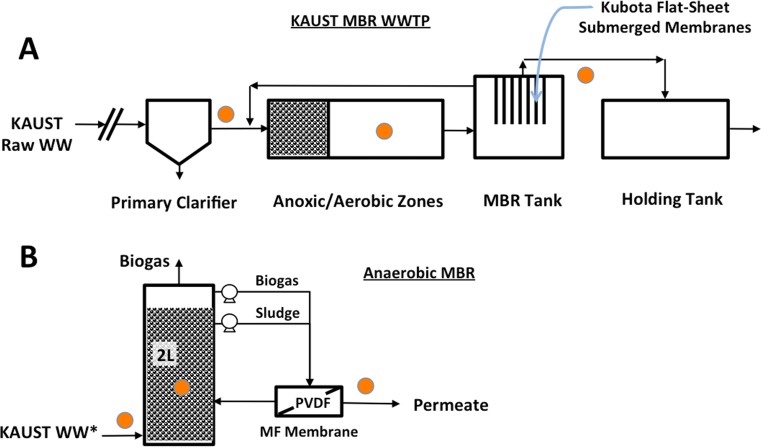
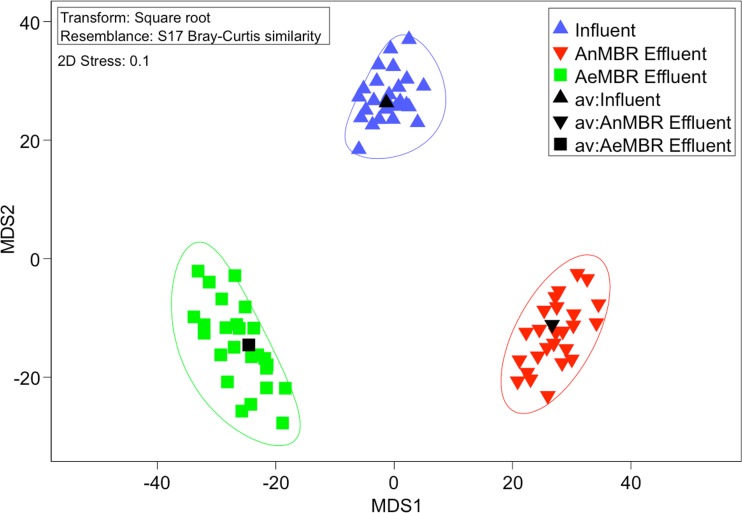
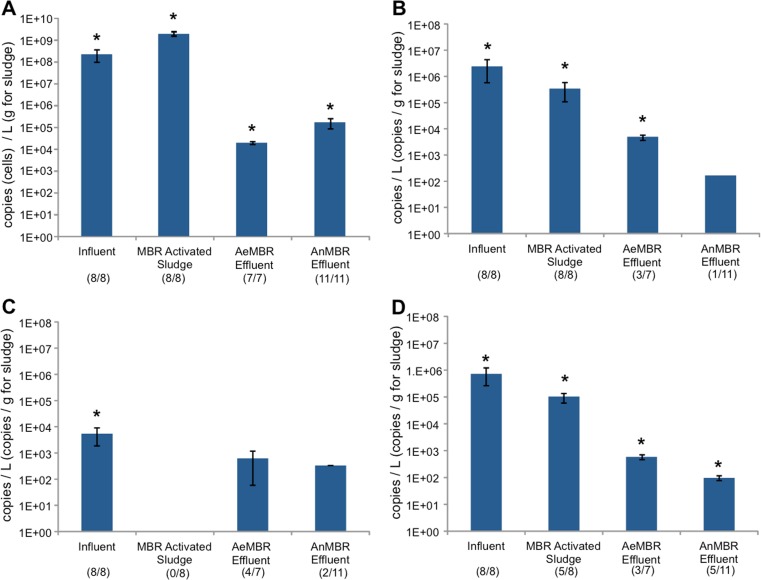
Although membrane bioreactor (MBR) systems provide better removal of pathogens compared to conventional activated sludge processes, they do not achieve total log removal. The present study examines two MBR systems treating municipal wastewater, one a full-scale MBR plant and the other a lab-scale anaerobic MBR. Both of these systems were operated using microfiltration (MF) polymeric membranes. High-throughput sequencing and digital PCR quantification were utilized to monitor the log removal values (LRVs) of associated pathogenic species and their abundance in the MBR effluents. Results showed that specific removal rates vary widely regardless of the system employed. Each of the two MBR effluents' microbial communities contained genera associated with opportunistic pathogens (e.g., Pseudomonas, Acinetobacter) with a wide range of log reduction values (< 2 to >5.5). Digital PCR further confirmed that these bacterial groups included pathogenic species, in several instances at LRVs different than those for their respective genera. These results were used to evaluate the potential risks associated both with the reuse of the MBR effluents for irrigation purposes and with land application of the activated sludge from the full-scale MBR system.
尽管与传统活性污泥法相比,膜生物反应器(MBR)系统能更好地去除病原体,但它们无法实现完全对数级去除。本研究考察了两个处理城市污水的MBR系统,一个是全尺寸MBR工厂,另一个是实验室规模的厌氧MBR。这两个系统均使用微滤(MF)聚合物膜运行。利用高通量测序和数字PCR定量来监测MBR出水中相关致病物种的对数去除值(LRV)及其丰度。结果表明,无论采用何种系统,特定去除率差异很大。两种MBR出水的微生物群落均包含与机会致病菌相关的属(如假单胞菌属、不动杆菌属),对数减少值范围很广(<2至>5.5)。数字PCR进一步证实,这些细菌类群包括致病物种,在某些情况下,其LRV与各自属的LRV不同。这些结果用于评估将MBR出水用于灌溉以及将全尺寸MBR系统的活性污泥用于土地施用所带来的潜在风险。