Xu Meng, Qu Wenrui, Wang Yanbing, Zhong Lei, Zhu Zhe, Li Wei, Zhao Xin, Wang Jincheng, Sun Yu
Department of Orthopedics, The Second Hospital of Jilin University, Changchun, Jilin, China (mainland).
Department of Pediatrics, The First Hospital of Jilin University, Changchun, Jilin, China (mainland).
Med Sci Monit. 2016 Dec 26;22:5124-5130. doi: 10.12659/msm.902724.
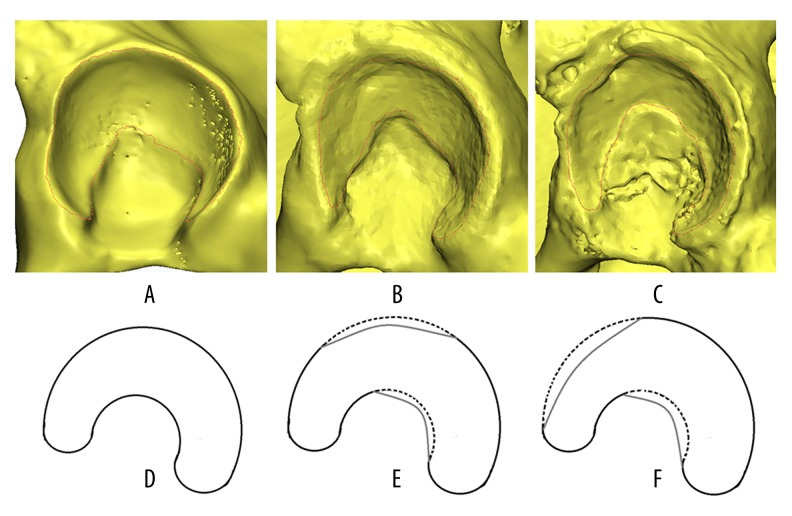
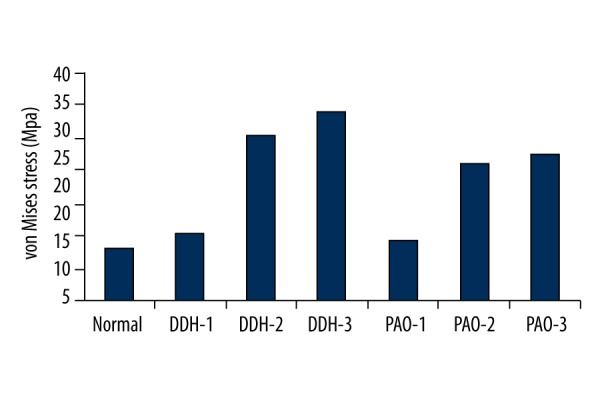
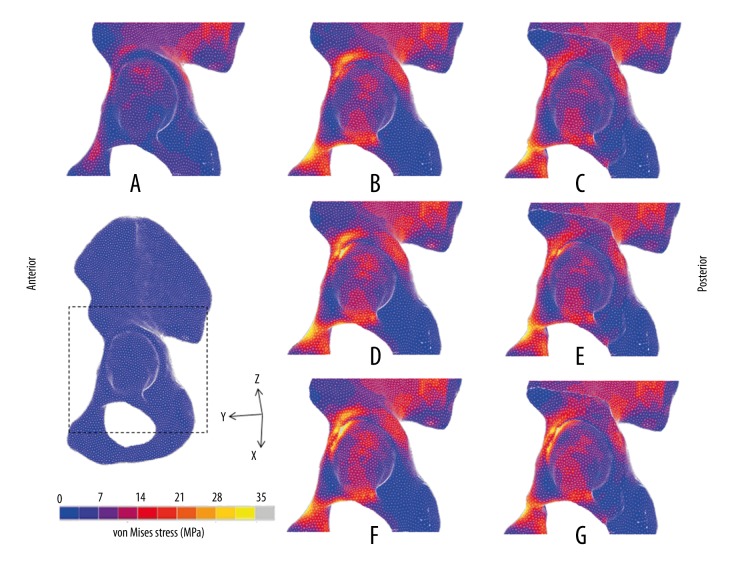
BACKGROUND Different extents and locations of acetabular cartilage defect have been supposed to be a major cause of undesirable outcomes of periacetabular osteotomy (PAO) in patients with developmental dysplasia of the hip (DDH). This study aimed to verify whether different locations of cartilage deficiency affect the biomechanical environment in a three-dimensional model utilizing finite element analysis (FEA). MATERIAL AND METHODS We developed 3 DDH models - DDH-1 (normal shape), DDH-2 (superior defect), and DDH-3 (anterosuperior defect) - by deforming from a normal hip model. We also developed 3 PAO models - PAO-1, PAO-2, and PAO-3 - through rotating osteotomized fragments. RESULTS The maximum von Mises stress in the normal hip was 13.06 MPa. In the DDH-1 model, the maximum value on the load-bearing area decreased from 15.49 MPa pre-PAO to 14.28 MPa post-PAO, while stresses in the DDH-2 and DDH-3 models were higher than in the DDH-1 model, both pre-PAO and post-PAO (30.46 MPa to 26.04 MPa for DDH-2; 33.89 MPa to 27.48 MPa for DDH-3). CONCLUSIONS This study shows that, both pre- and post-PAO, different types of cartilage deficiency affect the biomechanical environment. Furthermore, in dysplastic hips, obtaining accurate three-dimensional information about the acetabular cartilage can contribute substantially to PAO decision making.
髋臼软骨缺损的不同程度和位置被认为是发育性髋关节发育不良(DDH)患者髋臼周围截骨术(PAO)出现不良预后的主要原因。本研究旨在利用有限元分析(FEA)在三维模型中验证软骨缺损的不同位置是否会影响生物力学环境。
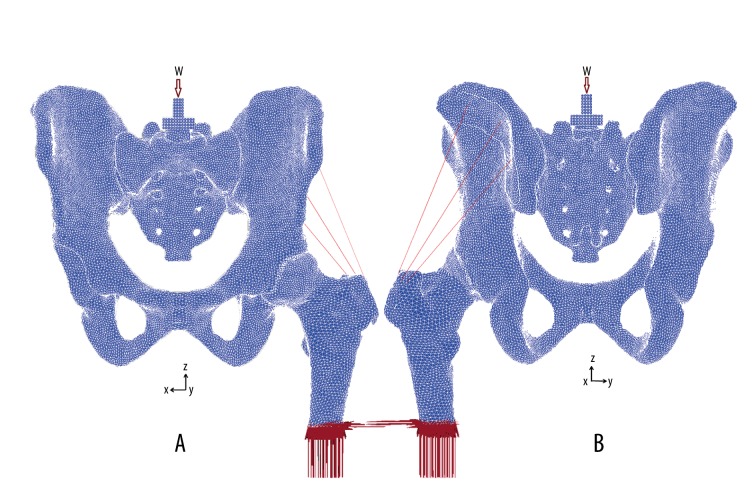
我们通过对正常髋关节模型进行变形,构建了3个DDH模型——DDH-1(正常形状)、DDH-2(上方缺损)和DDH-3(前上方缺损)。我们还通过旋转截骨碎片构建了3个PAO模型——PAO-1、PAO-2和PAO-3。
正常髋关节的最大冯·米塞斯应力为13.06兆帕。在DDH-1模型中,负重区域的最大值在PAO术前为15.49兆帕,术后降至14.28兆帕,而DDH-2和DDH-3模型中的应力在PAO术前和术后均高于DDH-1模型(DDH-2为30.46兆帕至26.04兆帕;DDH-3为33.89兆帕至27.48兆帕)。
本研究表明,无论是在PAO术前还是术后,不同类型的软骨缺损都会影响生物力学环境。此外,在发育不良的髋关节中,获取髋臼软骨的准确三维信息对PAO决策有很大帮助。