Barth Beatrix, Strehl Ute, Fallgatter Andreas J, Ehlis Ann-Christine
Psychophysiology and Optical Imaging, Department of Psychiatry and Psychotherapy, University of TuebingenTuebingen, Germany; Graduate School of Neural and Behavioral Sciences, University of TuebingenTuebingen, Germany.
Institute for Medical Psychology and Behavioural Neurobiology, University of Tuebingen Tuebingen, Germany.
Front Hum Neurosci. 2016 Dec 16;10:633. doi: 10.3389/fnhum.2016.00633. eCollection 2016.
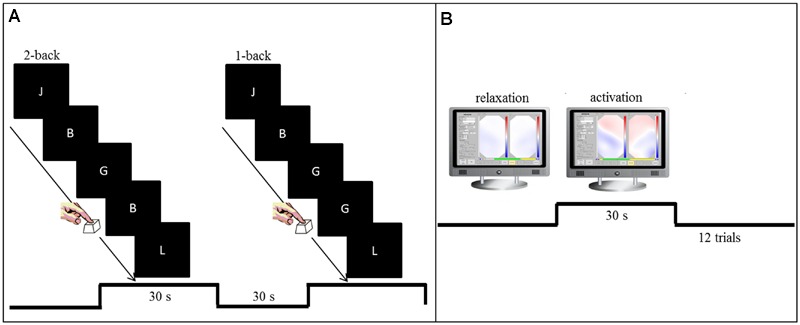
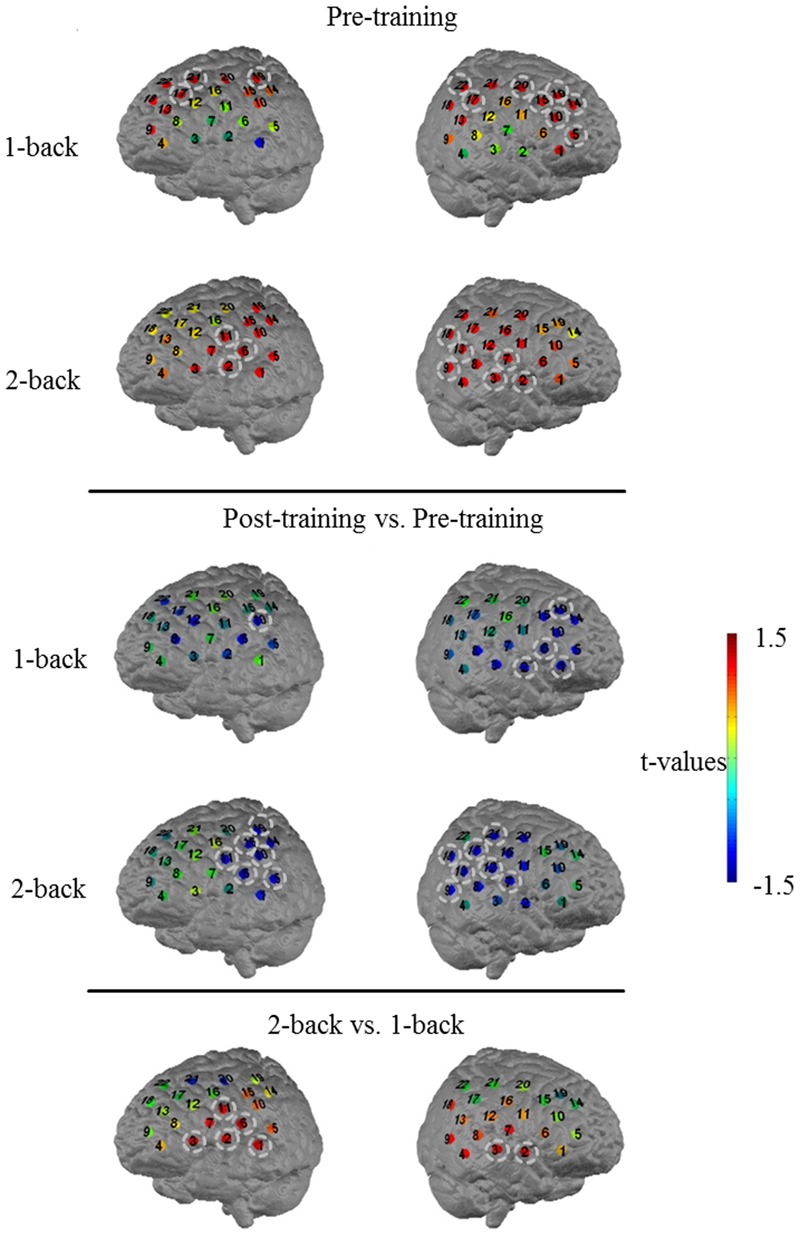
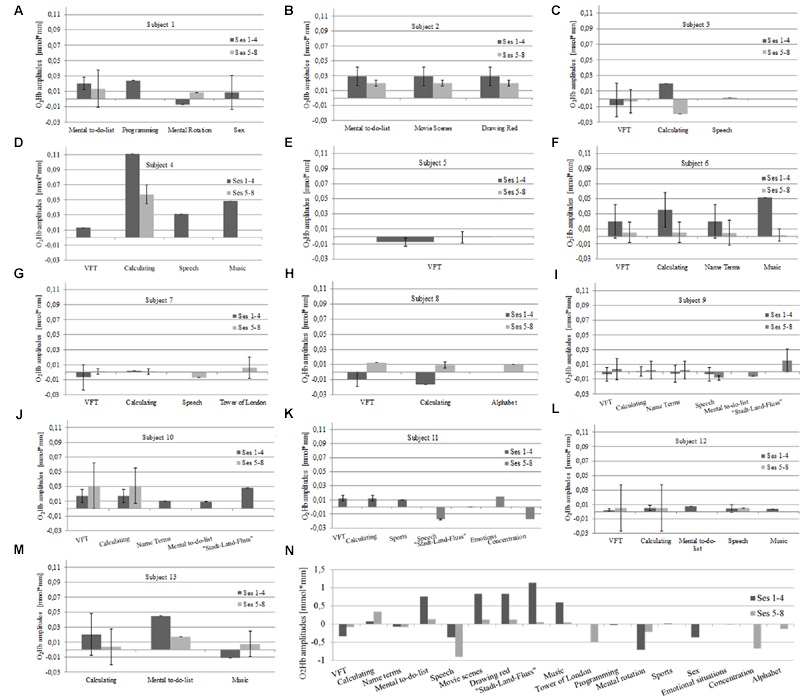
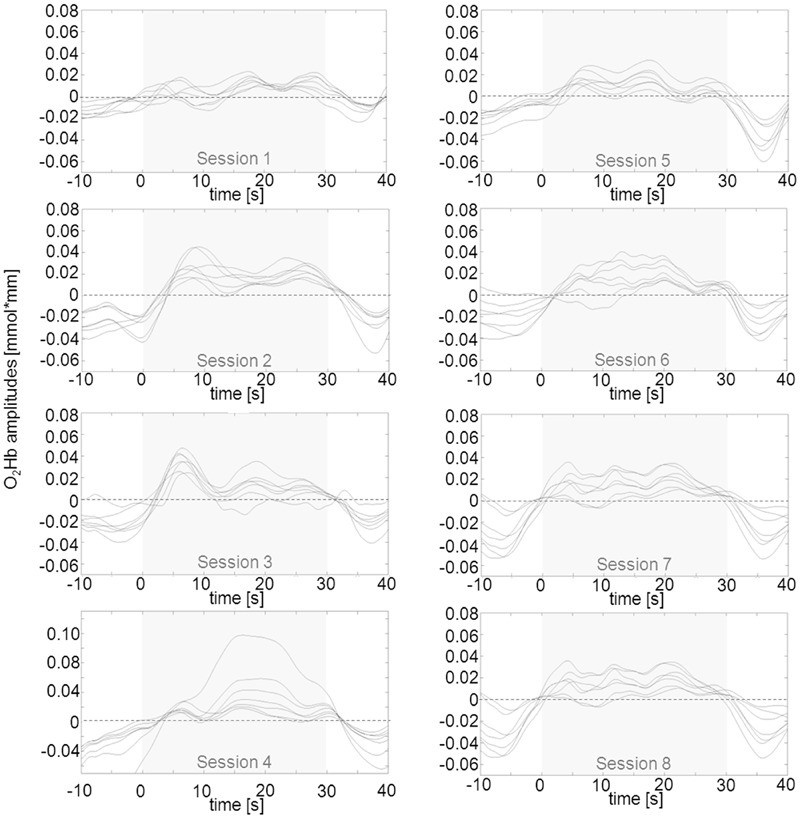
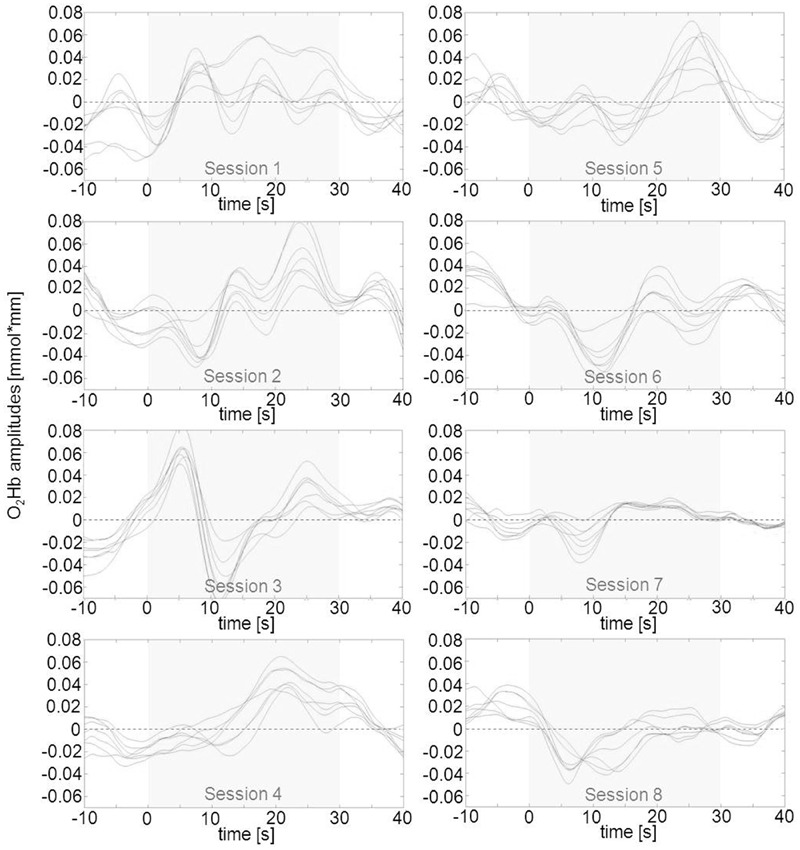
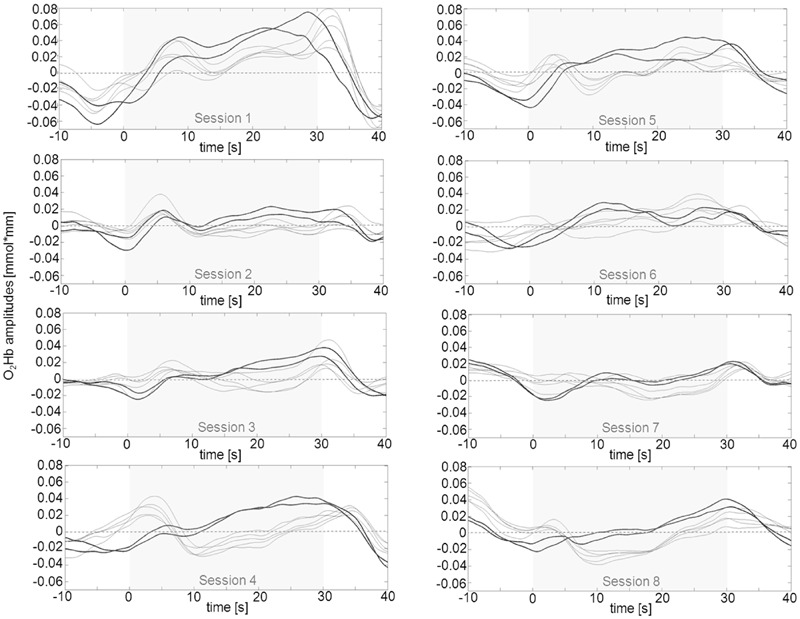
Neurofeedback is a promising tool for treatment and rehabilitation of several patient groups. In this proof of principle study, near-infrared spectroscopy (NIRS) based neurofeedback of frontal cortical areas was investigated in healthy adults. Main aims were the assessment of learning, the effects on performance in a working memory (n-back) task and the impact of applied strategies on regulation. 13 healthy participants underwent eight sessions of NIRS based neurofeedback within 2 weeks to learn to voluntarily up-regulate hemodynamic activity in prefrontal areas. An n-back task in pre-/post measurements was used to monitor neurocognitive changes. Mean oxygenated hemoglobin (OHb) amplitudes over the course of the sessions as well as during the n-back task were evaluated. 12 out of 13 participants were able to regulate their frontal hemodynamic response via NIRS neurofeedback. However, no systematic learning effects were observed in frontal OHb amplitudes over the training course in our healthy sample. We found an impact of applied strategies in only 5 out of 13 subjects. Regarding the n-back task, neurofeedback appeared to induce more focused and specific brain activation compared to pre-training measurement. NIRS based neurofeedback is a feasible and potentially effective method, with an impact on activation patterns in a working memory task. Ceiling effects might explain the lack of a systematic learning pattern in healthy subjects. Clinical studies are needed to show effects in patients exhibiting pathological deviations in prefrontal function.
神经反馈是用于多个患者群体治疗和康复的一种很有前景的工具。在这项原理验证研究中,对健康成年人进行了基于近红外光谱(NIRS)的额叶皮质区域神经反馈研究。主要目的是评估学习情况、对工作记忆(n-back)任务表现的影响以及所应用策略对调节的影响。13名健康参与者在2周内接受了8次基于NIRS的神经反馈训练,以学会自主上调前额叶区域的血流动力学活动。在前后测量中使用n-back任务来监测神经认知变化。评估了各训练阶段以及n-back任务期间的平均氧合血红蛋白(OHb)振幅。13名参与者中有12名能够通过NIRS神经反馈调节其额叶血流动力学反应。然而,在我们的健康样本中,在整个训练过程中,额叶OHb振幅未观察到系统性的学习效应。我们发现,在13名受试者中只有5名受到了所应用策略的影响。关于n-back任务,与训练前测量相比,神经反馈似乎能诱导更集中、更特定的大脑激活。基于NIRS的神经反馈是一种可行且可能有效的方法,对工作记忆任务中的激活模式有影响。天花板效应可能解释了健康受试者缺乏系统性学习模式的原因。需要开展临床研究来证明对前额叶功能存在病理偏差的患者的疗效。