Smith Kathryn, Lesser Julie, Brandenburg Beth, Lesser Andrew, Cici Jessica, Juenneman Robert, Beadle Amy, Eckhardt Sarah, Lantz Elin, Lock James, Le Grange Daniel
Neuropsychiatric Research Institute, Fargo, North Dakota USA.
Children's Hospitals and Clinics of Minnesota, Minneapolis, Minnesota USA.
J Eat Disord. 2016 Dec 19;4:35. doi: 10.1186/s40337-016-0124-0. eCollection 2016.
Historically, inpatient protocols have adopted relatively conservative approaches to refeeding in Anorexia Nervosa (AN) in order to reduce the risk of refeeding syndrome, a potentially fatal constellation of symptoms. However, increasing evidence suggests that patients with AN can tolerate higher caloric prescriptions during treatment, which may result in prevention of initial weight loss, shorter hospital stays, and less exposure to the effects of severe malnutrition. Therefore the present study sought to examine the effectiveness of a more accelerated refeeding protocol in an inpatient AN and atypical AN sample.
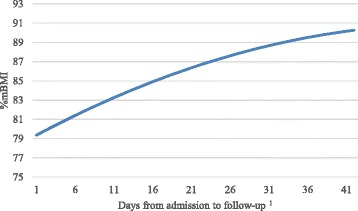
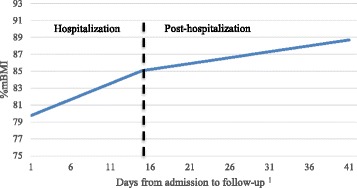
Participants were youth (ages 10-22) with AN ( = 113) and atypical AN ( = 16) who were hospitalized for medical stabilization. A retrospective chart review was conducted to assess changes in calories, weight status (percentage of median BMI, %mBMI), and indicators of refeeding syndrome, specifically hypophosphatemia, during hospitalization. Weight was assessed again approximately 4 weeks after discharge.
No cases of refeeding syndrome were observed, though 47.3 % of participants evidenced hypophosphatemia during treatment. Phosphorous levels were monitored in all participants, and 77.5 % were prescribed supplemental phosphorous at the time of discharge. Higher rates of caloric changes were predictive of greater changes in %mBMI during hospitalization. Rates of caloric and weight change were not related to an increased likelihood of re-admission.
Results suggest that a more accelerated approach to inpatient refeeding in youth with AN and atypical AN can be safely implemented and is not associated with refeeding syndrome, provided there is close monitoring and correction of electrolytes. These findings suggest that this approach has the potential to decrease length of stay and burden associated with inpatient hospitalization, while supporting continued progress after hospitalization.
从历史上看,住院治疗方案对神经性厌食症(AN)患者的重新喂养采取了相对保守的方法,以降低再喂养综合征的风险,这是一组可能致命的症状。然而,越来越多的证据表明,AN患者在治疗期间能够耐受更高的热量处方,这可能会防止最初的体重减轻,缩短住院时间,并减少严重营养不良影响的暴露。因此,本研究旨在检验一种更快速的重新喂养方案在住院AN和非典型AN样本中的有效性。
参与者为因医疗稳定而住院的10至22岁AN患者(n = 113)和非典型AN患者(n = 16)。进行回顾性病历审查,以评估住院期间卡路里、体重状况(中位数BMI的百分比,%mBMI)和再喂养综合征指标,特别是低磷血症的变化。出院后约4周再次评估体重。
未观察到再喂养综合征病例,尽管47.3%的参与者在治疗期间出现低磷血症。对所有参与者的磷水平进行了监测,77.5%的参与者在出院时被开具了补充磷的处方。更高的热量变化率预示着住院期间%mBMI的更大变化。热量和体重变化率与再次入院的可能性增加无关。
结果表明,对于AN和非典型AN的青少年患者,一种更快速的住院重新喂养方法可以安全实施,并且与再喂养综合征无关,前提是密切监测和纠正电解质。这些发现表明,这种方法有可能缩短住院时间和减轻住院负担,同时支持出院后的持续进展。