Hafner Tamara, Walkowiak Helena, Lee David, Aboagye-Nyame Francis
Health Policy Plan. 2017 May 1;32(4):572-584. doi: 10.1093/heapol/czw153.
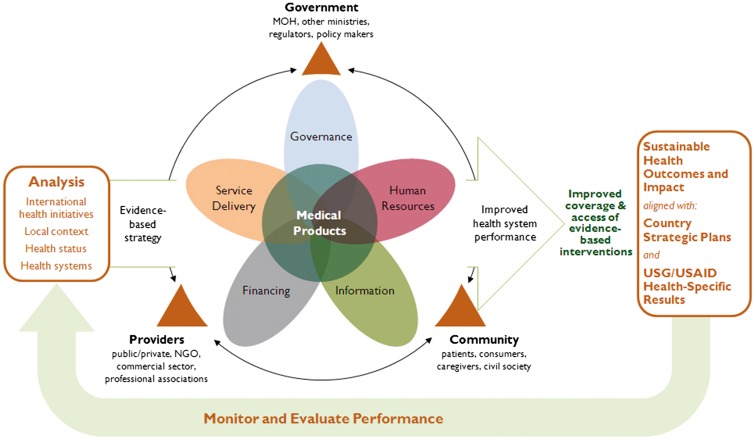
Pharmaceutical products are indispensable for improving health outcomes. An extensive body of work on access to and use of medicines has resulted in an assortment of tools measuring various elements of pharmaceutical systems. Until now however, there has been little attempt to conceptualize a pharmaceutical system as an entity and define its strengthening in a way that allows for measuring systems strengthening. The narrow focus of available tools limits their value in ascertaining which interventions result in stronger, more resilient systems. We sought to address this shortcoming by revisiting the current definitions, frameworks and assessment tools related to pharmaceutical systems. We conducted a comprehensive literature review and consulted with select pharmaceutical experts. On the basis of our review, we propose that a pharmaceutical system consists of all structures, people, resources, processes, and their interactions within the broader health system that aim to ensure equitable and timely access to safe, effective, quality pharmaceutical products and related services that promote their appropriate and cost-effective use to improve health outcomes. We further propose that pharmaceutical systems strengthening is the process of identifying and implementing strategies and actions that achieve coordinated and sustainable improvements in the critical components of a pharmaceutical system to make it more responsive and resilient and to enhance its performance for achieving better health outcomes. Finally, we established that, in addition to system performance and resilience, seven components of the pharmaceutical system are critical for measuring pharmaceutical systems strengthening: pharmaceutical products and related services; policy, laws and governance; regulatory systems; innovation, research and development, manufacturing, and trade; financing; human resources; and information. This work adds clarity to the concept of pharmaceutical systems and their strengthening by proposing holistic definitions on the basis of systems thinking. It provides a practical starting point for measuring the progress of pharmaceutical systems strengthening.
药品对于改善健康状况不可或缺。大量关于药品获取和使用的研究成果催生了一系列衡量药品系统各个要素的工具。然而,迄今为止,几乎没有人尝试将药品系统概念化为一个实体,并以一种能够衡量系统强化情况的方式来定义其强化过程。现有工具的狭隘关注点限制了它们在确定哪些干预措施能带来更强健、更具韧性的系统方面的价值。我们试图通过重新审视与药品系统相关的当前定义、框架和评估工具来解决这一缺陷。我们进行了全面的文献综述,并咨询了选定的药品专家。基于我们的综述,我们提出,药品系统由更广泛的卫生系统内的所有结构、人员、资源、流程及其相互作用组成,其目的是确保公平、及时地获取安全、有效、优质的药品及相关服务,促进这些药品的合理和具有成本效益的使用,以改善健康状况。我们进一步提出,药品系统强化是识别和实施战略及行动的过程,这些战略和行动能在药品系统的关键组成部分实现协调和可持续的改进,使其更具响应能力和韧性,并提高其实现更好健康状况的绩效。最后,我们确定,除了系统绩效和韧性外,药品系统的七个组成部分对于衡量药品系统强化至关重要:药品及相关服务;政策、法律和治理;监管系统;创新、研发、制造和贸易;融资;人力资源;以及信息。这项工作通过基于系统思维提出整体定义,为药品系统及其强化的概念增添了清晰度。它为衡量药品系统强化的进展提供了一个实际的起点。