Krogh Petersen Jeanette, Jensen Per, Dahl Sørensen Mia, Winther Kristensen Bjarne
Department of Pathology, Odense University Hospital, Odense C, Denmark.
Department of Clinical Research, University of Southern Denmark, Odense C, Denmark.
PLoS One. 2016 Dec 28;11(12):e0169129. doi: 10.1371/journal.pone.0169129. eCollection 2016.
Glioblastomas are the most frequent type of malignant primary brain tumor with a median overall survival less than 15 months. Therapy resistance of glioblastomas has been attributed to the presence of tumor initiating stem-like cells (TSCs). TSC-related markers have therefore been suggested to have promising potentials as prognostic markers in gliomas.
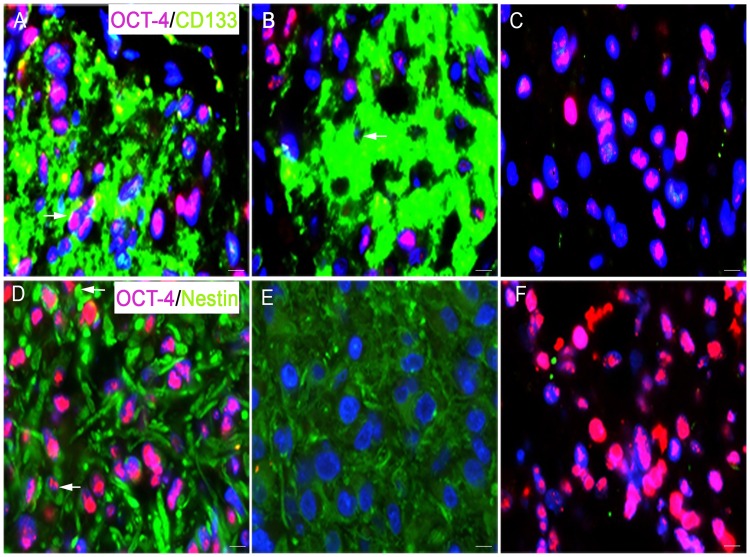
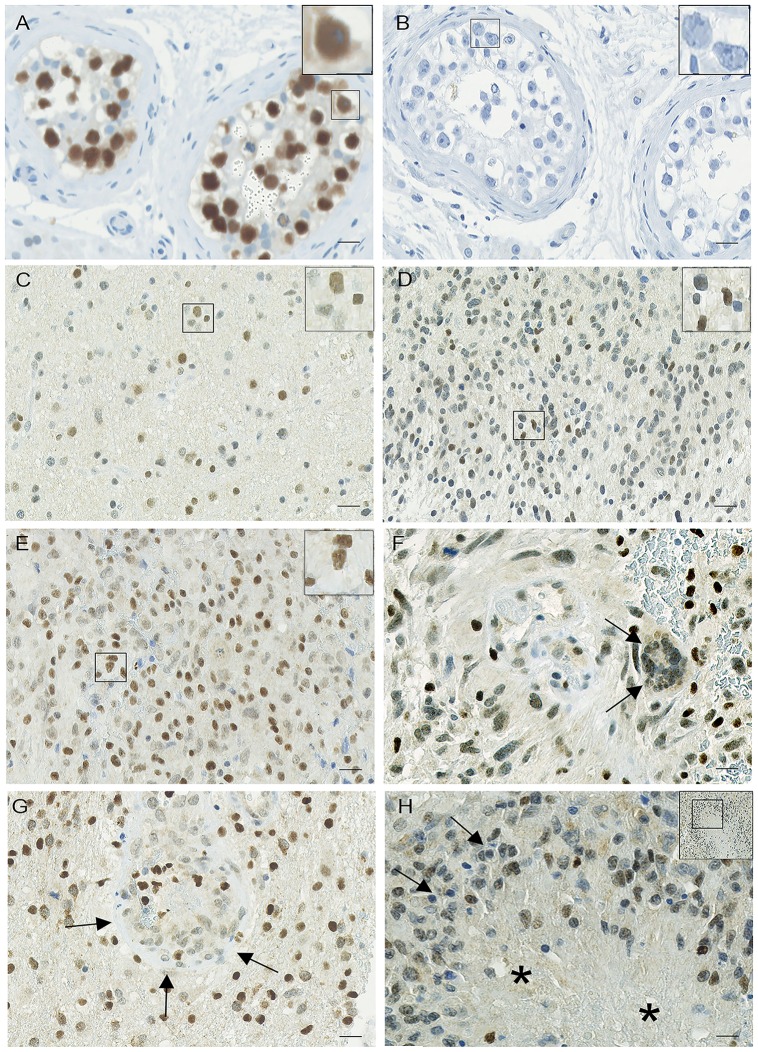
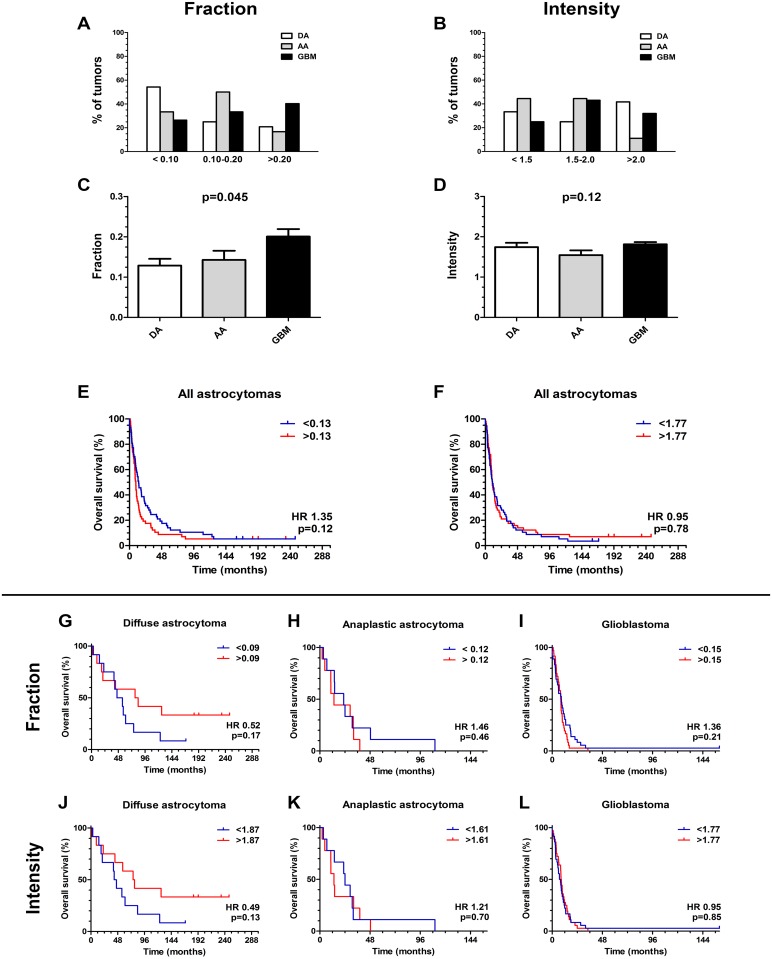
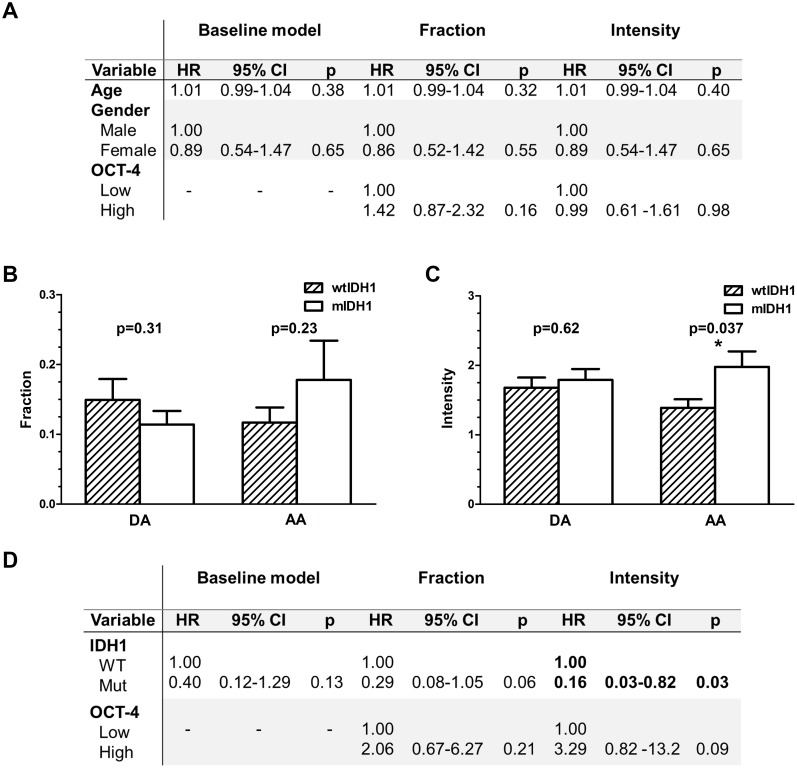
METHODOLOGY/PRINCIPAL FINDINGS: The aim of the present study was to investigate the expression and prognostic impact of the TSC-related marker Oct-4 in astrocytic brain tumors of increasing grade. In total 114 grade II, III and IV astrocytic brain tumors were immunohistochemically stained for Oct-4, and the fraction and intensity of Oct-4 positive cells were determined by morphometric analysis of full tumor sections. Oct-4 was expressed in all tumors, and the Oct-4 positive cell fraction increased with tumor grade (p = 0.045). There was no association between survival and Oct-4 positive cell fraction, neither when combining all tumor grades nor in analysis of individual grades. Oct-4 intensity was not associated with grade, but taking IDH1 status into account we found a tendency for high Oct-4 intensity to be associated with poor prognosis in anaplastic astrocytomas. Double immunofluorescence stainings showed co-localization in the perivascular niches of Oct-4 and two other TSC markers CD133 and nestin in glioblastomas. In some areas Oct-4 was expressed independently of CD133 and nestin.
In conclusion, high Oct-4 fraction was associated with tumor malignancy, but seemed to be without independent prognostic influence in glioblastomas. Identification of a potential prognostic value in anaplastic astrocytomas requires additional studies using larger patient cohorts.
胶质母细胞瘤是最常见的原发性恶性脑肿瘤类型,总体中位生存期不足15个月。胶质母细胞瘤的治疗耐药性归因于肿瘤起始干细胞样细胞(TSCs)的存在。因此,TSC相关标志物被认为在胶质瘤中作为预后标志物具有广阔前景。
方法/主要发现:本研究旨在调查TSC相关标志物Oct-4在不同级别的星形细胞脑肿瘤中的表达及其对预后的影响。对总共114例II级、III级和IV级星形细胞脑肿瘤进行Oct-4免疫组织化学染色,并通过对整个肿瘤切片的形态计量分析确定Oct-4阳性细胞的比例和强度。Oct-4在所有肿瘤中均有表达,Oct-4阳性细胞比例随肿瘤级别增加而升高(p = 0.045)。生存率与Oct-4阳性细胞比例之间无关联,无论是合并所有肿瘤级别分析还是单独分析各个级别时均如此。Oct-4强度与肿瘤级别无关,但考虑到异柠檬酸脱氢酶1(IDH1)状态,我们发现在间变性星形细胞瘤中,Oct-4高强度倾向于与预后不良相关。双重免疫荧光染色显示,在胶质母细胞瘤的血管周围龛中,Oct-4与另外两种TSC标志物CD133和巢蛋白共定位。在某些区域,Oct-4独立于CD133和巢蛋白表达。
总之,高Oct-4比例与肿瘤恶性程度相关,但在胶质母细胞瘤中似乎无独立的预后影响。要确定间变性星形细胞瘤中的潜在预后价值,需要使用更大患者队列进行更多研究。