Rosager Ann Mari, Sørensen Mia D, Dahlrot Rikke H, Hansen Steinbjørn, Schonberg David L, Rich Jeremy N, Lathia Justin D, Kristensen Bjarne W
Department of Pathology, Odense University Hospital, Odense, Denmark.
Department of Clinical Research, University of Southern Denmark, Odense, Denmark.
PLoS One. 2017 Aug 24;12(8):e0182954. doi: 10.1371/journal.pone.0182954. eCollection 2017.
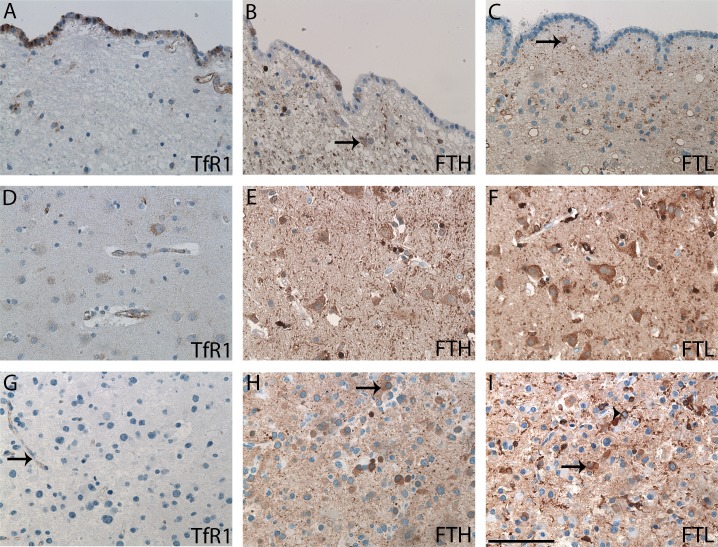
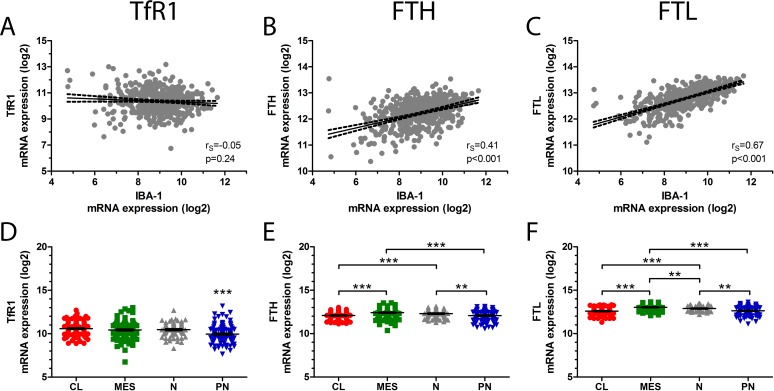
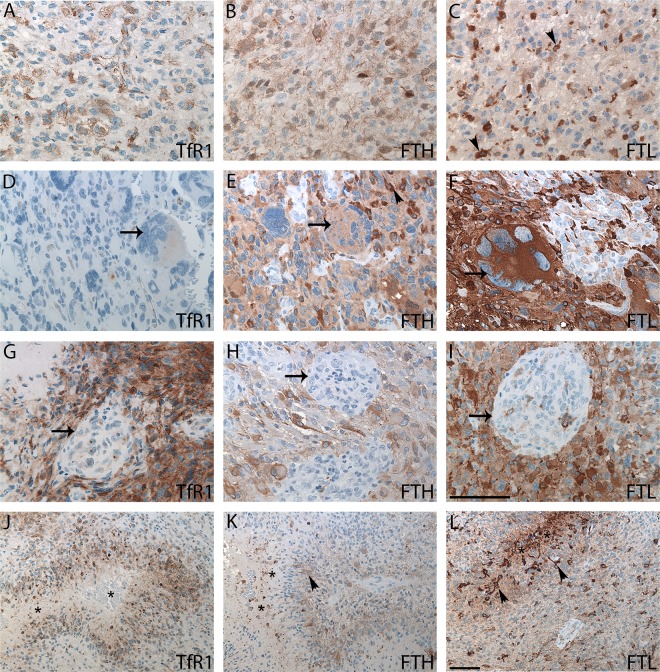
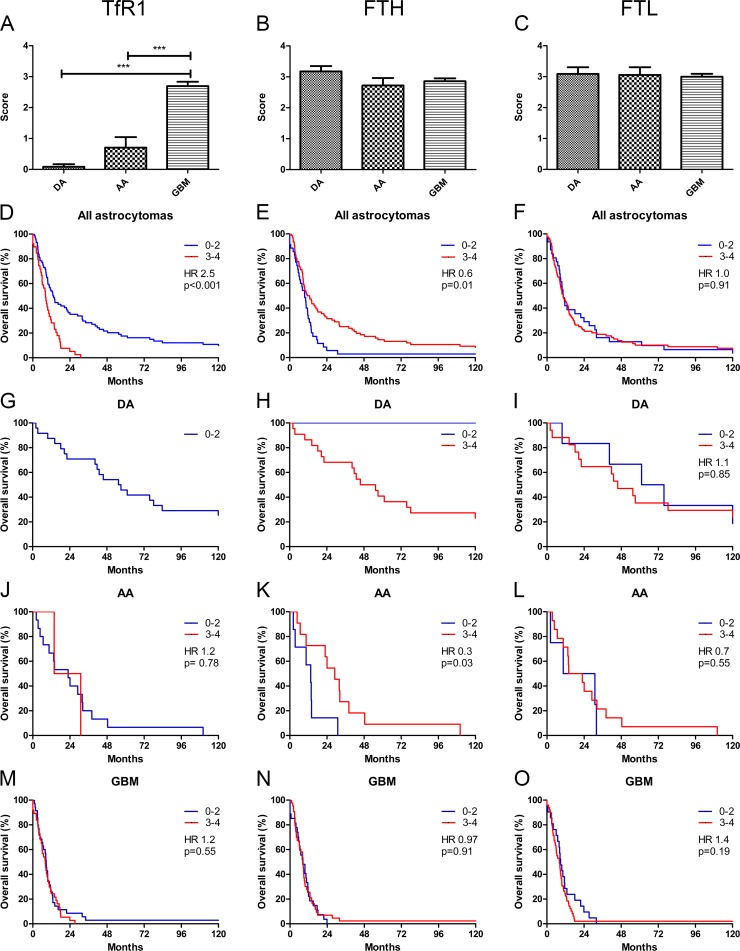
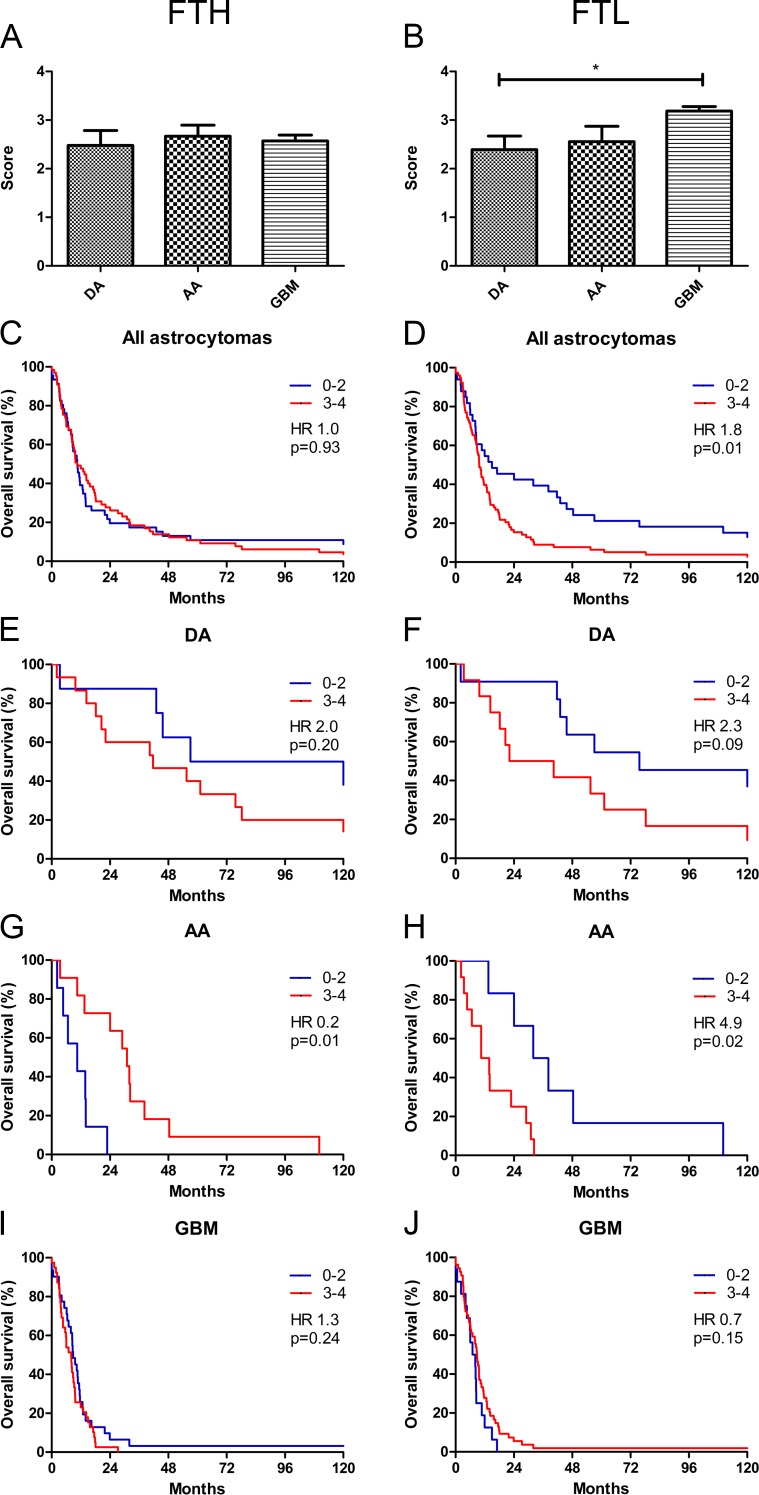
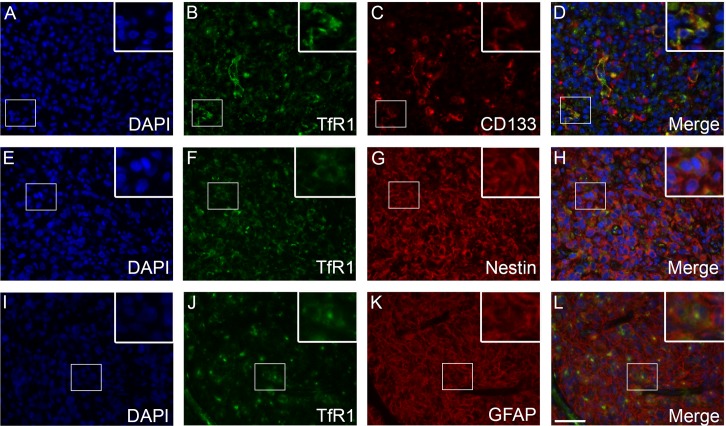
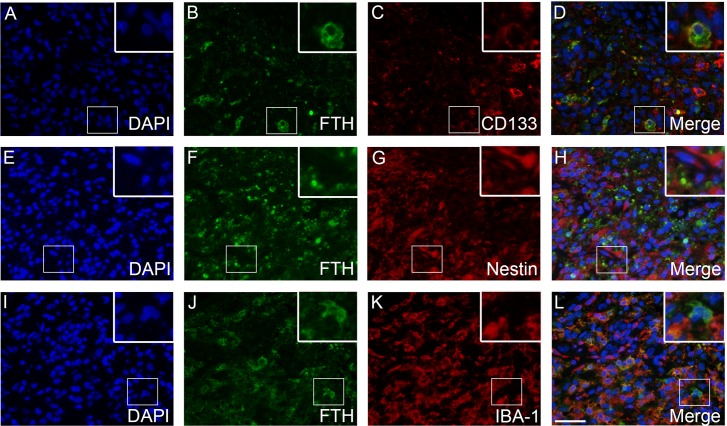
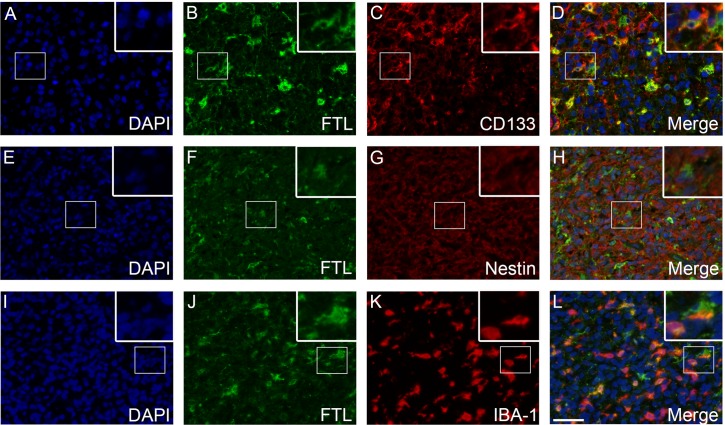
Astrocytic brain tumors are the most frequent primary brain tumors. Treatment with radio- and chemotherapy has increased survival making prognostic biomarkers increasingly important. The aim of the present study was to investigate the expression and prognostic value of transferrin receptor-1 (TfR1) as well as ferritin heavy (FTH) and light (FTL) chain in astrocytic brain tumors. A cohort of 111 astrocytic brain tumors (grade II-IV) was stained immunohistochemically with antibodies against TfR1, FTH, and FTL and scored semi-quantitatively. Double-immunofluorescence stainings were established to determine the phenotype of cells expressing these markers. We found that TfR1, FTH, and FTL were expressed by tumor cells in all grades. TfR1 increased with grade (p<0.001), but was not associated with prognosis in the individual grades. FTH and FTL were expressed by tumor cells and cells with microglial/macrophage morphology. Neither FTH nor FTL increased with malignancy grade, but low FTH expression by both tumor cells (p = 0.03) and microglia/macrophages (p = 0.01) correlated with shorter survival in patients anaplastic astrocytoma. FTL-positive microglia/macrophages were frequent in glioblastomas, and high FTL levels correlated with shorter survival in the whole cohort (p = 0.01) and in patients with anaplastic astrocytoma (p = 0.02). Double-immunofluorescence showed that TfR1, FTH, and FTL were co-expressed to a limited extent with the stem cell-related marker CD133. FTH and FTL were also co-expressed by IBA-1-positive microglia/macrophages. In conclusion, TfR1 was highly expressed in glioblastomas and associated with shorter survival in the whole cohort, but not in the individual malignancy grades. Low levels of FTH-positive tumor cells and microglia/macrophages were associated with poor survival in anaplastic astrocytomas, while high amounts of FTL-positive microglia/macrophages had a negative prognostic value. The results suggest that regulation of the iron metabolism in astrocytic brain tumors is complex involving both autocrine and paracrine signaling.
星形细胞脑肿瘤是最常见的原发性脑肿瘤。放疗和化疗提高了患者生存率,使得预后生物标志物变得愈发重要。本研究旨在调查转铁蛋白受体-1(TfR1)以及铁蛋白重链(FTH)和轻链(FTL)在星形细胞脑肿瘤中的表达及预后价值。对111例II-IV级星形细胞脑肿瘤队列进行免疫组织化学染色,使用抗TfR1、FTH和FTL抗体,并进行半定量评分。建立双重免疫荧光染色以确定表达这些标志物的细胞表型。我们发现,所有级别肿瘤细胞均表达TfR1、FTH和FTL。TfR1表达随级别增加(p<0.001),但在各个级别中与预后均无关联。FTH和FTL在肿瘤细胞以及具有小胶质细胞/巨噬细胞形态的细胞中表达。FTH和FTL均不随恶性程度增加而升高,但在间变性星形细胞瘤患者中,肿瘤细胞(p = 0.03)和小胶质细胞/巨噬细胞(p = 0.01)中低水平FTH表达均与较短生存期相关。在胶质母细胞瘤中,FTL阳性小胶质细胞/巨噬细胞很常见,且在整个队列(p = 0.01)以及间变性星形细胞瘤患者(p = 0.02)中,高FTL水平与较短生存期相关。双重免疫荧光显示,TfR1、FTH和FTL与干细胞相关标志物CD133在有限程度上共同表达。FTH和FTL也在IBA-1阳性小胶质细胞/巨噬细胞中共同表达。总之,TfR1在胶质母细胞瘤中高表达,且与整个队列较短生存期相关,但在各个恶性级别中并非如此。间变性星形细胞瘤中低水平FTH阳性肿瘤细胞和小胶质细胞/巨噬细胞与不良生存相关,而大量FTL阳性小胶质细胞/巨噬细胞具有负面预后价值。结果表明,星形细胞脑肿瘤中铁代谢的调节很复杂,涉及自分泌和旁分泌信号传导。