Xiong Lili, Kameshwar Ayyappa Kumar Sista, Chen Xi, Guo Zhiyun, Mao Canquan, Chen Sanfeng, Qin Wensheng
School of Life Science and Engineering, Southwest Jiaotong University, Chengdu City, 610031, Sichuan Province, China.
Department of Biology, Lakehead University, Thunder Bay, ON, P7B 5E1, Canada.
Microb Cell Fact. 2016 Dec 28;15(1):215. doi: 10.1186/s12934-016-0614-4.
ACEII transcription factor plays a significant role in regulating the expression of cellulase and hemicellulase encoding genes. Apart from ACEII, transcription factors such as XYR1, CRE1, HAP2/3/5 complex and ACEI function in a coordinated pattern for regulating the gene expression of cellulases and hemicellulases. Studies have demonstrated that ACEII gene deletion results in decreased total cellulase and xylanase activities with reduced transcript levels of lignocellulolytic enzymes.
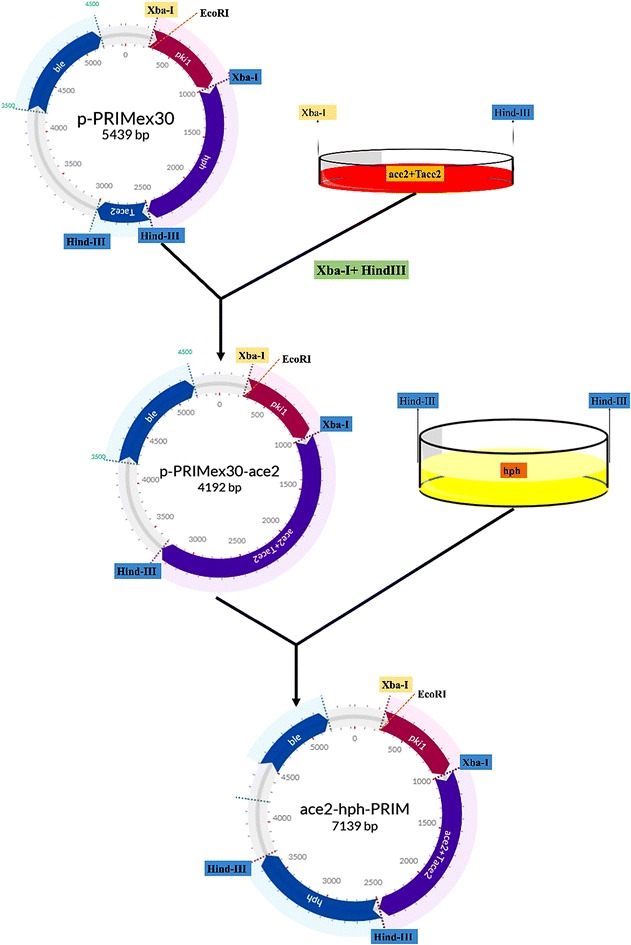
In this study, we have successfully transformed the ACEII transcription factor encoding gene in Trichoderma reesei to significantly improve its degrading abilities. Transformation experiments on parental strain T. reesei QM9414 has resulted in five genetically engineered strains T/Ace2-2, T/Ace2-5, T/Ace2-8, T/Ace5-4 and T/Ace10-1. Among which, T/Ace2-2 has exhibited significant increase in enzyme activity by twofolds, when compared to parental strain. The T/Ace2-2 was cultured on growth substrates containing 2% bark supplemented with (a) sugar free + MA medium (b) glucose + MA medium and (c) xylose + MA medium. The bark degradation efficiency of genetically modified T/Ace2-2 strain was assessed by analyzing the xylitol production yield using HPAEC. By 6th day, about 10.52 g/l of xylitol was produced through enzymatic conversion of bark (2% bark + MA + xylose) by the T/Ace2-2 strain and by 7th day the conversion rate was found to be 0.21 g/g. Obtained results confirmed that bark growth medium supplemented with D-xylose has profoundly increased the conversion rate of bark by T/Ace2-2 strain when compared to sugar free and glucose supplemented growth media. Results obtained from scanning electron microscopy has endorsed our current results. Bark samples inoculated with T/Ace2-2 strain has showed large number of degraded cells with clearly visible cavities and fractures, by exposing the microfibrillar interwoven complex.
We propose a cost effective and ecofriendly method for the degradation of lignocellulosic biomass such as bark to produce xylitol by using genetically modified T. reesei. Efficient conversion rate and production yield obtained in our current study provides a great scope for the xylitol industries, as our method bypasses the pretreatment of bark achieving clean and low-cost xylitol production.
ACEII转录因子在调节纤维素酶和半纤维素酶编码基因的表达中起重要作用。除ACEII外,XYR1、CRE1、HAP2/3/5复合物和ACEI等转录因子以协调的模式发挥作用,调节纤维素酶和半纤维素酶的基因表达。研究表明,ACEII基因缺失导致总纤维素酶和木聚糖酶活性降低,木质纤维素分解酶的转录水平也降低。
在本研究中,我们成功地在里氏木霉中转化了编码ACEII转录因子的基因,以显著提高其降解能力。对亲本菌株里氏木霉QM9414进行转化实验,得到了五个基因工程菌株T/Ace2-2、T/Ace2-5、T/Ace2-8、T/Ace5-4和T/Ace10-1。其中,与亲本菌株相比,T/Ace2-2的酶活性显著提高了两倍。将T/Ace2-2在含有2%树皮的生长底物上培养,分别添加(a)无糖+麦芽汁培养基(b)葡萄糖+麦芽汁培养基和(c)木糖+麦芽汁培养基。通过高效阴离子交换色谱法分析木糖醇产量,评估转基因T/Ace2-2菌株的树皮降解效率。到第6天,T/Ace2-2菌株通过对树皮(2%树皮+麦芽汁+木糖)的酶促转化产生了约10.52 g/l的木糖醇,到第7天,转化率为0.21 g/g。所得结果证实,与无糖和添加葡萄糖的生长培养基相比,添加D-木糖的树皮生长培养基显著提高了T/Ace2-2菌株对树皮的转化率。扫描电子显微镜获得的结果支持了我们目前的结果。接种T/Ace2-2菌株的树皮样品显示出大量降解细胞,有明显可见的空洞和裂缝,暴露出微纤维交织复合物。
我们提出了一种经济高效且环保的方法,通过使用转基因里氏木霉降解木质纤维素生物质(如树皮)来生产木糖醇。我们目前的研究中获得的高效转化率和产量为木糖醇产业提供了广阔的前景,因为我们的方法绕过了树皮的预处理,实现了清洁且低成本的木糖醇生产。