Wang Bei, Chen Queting, Cao Yang, Ma Xia, Yin Chenxing, Jia Youchao, Zang Aimin, Fan Wufang
Molecular Biology Lab of Gastric Cancer, School of Life Sciences, Hebei University, Baoding, Hebei Province, China.
Department of Medical Oncology, Affiliated Hospital of Hebei University, Baoding, Hebei Province, China.
PLoS One. 2016 Dec 29;11(12):e0168904. doi: 10.1371/journal.pone.0168904. eCollection 2016.
Accumulating evidence supports the hypothesis that cancer stem cells (CSCs) are essential for cancer initiation, metastasis and drug resistance. However, the functional association of gastric CSC markers with stemness and epithelial-mesenchymal transition (EMT) signature genes is unclear.
qPCR was performed to measure the expression profiles of stemness and EMT signature genes and their association with putative CSC markers in gastric cancer tissues, cancer cell lines and sphere cells. Western blot analysis was used to confirm the results of the transcript analysis. Cell proliferation, cell migration, drug resistance and sphere cell growth assays were conducted to measure the expansion and invasion abilities of the cells. Tumor xenograft experiments were performed in NOD/SCID mice to test cell stemness in vivo. Flow cytometry and immunofluorescence staining were used to analyze cell subpopulations.
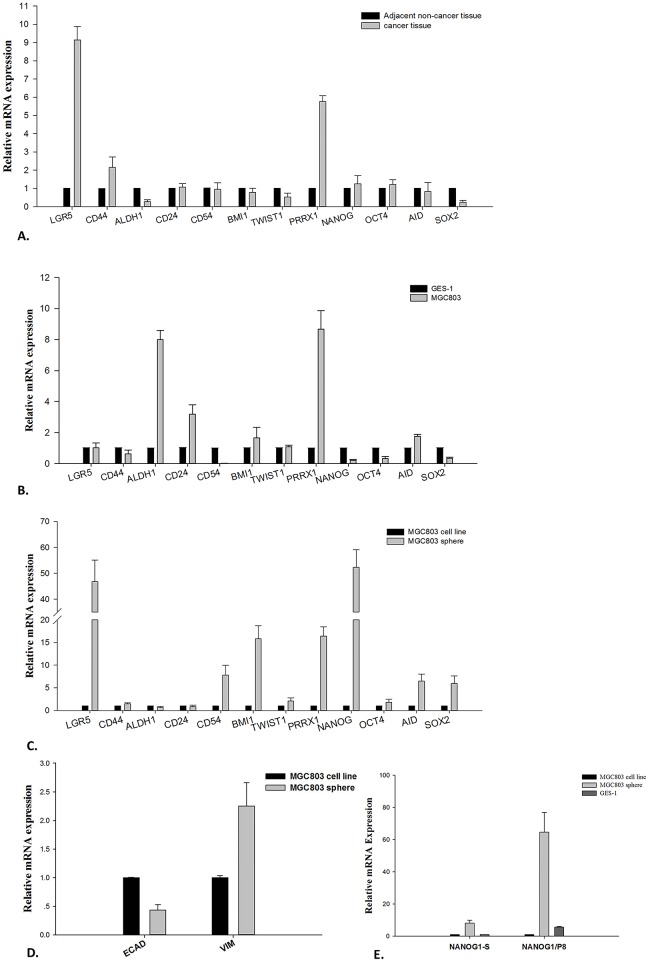
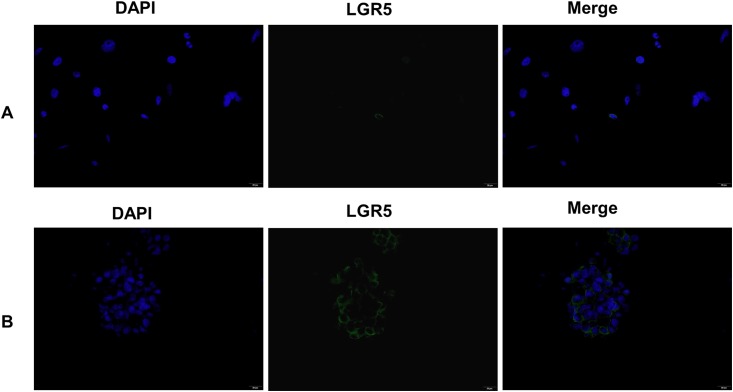
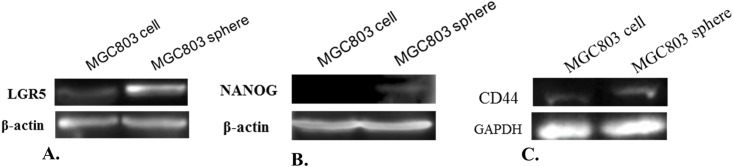
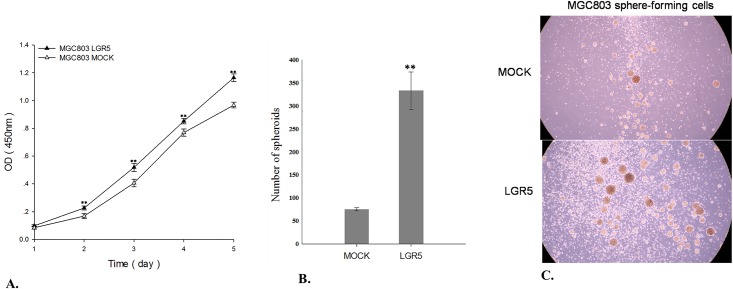
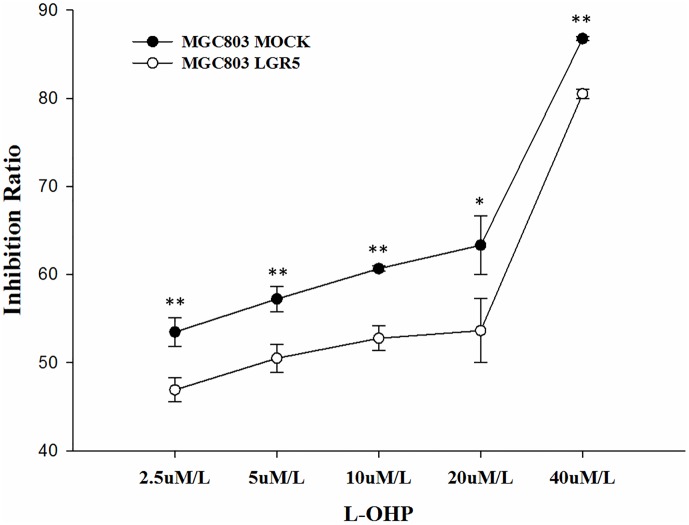
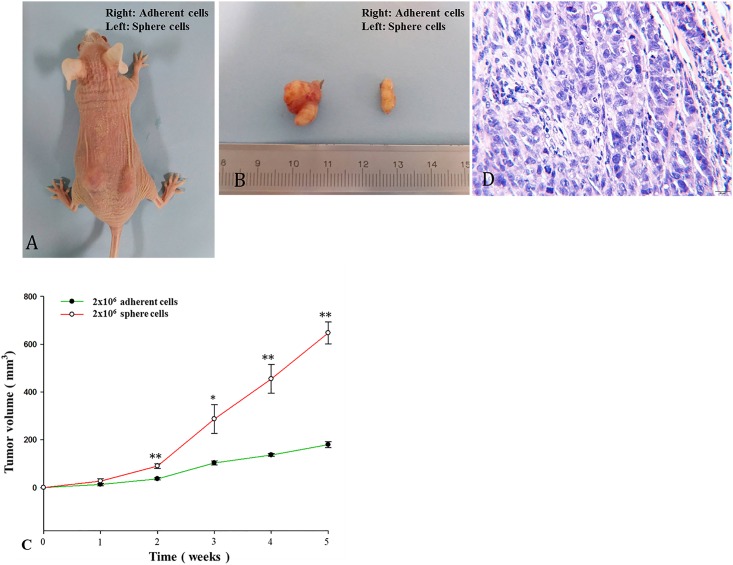
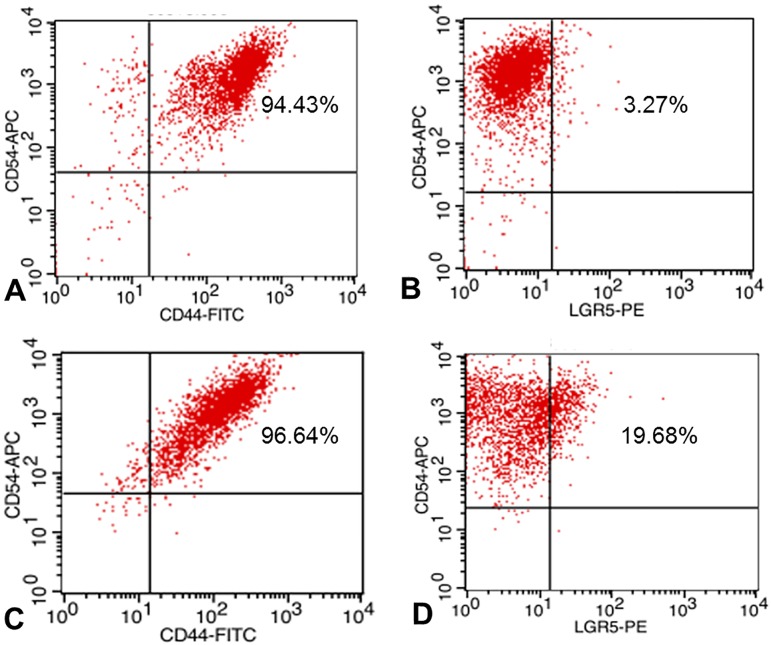
The expression of LGR5 was strikingly up-regulated in sphere cells but not in cancer tissues or parental adherent cells. The up-regulation of LGR5 was also positively associated with stemness regulators (NANOG, OCT4, SOX2, and AICDA) and EMT inducers (PRRX1, TWIST1, and BMI1). In addition, sphere cells exhibited up-regulated vimentin and down-regulated E-cadherin expression. Using gene-specific primers, we found that the NANOG expression primarily originates from the retrogene NANOGP8. Western blot analysis showed that the expression of both LGR5 and NANOG is significantly higher in sphere cells. LGR5 over-expression significantly enhanced sphere cell growth, cell proliferation, cell migration and drug resistance in MGC803 cells. Tumor xenografts in nude mice showed that sphere cells are at least 10 times more efficient at tumor initiation than adherent cells. Flow cytometry analysis showed that ~20% of sphere cells are LGR5+/CD54+, but only ~3% of adherent cells are Lgr5+/CD54+. Immunofluorescence staining supports the above results.
The LGR5-expressing fraction of CD54+ cells represents gastric cancer CSCs, in which LGR5 is closely associated with stemness and EMT core genes, and NANOG expression is mainly contributed by the retrogene NANOGP8. Sphere cells are the best starting materials for the characterization of CSCs.
越来越多的证据支持癌症干细胞(CSCs)对于癌症起始、转移和耐药性至关重要这一假说。然而,胃CSC标志物与干性及上皮-间质转化(EMT)特征基因之间的功能关联尚不清楚。
采用qPCR检测胃癌组织、癌细胞系及球形细胞中干性和EMT特征基因的表达谱及其与假定CSC标志物的关联。蛋白质印迹分析用于确认转录分析结果。进行细胞增殖、细胞迁移、耐药性及球形细胞生长实验以检测细胞的扩增和侵袭能力。在NOD/SCID小鼠中进行肿瘤异种移植实验以在体内测试细胞干性。采用流式细胞术和免疫荧光染色分析细胞亚群。
LGR5的表达在球形细胞中显著上调,但在癌组织或亲本贴壁细胞中未上调。LGR5的上调还与干性调节因子(NANOG、OCT4、SOX2和AICDA)及EMT诱导因子(PRRX1、TWIST1和BMI1)呈正相关。此外,球形细胞中波形蛋白表达上调,E-钙黏蛋白表达下调。使用基因特异性引物,我们发现NANOG表达主要源自反转录基因NANOGP8。蛋白质印迹分析表明,球形细胞中LGR5和NANOG的表达均显著更高。LGR5过表达显著增强了MGC803细胞中球形细胞的生长、细胞增殖、细胞迁移及耐药性。裸鼠中的肿瘤异种移植显示,球形细胞起始肿瘤的效率至少是贴壁细胞的10倍。流式细胞术分析表明,约20%的球形细胞为LGR5+/CD54+,但只有约3%的贴壁细胞为Lgr5+/CD54+。免疫荧光染色支持上述结果。
CD54+细胞中表达LGR5的部分代表胃癌CSCs,其中LGR5与干性和EMT核心基因密切相关,且NANOG表达主要由反转录基因NANOGP8贡献。球形细胞是表征CSCs的最佳起始材料。