Walsh Michael E, Van Remmen Holly
Energy Metabolism Laboratory, Swiss Federal Institute of Technology (ETH) Zurich , Zurich, Switzerland.
Oklahoma Medical Research Foundation , Oklahoma City, OK, USA.
Nutr Healthy Aging. 2016 Oct 27;4(1):17-30. doi: 10.3233/NHA-160005.
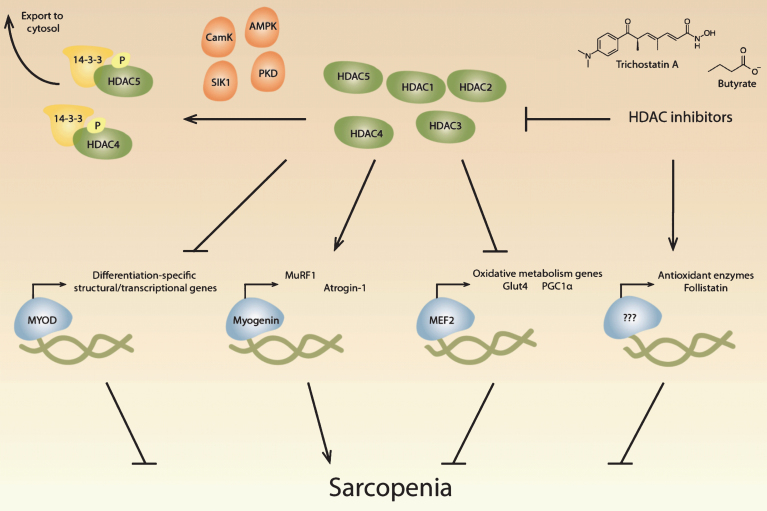
Skeletal muscle atrophy during aging, a process known as sarcopenia, is associated with muscle weakness, frailty, and the loss of independence in older adults. The mechanisms contributing to sarcopenia are not totally understood, but muscle fiber loss due to apoptosis, reduced stimulation of anabolic pathways, activation of catabolic pathways, denervation, and altered metabolism have been observed in muscle from old rodents and humans. Recently, histone deacetylases (HDACs) have been implicated in muscle atrophy and dysfunction due to denervation, muscular dystrophy, and disuse, and HDACs play key roles in regulating metabolism in skeletal muscle. In this review, we will discuss the role of HDACs in muscle atrophy and the potential of HDAC inhibitors for the treatment of sarcopenia. Several HDAC isoforms are potential targets for intervention in sarcopenia. Inhibition of HDAC1 prevents muscle atrophy due to nutrient deprivation. HDAC3 regulates metabolism in skeletal muscle and may inhibit oxidative metabolism during aging. HDAC4 and HDAC5 have been implicated in muscle atrophy due to denervation, a process implicated in sarcopenia. HDAC inhibitors are already in use in the clinic, and there is promise in targeting HDACs for the treatment of sarcopenia.
衰老过程中的骨骼肌萎缩,即所谓的肌肉减少症,与老年人的肌肉无力、身体虚弱以及失去独立生活能力有关。导致肌肉减少症的机制尚未完全明确,但在老年啮齿动物和人类的肌肉中已观察到,凋亡导致的肌纤维损失、合成代谢途径刺激减少、分解代谢途径激活、去神经支配以及代谢改变。最近,组蛋白脱乙酰酶(HDACs)被认为与因去神经支配、肌肉营养不良和废用导致的肌肉萎缩及功能障碍有关,并且HDACs在调节骨骼肌代谢中起关键作用。在本综述中,我们将讨论HDACs在肌肉萎缩中的作用以及HDAC抑制剂治疗肌肉减少症的潜力。几种HDAC亚型是干预肌肉减少症的潜在靶点。抑制HDAC1可预防因营养缺乏导致的肌肉萎缩。HDAC3调节骨骼肌代谢,可能在衰老过程中抑制氧化代谢。HDAC4和HDAC5与因去神经支配导致的肌肉萎缩有关,而去神经支配是肌肉减少症涉及的一个过程。HDAC抑制剂已在临床上使用,靶向HDACs治疗肌肉减少症有一定前景。