Honda Shino, Sadatomi Daichi, Yamamura Yasuo, Nakashioya Kazutaka, Tanimura Susumu, Takeda Kohsuke
Department of Cell Regulation, Graduate School of Biomedical Sciences, Nagasaki University, Nagasaki, Japan.
Cancer Sci. 2017 Mar;108(3):520-527. doi: 10.1111/cas.13154.
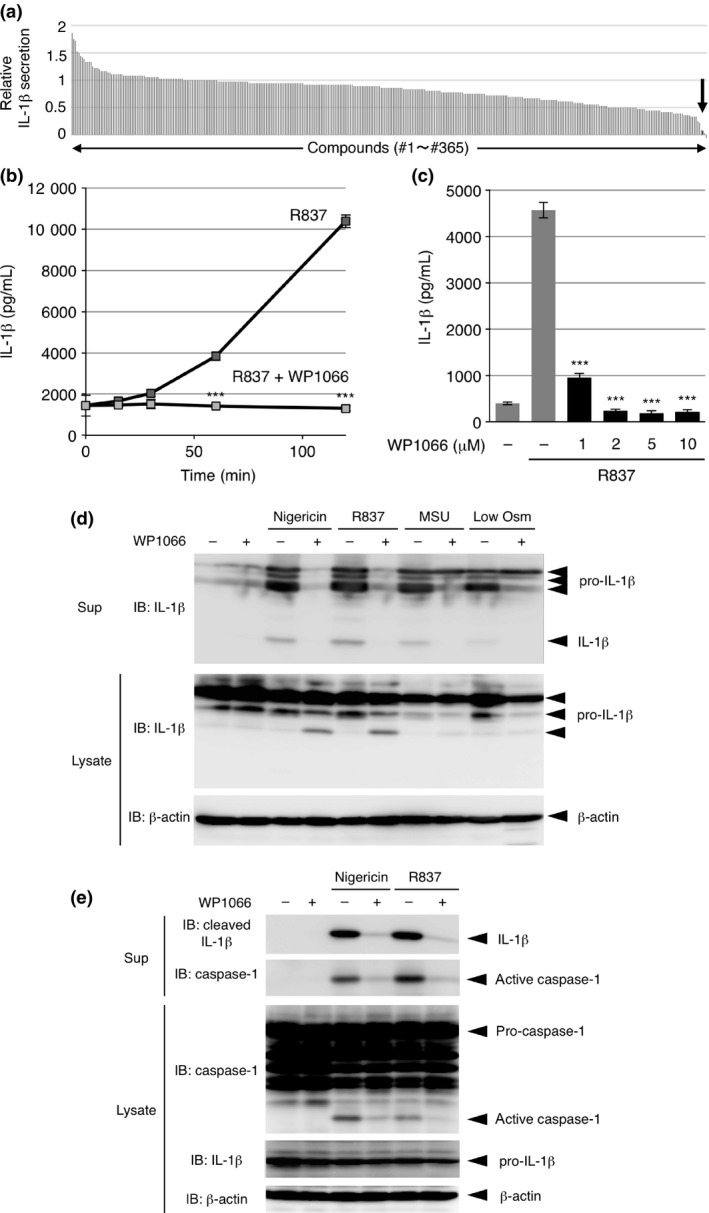
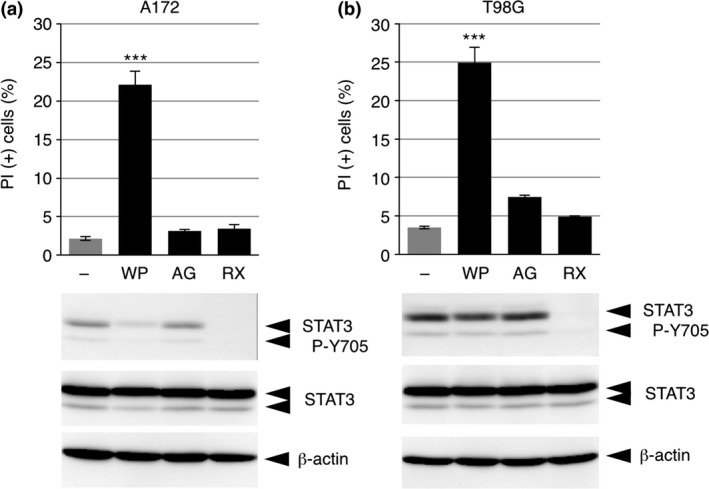
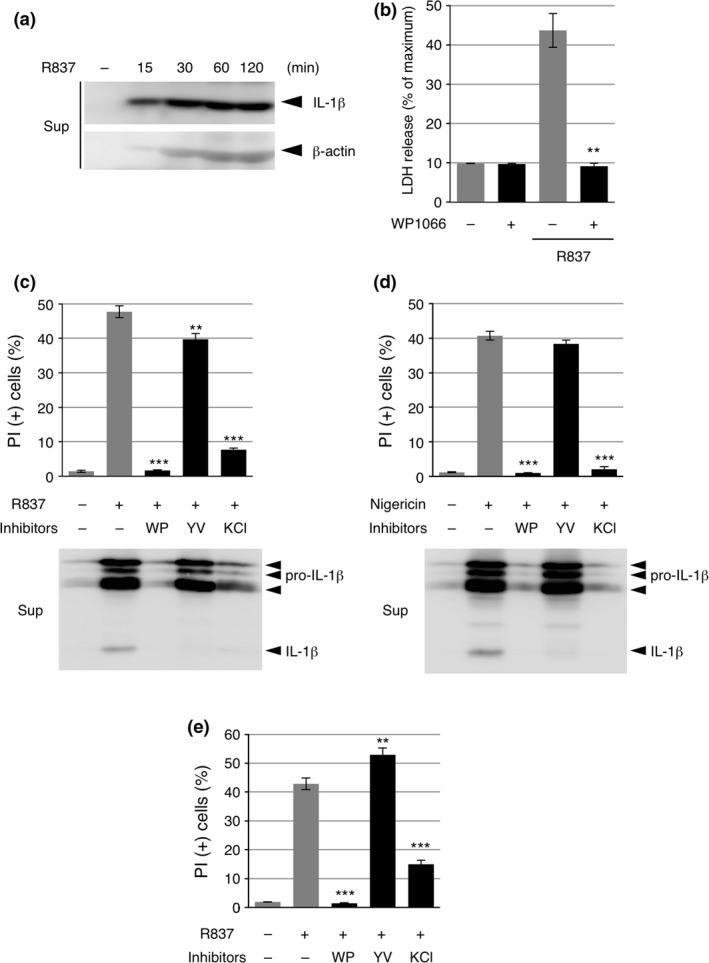
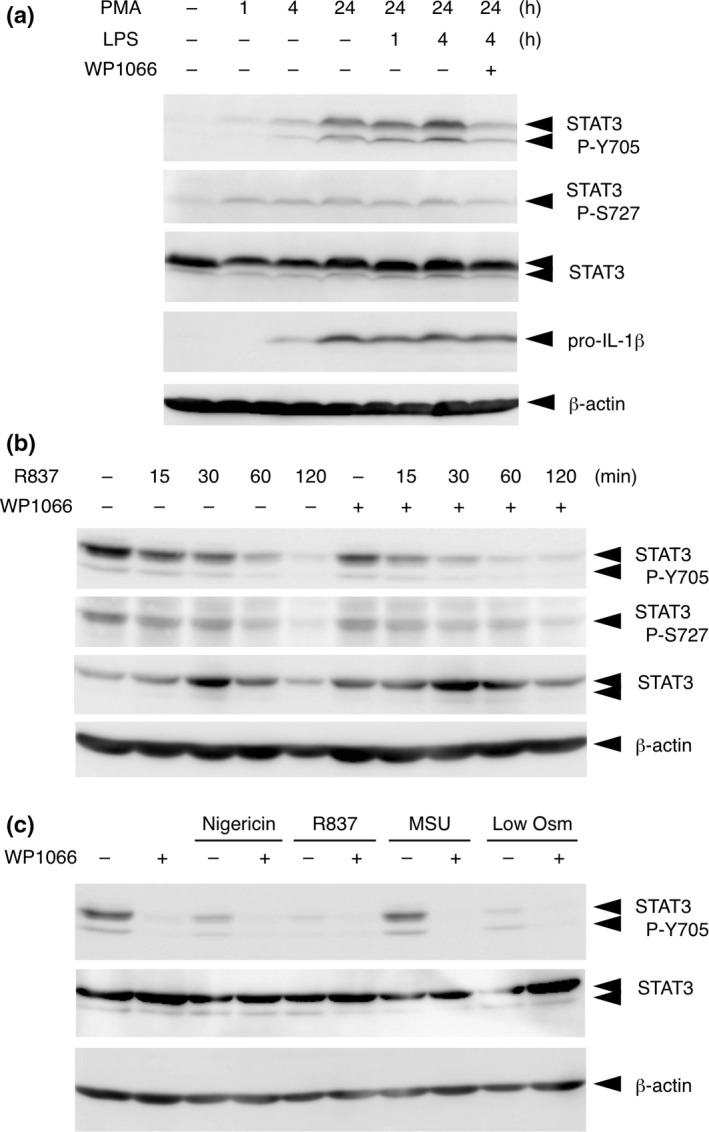
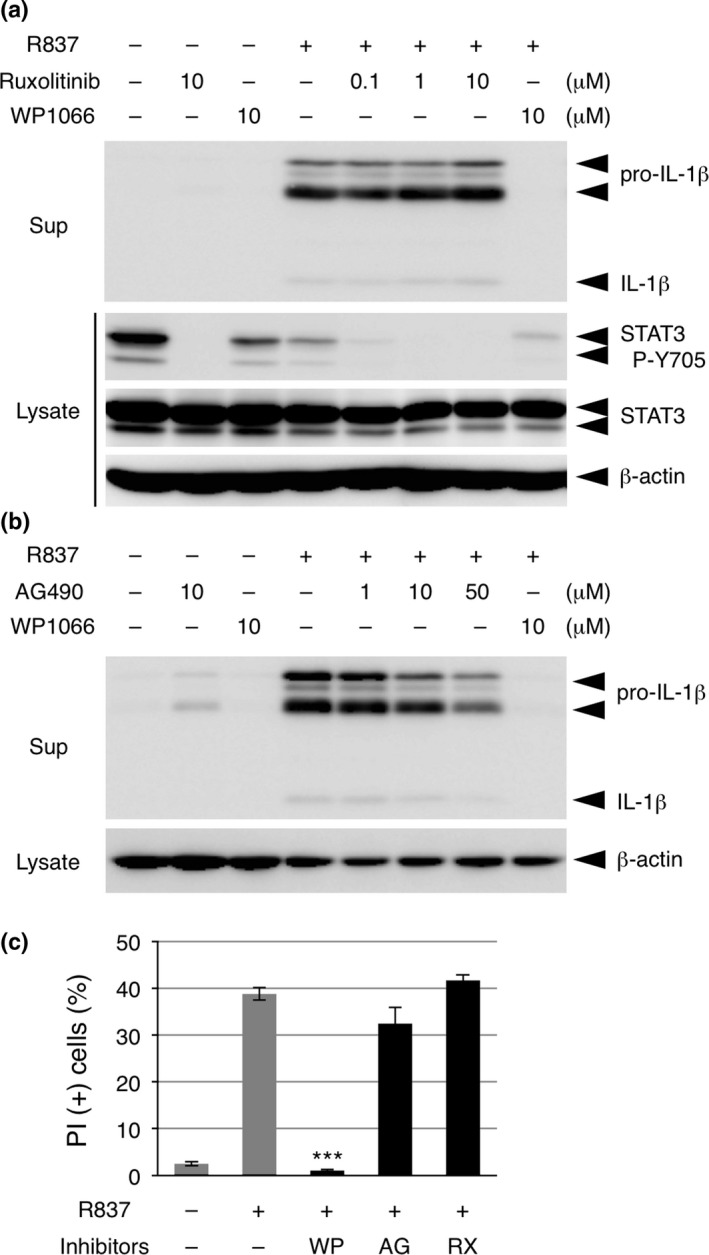
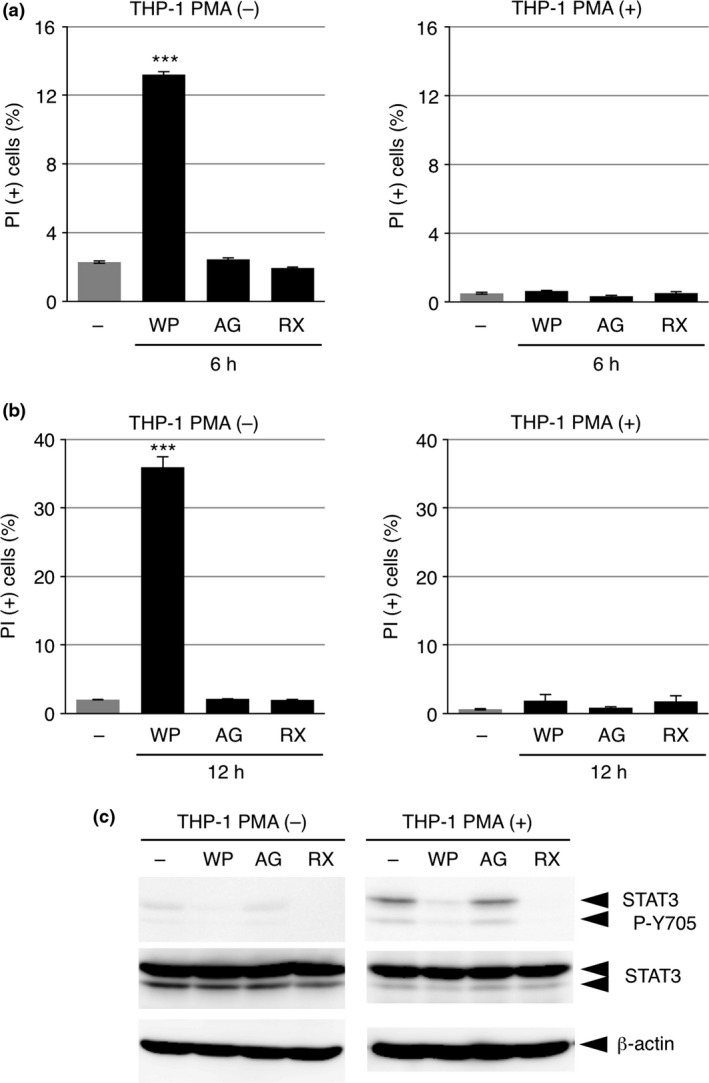
The compound WP1066 was originally synthesized by modifying the structure of AG490, which inhibits the activation of signal transducer and activator of transcription 3 (STAT3) by directly targeting Janus kinases (JAKs). WP1066 exhibits stronger anti-cancer activity than AG490 against malignant glioma and other cancer cells and is regarded as a promising therapeutic agent. By screening a small library of target-known compounds, we identified WP1066 as an inhibitor of macrophage cell death induced by agonists of the NLRP3 inflammasome, an intracellular protein complex required for the processing of the proinflammatory cytokine interleukin (IL)-1β. WP1066 strongly inhibited cell death as well as extracellular release of IL-1β induced by inflammasome agonists in mouse peritoneal exudate cells and human leukemia monocytic THP-1 cells that were differentiated into macrophagic cells by treatment with PMA. However, inflammasome agonists did not increase STAT3 phosphorylation, and another JAK inhibitor, ruxolitinib, did not inhibit cell death, although it strongly inhibited basal STAT3 phosphorylation. Thus, WP1066 appears to suppress macrophage cell death independently of its inhibitory effect on STAT3. In contrast, WP1066 itself induced the death of undifferentiated THP-1 cells, suggesting that WP1066 differentially modulates cell death in a context-dependent manner. Consistent with previous findings, WP1066 induced the death of human glioma A172 and T98G cells. However, neither ruxolitinib nor AG490, the former of which completely suppressed STAT3 phosphorylation, induced the death of these glioma cells. These results suggest that WP1066 targets cell death-modulating molecules other than those involved in JAK-STAT3 signaling.
化合物WP1066最初是通过修饰AG490的结构合成的,AG490通过直接靶向Janus激酶(JAK)来抑制信号转导子和转录激活子3(STAT3)的激活。WP1066在抗恶性胶质瘤和其他癌细胞方面表现出比AG490更强的抗癌活性,被认为是一种有前景的治疗药物。通过筛选一个已知靶点的小分子化合物库,我们确定WP1066是NLRP3炎性小体激动剂诱导的巨噬细胞死亡的抑制剂,NLRP3炎性小体是一种细胞内蛋白质复合物,是促炎细胞因子白细胞介素(IL)-1β加工过程所必需的。WP1066强烈抑制小鼠腹腔渗出细胞和经佛波酯(PMA)处理分化为巨噬细胞的人白血病单核细胞THP-1细胞中炎性小体激动剂诱导的细胞死亡以及IL-1β的细胞外释放。然而,炎性小体激动剂并未增加STAT3磷酸化,另一种JAK抑制剂鲁索替尼虽然强烈抑制基础STAT3磷酸化,但并未抑制细胞死亡。因此,WP1066似乎独立于其对STAT3的抑制作用来抑制巨噬细胞死亡。相反,WP1066本身可诱导未分化的THP-1细胞死亡,这表明WP1066以一种依赖于环境的方式差异性地调节细胞死亡。与先前的研究结果一致,WP1066可诱导人胶质瘤A172和T98G细胞死亡。然而,鲁索替尼和AG490均未诱导这些胶质瘤细胞死亡,前者可完全抑制STAT3磷酸化。这些结果表明,WP1066靶向的细胞死亡调节分子不同于参与JAK-STAT3信号传导的分子。