Wu Zhen-Hua, Lin Chen, Liu Ming-Ming, Zhang Jian, Tao Zhong-Hua, Hu Xi-Chun
Department of Medical Oncology, Fudan University Shanghai Cancer Center; Department of Oncology, Shanghai Medical College, Fudan University, Shanghai, China.
Department of Medical Chemistry, School of Pharmacy, Fudan University, Shanghai, China.
PLoS One. 2016 Dec 30;11(12):e0169230. doi: 10.1371/journal.pone.0169230. eCollection 2016.
Gemcitabine-based chemotherapy remains one of the standards in management of metastatic breast cancer. However, intrinsic and acquired resistance to gemcitabine inevitably occurs. The aims of this study were to assess the efficacy of the combination of src inhibition and gemcitabine in gemcitabine-resistant breast cancer cells.
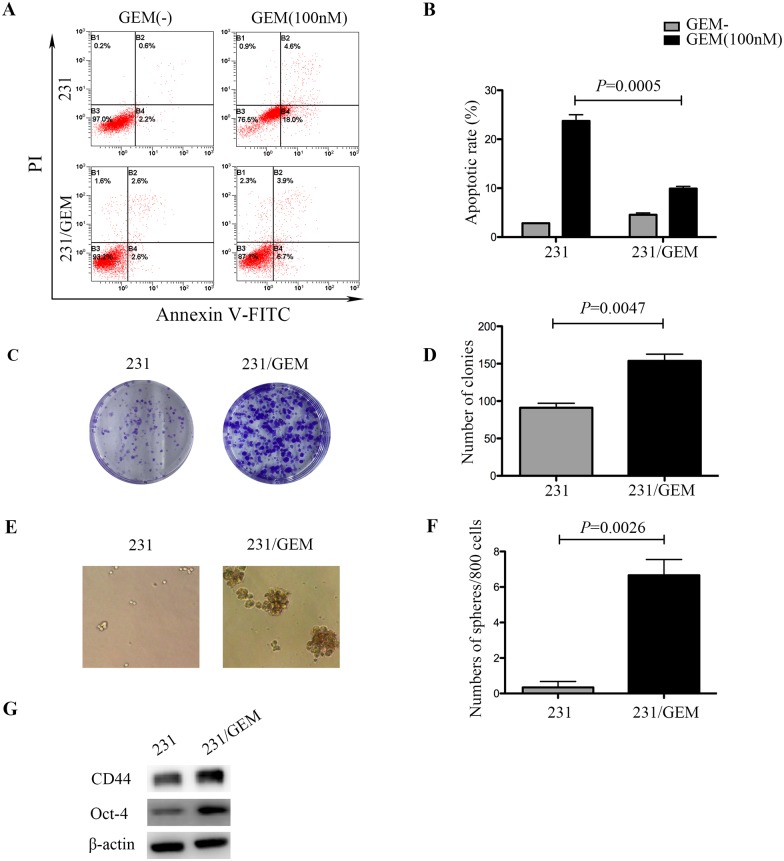
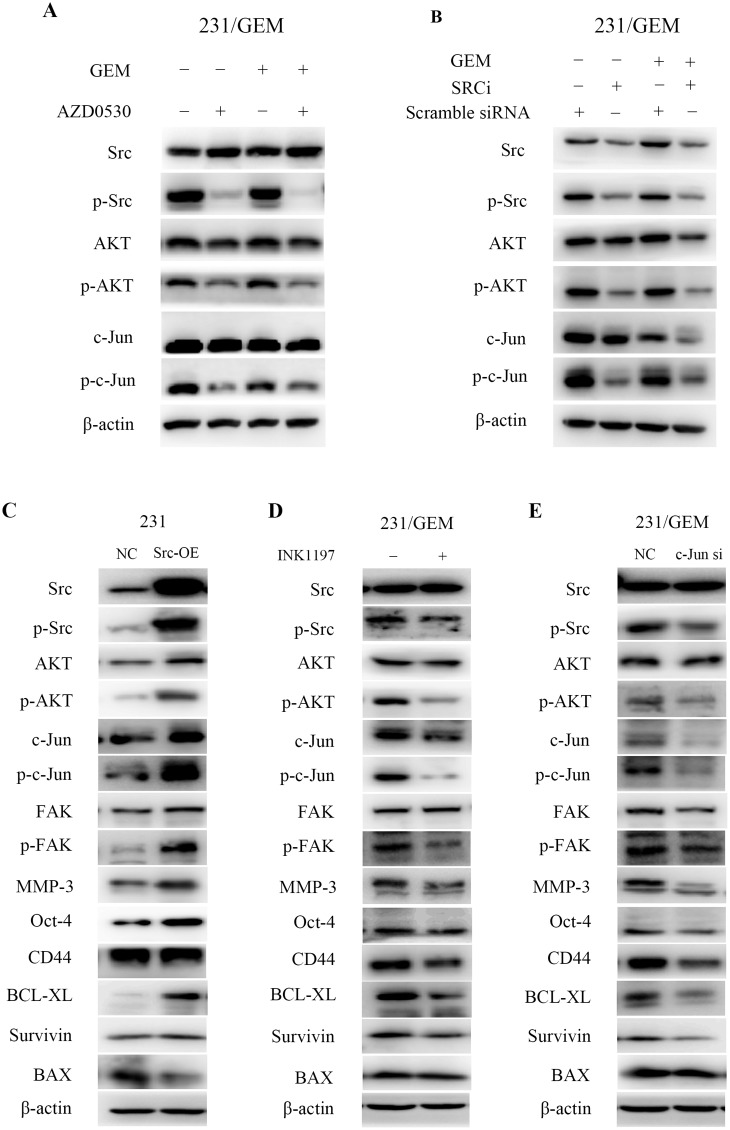
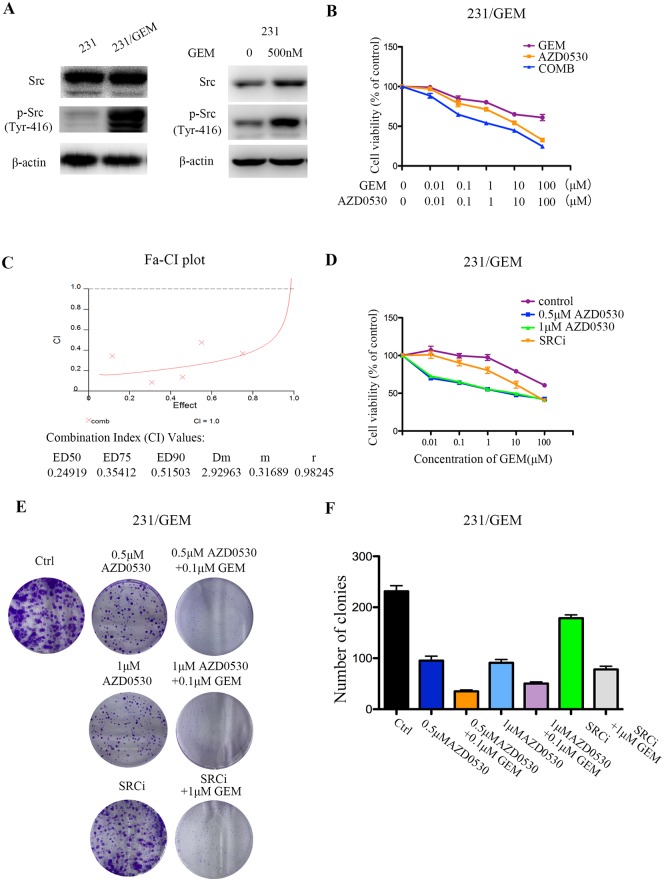
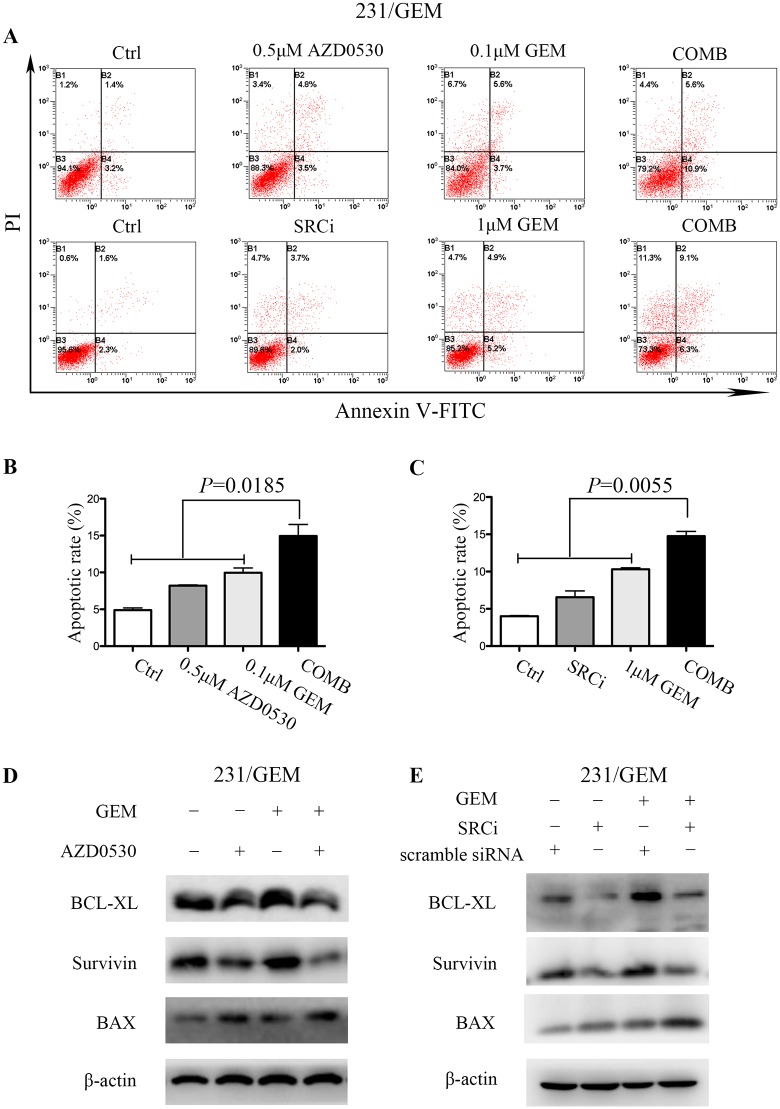
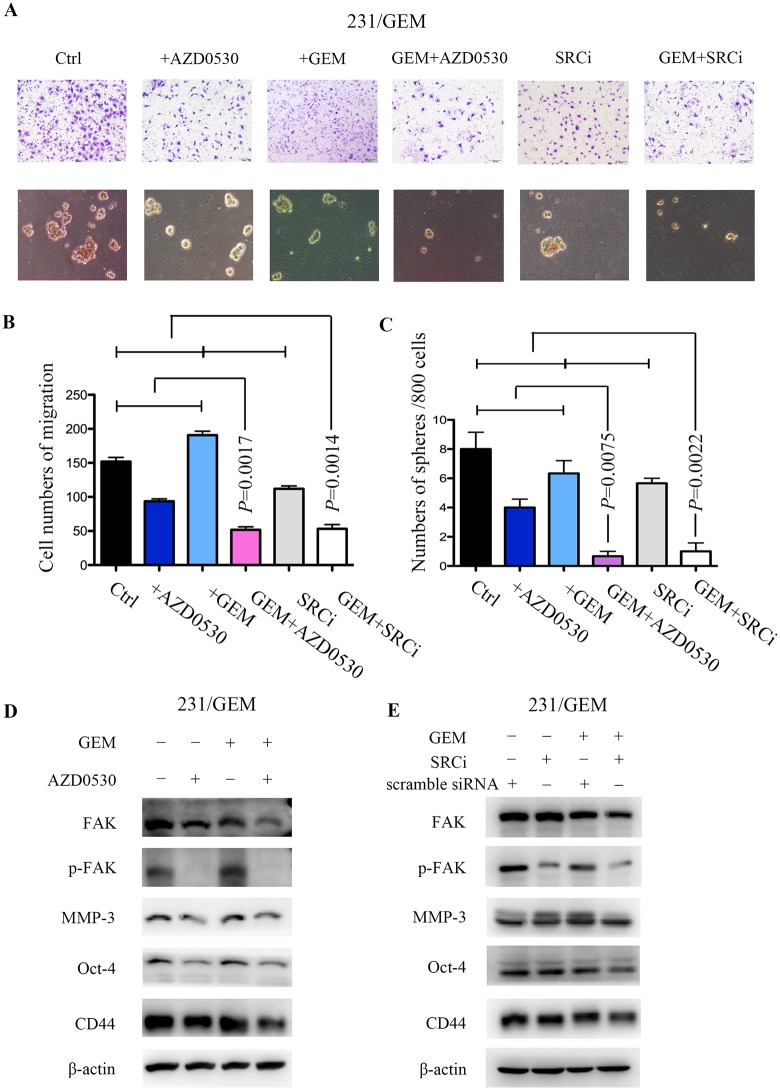
By using colony formation, sphere forming, flow cytometry, cell counting kit-8 and transwell assays, 231/GEM-res (gemcitabine-resistant) cell line, which was 10 times more resistant, was shown to have elevated drug tolerance, enhanced proliferative and self-renewal abilities, compared with its parental cells. Inhibition of src by both saracatinib (AZD0530) and siRNA could partially reverse gemcitabine resistance and attenuate resistance-associated anti-apoptosis, migration and stem cell capacities. In addition, the combination of src inhibition and gemcitabine had synergistic antitumor effects. Western blot analysis revealed up-regulation of pro-apoptotic protein BAX, along with the down-regulation of anti-apoptotic proteins (BCL-XL, Survivin), migration associated proteins (p-FAK, MMP-3) and cancer stem cell (CSC) markers (CD44, Oct-4), which was probably mediated by AKT/c-Jun pathway.
In highly gemcitabine-resistant 231 cells, src inhibition can synergize with gemcitabine, reverse drug resistance, inhibit tumor growth/metastasis/stemness of cancer stem cells, possibly via the AKT/c-Jun pathway.
基于吉西他滨的化疗仍然是转移性乳腺癌治疗的标准方法之一。然而,对吉西他滨的内在和获得性耐药不可避免地会出现。本研究的目的是评估src抑制与吉西他滨联合应用于吉西他滨耐药乳腺癌细胞的疗效。
通过集落形成、成球、流式细胞术、细胞计数试剂盒-8和Transwell实验,结果显示,与亲代细胞相比,耐药性高10倍的231/GEM-res(吉西他滨耐药)细胞系具有更高的耐药性、更强的增殖和自我更新能力。萨拉卡替尼(AZD0530)和小干扰RNA对src的抑制均可部分逆转吉西他滨耐药性,并减弱与耐药相关的抗凋亡、迁移和干细胞能力。此外,src抑制与吉西他滨联合应用具有协同抗肿瘤作用。蛋白质免疫印迹分析显示,促凋亡蛋白BAX上调,同时抗凋亡蛋白(BCL-XL、Survivin)、迁移相关蛋白(p-FAK、MMP-3)和癌症干细胞(CSC)标志物(CD44、Oct-4)下调,这可能是由AKT/c-Jun通路介导的。
在高度耐吉西他滨的231细胞中,src抑制可与吉西他滨协同作用,逆转耐药性,抑制肿瘤生长/转移/癌症干细胞干性,可能是通过AKT/c-Jun通路实现的。