Zhang Zili, Zhao Shifeng, Yao Zhen, Wang Ling, Shao Jiangjuan, Chen Anping, Zhang Feng, Zheng Shizhong
Department of Pharmacology, College of Pharmacy, Nanjing University of Chinese Medicine, Nanjing 210023, PR China.
Department of Pharmacy, College of Pharmacy, Nanjing University of Chinese Medicine, Nanjing 210023, PR China.
Redox Biol. 2017 Apr;11:322-334. doi: 10.1016/j.redox.2016.12.021. Epub 2016 Dec 21.
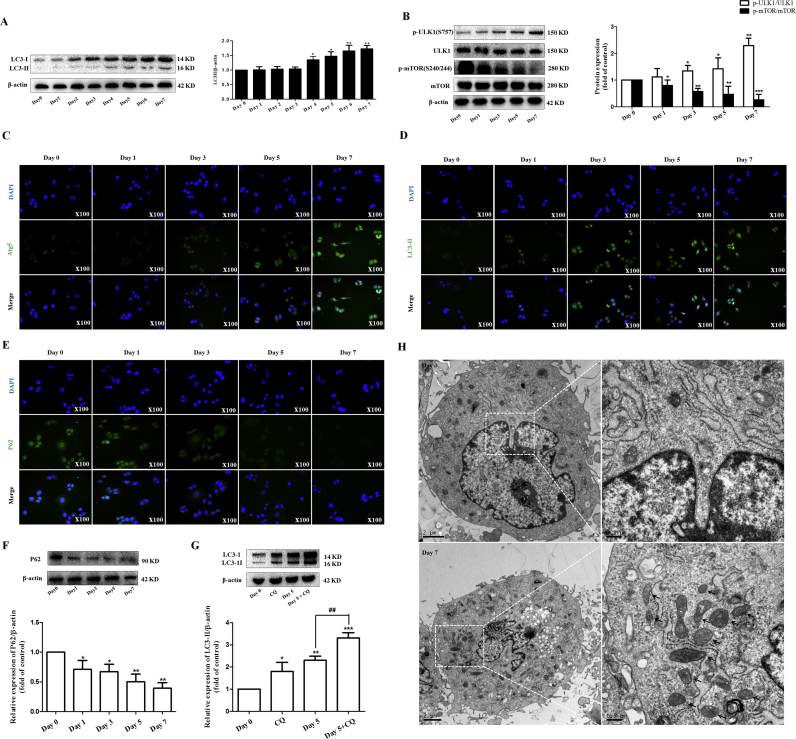
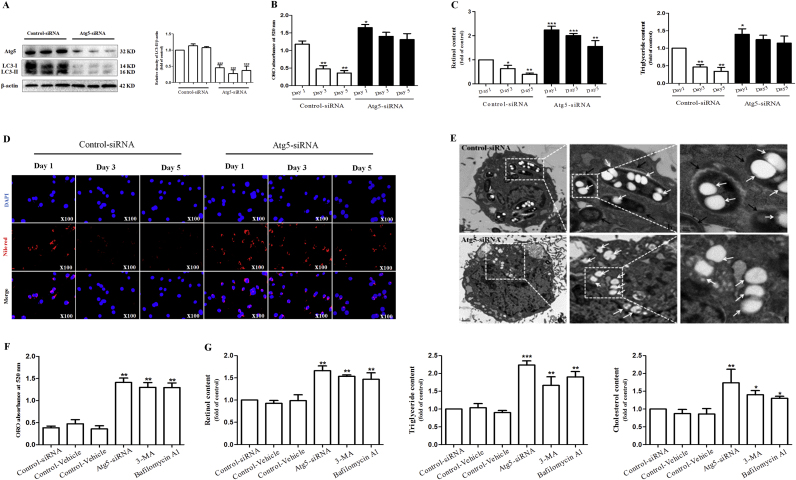
Activation of hepatic stellate cells (HSCs) is a pivotal event in liver fibrosis, characterized by dramatic disappearance of lipid droplets (LDs). Although LD disappearance has long been considered one of the hallmarks of HSC activation, the underlying molecular mechanisms are largely unknown. In this study, we sought to investigate the role of autophagy in the process of LD disappearance, and to further examine the underlying mechanisms in this molecular context. We found that LD disappearance during HSC activation was associated with a coordinate increase in autophagy. Inhibition or depletion of autophagy by Atg5 siRNA impaired LD disappearance of quiescent HSCs, and also restored lipocyte phenotype of activated HSCs. In contrast, induction of autophagy by Atg5 plasmid accelerated LD loss of quiescent HSCs. Importantly, our study also identified a crucial role for reactive oxygen species (ROS) in the facilitation of autophagy activation. Antioxidants, such as glutathione and N-acetyl cysteine, significantly abrogated ROS production, and in turn, prevented autophagosome generation and autophagic flux during HSC activation. Besides, we found that HSC activation triggered Rab25 overexpression, and promoted the combination of Rab25 and PI3KCIII, which direct autophagy to recognize, wrap and degrade LDs. Down-regulation of Rab25 activity, using Rab25 siRNA, blocked the target recognition of autophagy on LDs, and inhibited LD disappearance of quiescent HSCs. Moreover, the scavenging of excessive ROS could disrupt the interaction between autophagy and Rab25, and increase intracellular lipid content. Overall, these results provide novel implications to reveal the molecular mechanism of LD disappearance during HSC activation, and also identify ROS-Rab25-dependent autophagy as a potential target for the treatment of liver fibrosis.
肝星状细胞(HSCs)的激活是肝纤维化中的关键事件,其特征是脂滴(LDs)显著消失。尽管长期以来LD消失一直被认为是HSC激活的标志之一,但其潜在的分子机制在很大程度上尚不清楚。在本研究中,我们试图探究自噬在LD消失过程中的作用,并在这一分子背景下进一步研究其潜在机制。我们发现HSC激活过程中LD的消失与自噬的协同增加有关。用Atg5 siRNA抑制或消耗自噬会损害静止HSCs的LD消失,并且还能恢复激活的HSCs的脂肪细胞表型。相反,用Atg5质粒诱导自噬会加速静止HSCs的LD丢失。重要的是,我们的研究还确定了活性氧(ROS)在促进自噬激活中的关键作用。抗氧化剂,如谷胱甘肽和N-乙酰半胱氨酸,可显著消除ROS的产生,进而在HSC激活过程中阻止自噬体的生成和自噬流。此外,我们发现HSC激活会触发Rab25的过表达,并促进Rab25与PI3KCIII的结合,从而引导自噬识别、包裹和降解LDs。使用Rab25 siRNA下调Rab25活性会阻断自噬对LDs的靶向识别,并抑制静止HSCs的LD消失。此外,清除过量的ROS会破坏自噬与Rab25之间的相互作用,并增加细胞内脂质含量。总体而言,这些结果为揭示HSC激活过程中LD消失的分子机制提供了新的启示,并且还确定了ROS-Rab25依赖性自噬作为肝纤维化治疗的潜在靶点。