Jarocki Michał, Turek Kacper, Saczko Jolanta, Tarek Mounir, Kulbacka Julita
University Clinical Hospital, Wroclaw Medical University, Wroclaw, Poland.
Provincial Specialist Hospital, Wroclaw, Poland.
Cell Death Discov. 2024 Oct 30;10(1):460. doi: 10.1038/s41420-024-02224-8.
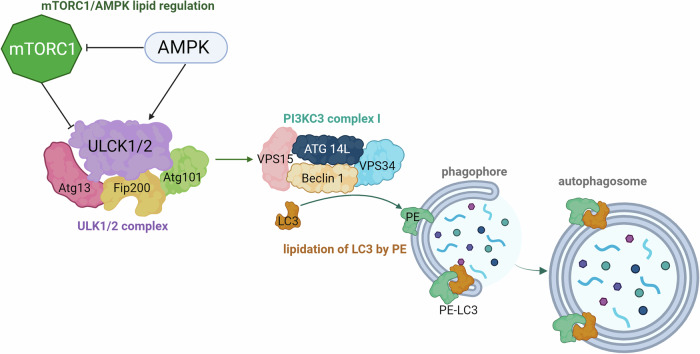
Autophagy is a molecular process essential for maintaining cellular homeostasis, with its impairment or dysregulation linked to the progression of various diseases in mammals. Specific lipids, including phosphoinositides, sphingolipids, and oxysterols, play pivotal roles in inducing and regulating autophagy, highlighting their significance in this intricate process. This review focuses on the critical involvement of these lipids in autophagy and lipophagy, providing a comprehensive overview of the current understanding of their functions. Moreover, we delve into how abnormalities in autophagy, influenced by these lipids, contribute to the pathogenesis of various diseases. These include age-related conditions such as cardiovascular diseases, neurodegenerative disorders, type 2 diabetes, and certain cancers, as well as inflammatory and liver diseases, skeletal muscle pathologies and age-related macular degeneration (AMD). This review aims to highlight function of lipids and their potential as therapeutic targets in treating diverse human pathologies by elucidating the specific roles of phosphoinositides, sphingolipids, and oxysterols in autophagy.
自噬是维持细胞内稳态所必需的分子过程,其功能受损或失调与哺乳动物多种疾病的进展相关。特定脂质,包括磷酸肌醇、鞘脂和氧化甾醇,在诱导和调节自噬中起关键作用,凸显了它们在这一复杂过程中的重要性。本综述聚焦于这些脂质在自噬和脂质自噬中的关键作用,全面概述了目前对其功能的理解。此外,我们深入探讨了受这些脂质影响的自噬异常如何导致各种疾病的发病机制。这些疾病包括与年龄相关的病症,如心血管疾病、神经退行性疾病、2型糖尿病和某些癌症,以及炎症性疾病、肝脏疾病、骨骼肌病变和年龄相关性黄斑变性(AMD)。本综述旨在通过阐明磷酸肌醇、鞘脂和氧化甾醇在自噬中的具体作用,突出脂质的功能及其作为治疗多种人类疾病的潜在靶点的可能性。