Kecik Defne
Department of Orthodontics, Faculty of Dentistry, Istanbul Hospital, Başkent University, Istanbul, Turkiye.
Eur J Dent. 2016 Oct-Dec;10(4):512-516. doi: 10.4103/1305-7456.195163.
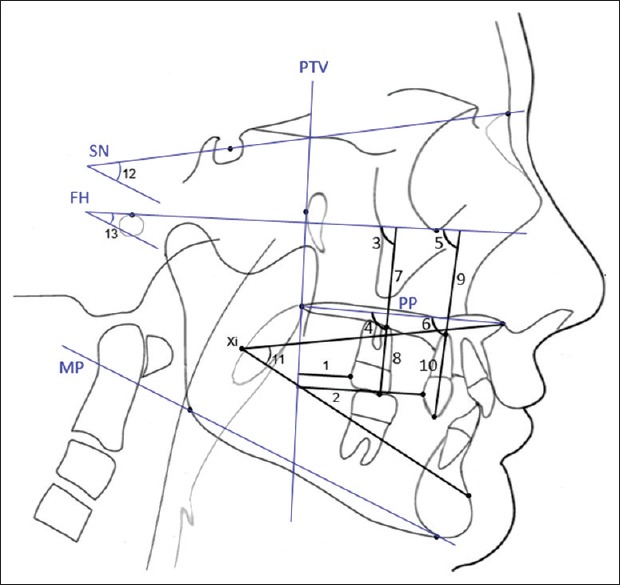
The purpose of this study was to compare the dental and skeletal effects of canine retraction using conventional anchorage reinforcement systems and comparing them with the usage of TADs.
The sample consisted of 50 patients having Class I malocclusions with bimaxillary protrusion indicated for first premolar extraction, and allocated into two groups. The first group consisted of 25 patients with a mean age of 18,7 years (min:14, max:22 years, 16 girls and 9 boys) that TADs were applied as an anchorage mechanic between attached gingiva of upper second premolar and first molar teeth. The second group consisted of 25 patients with a mean age of 19,4 years (min:15, max:23 years, 14 girls and 11 boys) that conventional molar anchorage with Transpalatal arch (TPA) was applied for the anchorage mechanics against canine retraction.
The results showed that mean mesial movement and the tipping of the first molars in TAD group between T0 - T1 were insignificant ( > 0,05), however in the TPA group were significant (<0,01). Vertical movement of the molars were not significant when two groups were compared (>0,05).
Although TPA is a useful appliance, it doesn't provide an effective anchorage control on anteroposterior movement maxillary first molar teeth concerning first premolar extraction treatment. TADs are more convenient to provide absolute anchorage during maxillary canine retraction in contrast to transpalatal arch.
本研究旨在比较使用传统支抗增强系统内收尖牙的牙齿和骨骼效应,并将其与使用微型钛钉种植体(TADs)的情况进行比较。
样本包括50例安氏I类双颌前突错颌畸形患者,均需拔除第一前磨牙,并分为两组。第一组有25例患者,平均年龄18.7岁(最小14岁,最大22岁,16名女孩和9名男孩),在其上颌第二前磨牙和第一磨牙的附着龈之间应用TADs作为支抗装置。第二组有25例患者,平均年龄19.4岁(最小15岁,最大23岁,14名女孩和11名男孩),采用横腭杆(TPA)的传统磨牙支抗来对抗尖牙内收。
结果显示,TAD组在T0 - T1期间第一磨牙的平均近中移动和倾斜不显著(>0.05),然而在TPA组中则显著(<0.01)。两组磨牙的垂直移动比较无显著差异(>0.05)。
尽管TPA是一种有用的矫治器,但在涉及第一前磨牙拔除治疗中,它对上颌第一磨牙的前后向移动并不能提供有效的支抗控制。与横腭杆相比,在进行上颌尖牙内收时,TADs更便于提供绝对支抗。