Winship Lawrence J, Rounds Caleb, Hepler Peter K
School of Natural Science, Hampshire College, Amherst, MA 01002, USA.
Biology Department, University of Massachusetts, Amherst, MA 01003, USA.
Plants (Basel). 2016 Dec 30;6(1):3. doi: 10.3390/plants6010003.
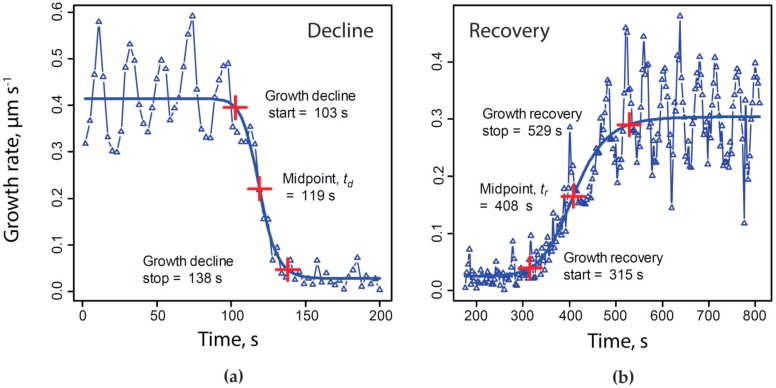
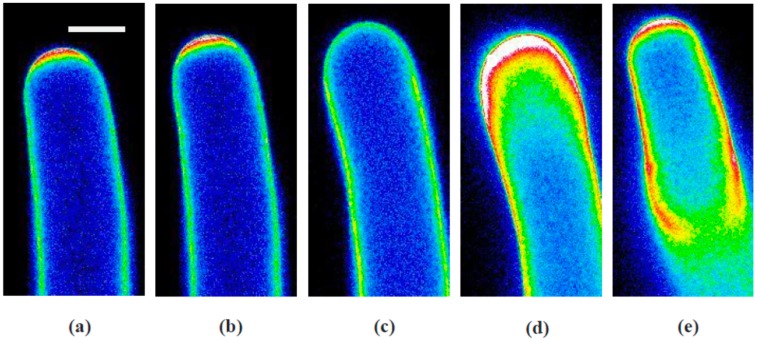
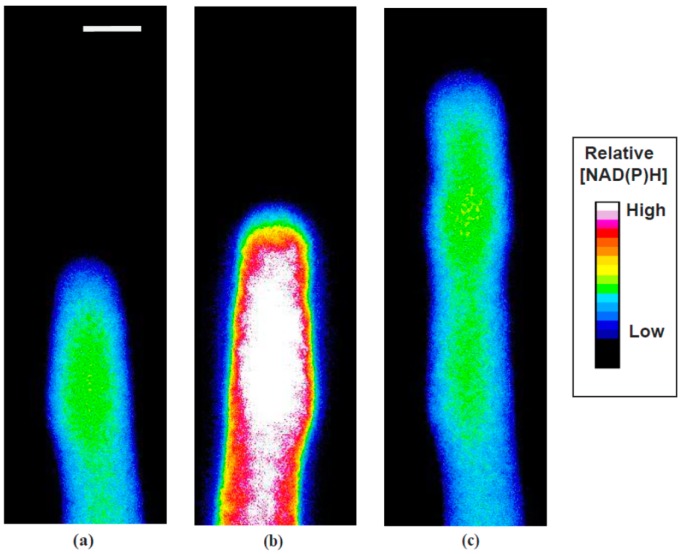
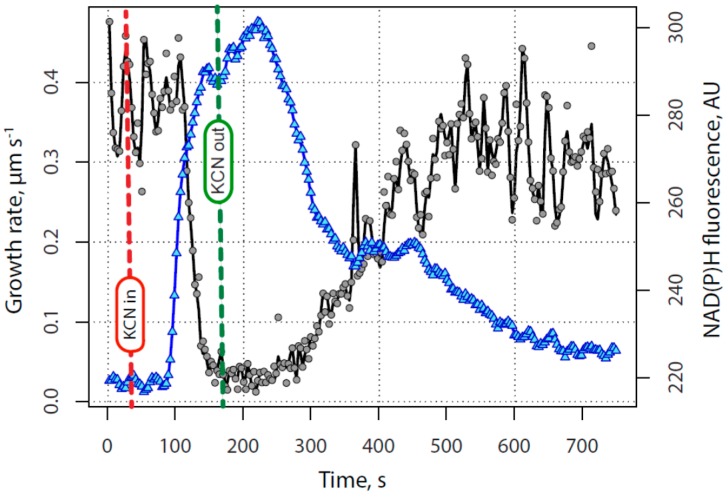
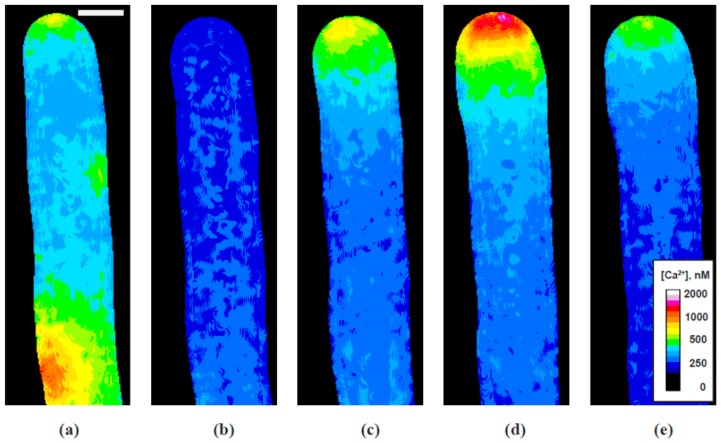
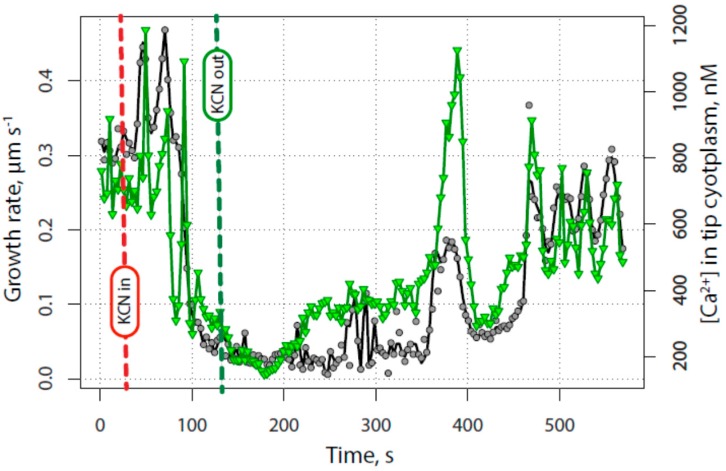
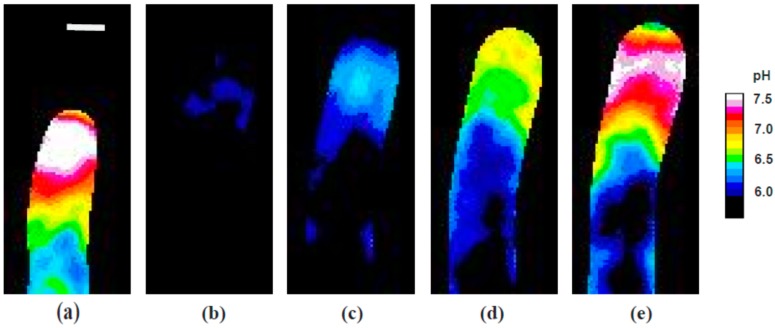
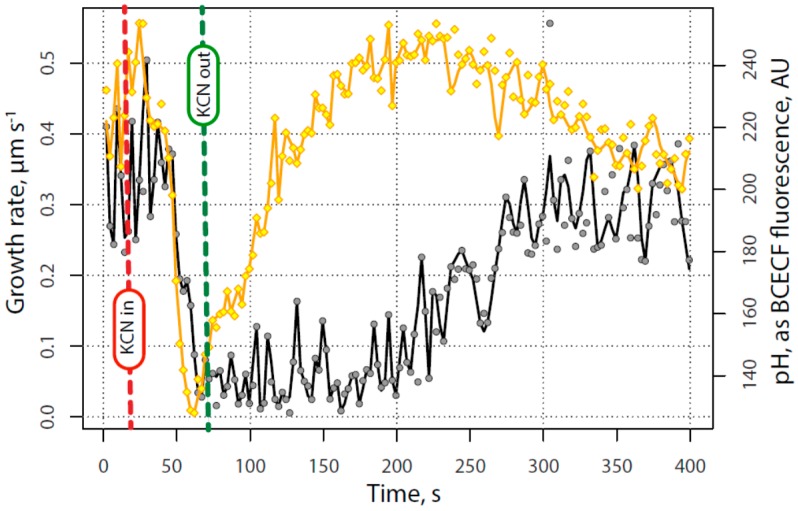
Pollen tubes grow by spatially and temporally regulated expansion of new material secreted into the cell wall at the tip of the tube. A complex web of interactions among cellular components, ions and small molecule provides dynamic control of localized expansion and secretion. Cross-correlation studies on oscillating lily ( Wallace) pollen tubes showed that an increase in intracellular calcium follows an increase in growth, whereas the increase in the alkaline band and in secretion both anticipate the increase in growth rate. Calcium, as a follower, is unlikely to be a stimulator of growth, whereas the alkaline band, as a leader, may be an activator. To gain further insight herein we reversibly inhibited growth with potassium cyanide (KCN) and followed the re-establishment of calcium, pH and secretion patterns as growth resumed. While KCN markedly slows growth and causes the associated gradients of calcium and pH to sharply decline, its removal allows growth and vital processes to fully recover. The calcium gradient reappears before growth restarts; however, it is preceded by both the alkaline band and secretion, in which the alkaline band is slightly advanced over secretion. Thus the pH gradient, rather than the tip-focused calcium gradient, may regulate pollen tube growth.
花粉管通过在管尖分泌到细胞壁中的新物质在空间和时间上的调节性扩张而生长。细胞成分、离子和小分子之间复杂的相互作用网络为局部扩张和分泌提供动态控制。对振荡的百合(华莱士)花粉管的互相关研究表明,细胞内钙的增加跟随生长的增加,而碱性带和分泌的增加都先于生长速率的增加。钙作为跟随者,不太可能是生长的刺激物,而碱性带作为领导者,可能是一种激活剂。为了进一步深入了解这一点,我们用氰化钾(KCN)可逆地抑制生长,并随着生长恢复跟踪钙、pH值和分泌模式的重新建立。虽然KCN显著减缓生长并导致相关的钙和pH梯度急剧下降,但其去除可使生长和生命过程完全恢复。钙梯度在生长重新开始之前重新出现;然而,它之前既有碱性带又有分泌,其中碱性带比分泌稍微提前出现。因此,pH梯度而非顶端聚焦的钙梯度可能调节花粉管生长。