Meng Ling-Zhao, Fang Ju-Gao, Sun Jing-Wu, Yang Fan, Wei Yong-Xiang
Department of Otolaryngology-Head and Neck Surgery, Beijing Anzhen Hospital, Capital Medical University, Beijing 100029, China.
Department of Otolaryngology-Head and Neck Surgery, Beijing Tongren Hospital, Capital Medical University, Beijing 100730, China.
Biomed Res Int. 2016;2016:1095710. doi: 10.1155/2016/1095710. Epub 2016 Dec 1.
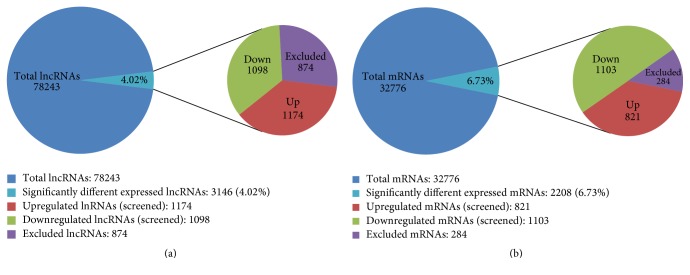
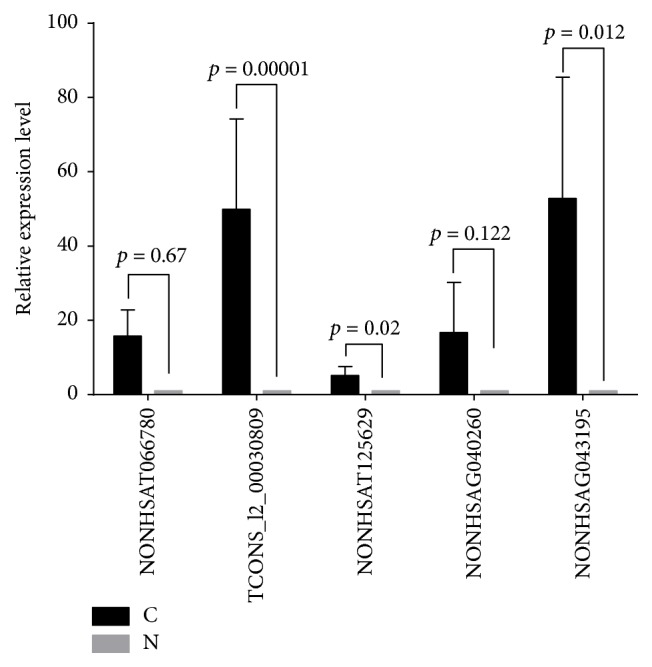
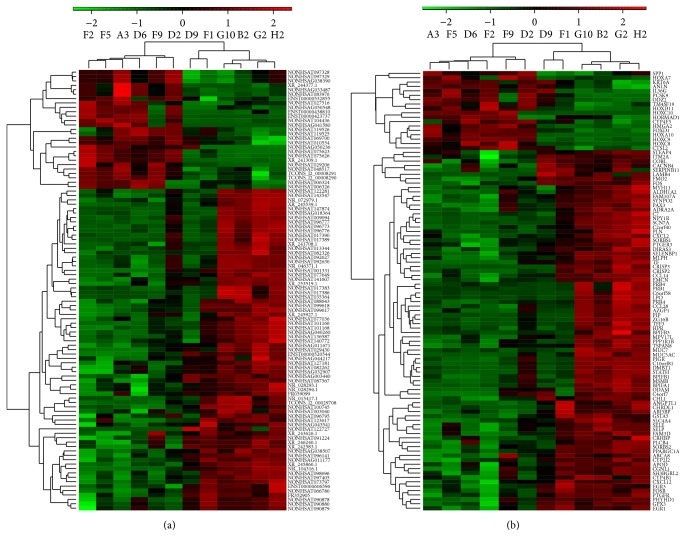
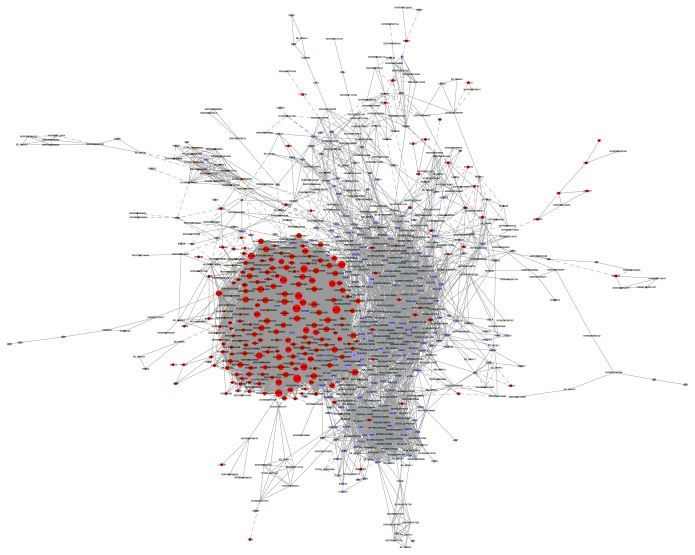
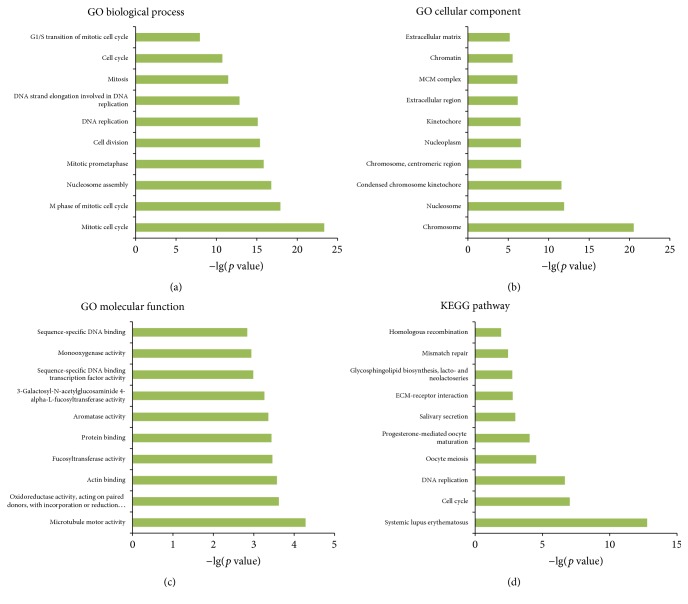
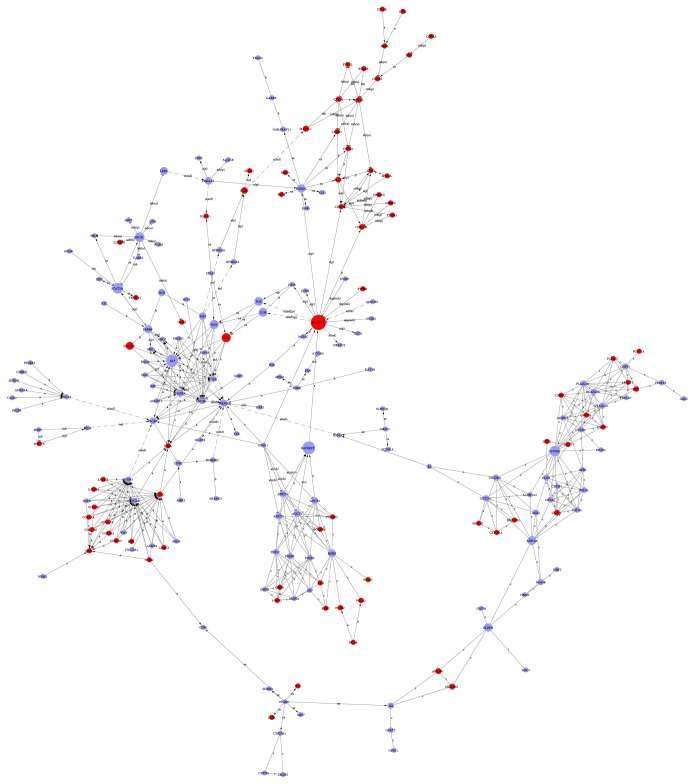
This study aimed to identify aberrantly expressed long noncoding RNAs (lncRNAs) profile of sinonasal squamous cell carcinoma (SSCC) and explore their potential functions. . We investigated lncRNA and mRNA expression in SSCC and paired adjacent noncancerous tissues obtained from 6 patients with microarrays. Gene ontology (GO) analysis and pathway analysis were utilized to investigate the gene function. Gene signal-network and lncRNA-mRNA network were depicted. Quantitative real-time polymerase chain reaction (qRT-PCR) was utilized to validate 5 lncRNAs in a second set of paired SSCC and adjacent noncancerous tissues obtained from 22 additional patients. We identified significantly differentially expressed lncRNAs ( = 3146) and mRNAs ( = 2208) in SSCC relative to noncancerous tissues. The GO annotation indicated that there are some core gene products that may be attributed to the progress of SSCC. The pathway analysis identified many pathways associated with cancer. The results of lncRNA-mRNA network and gene signal-network implied some core lncRNAs/mRNAs might play important roles in SSCC pathogenesis. The results of qRT-PCR showed that all of the 5 lncRNAs were differentially expressed and consistent with the microarray results. . Our study is the first screening and analysis of lncRNAs expression profile in SSCC and may offer new insights into pathogenesis of this disease.
本研究旨在鉴定鼻窦鳞状细胞癌(SSCC)中异常表达的长链非编码RNA(lncRNA)谱,并探索其潜在功能。我们利用微阵列技术研究了6例患者的SSCC组织及其配对的相邻非癌组织中的lncRNA和mRNA表达情况。运用基因本体(GO)分析和通路分析来研究基因功能,并构建基因信号网络和lncRNA-mRNA网络。利用定量实时聚合酶链反应(qRT-PCR)对另外22例患者的配对SSCC组织和相邻非癌组织中的5种lncRNA进行验证。相对于非癌组织,我们在SSCC中鉴定出显著差异表达的lncRNA(n = 3146)和mRNA(n = 2208)。GO注释表明存在一些可能与SSCC进展相关的核心基因产物。通路分析确定了许多与癌症相关的通路。lncRNA-mRNA网络和基因信号网络的结果表明,一些核心lncRNA/mRNA可能在SSCC发病机制中发挥重要作用。qRT-PCR结果显示,所有5种lncRNA均差异表达,且与微阵列结果一致。我们的研究首次对SSCC中的lncRNA表达谱进行了筛选和分析,可能为该疾病的发病机制提供新的见解。