State Key Laboratory of Bioactive Substances and Functions of Natural Medicines, Institute of Materia Medica, Chinese Academy of Medical Sciences and Peking Union Medical College, Beijing 100050, China.
Jiuzhang Biochemical Engineering Science and Technology Development Co., Ltd., Chengdu, Sichuan 610041, China.
Sci Rep. 2017 Jan 3;7:39011. doi: 10.1038/srep39011.
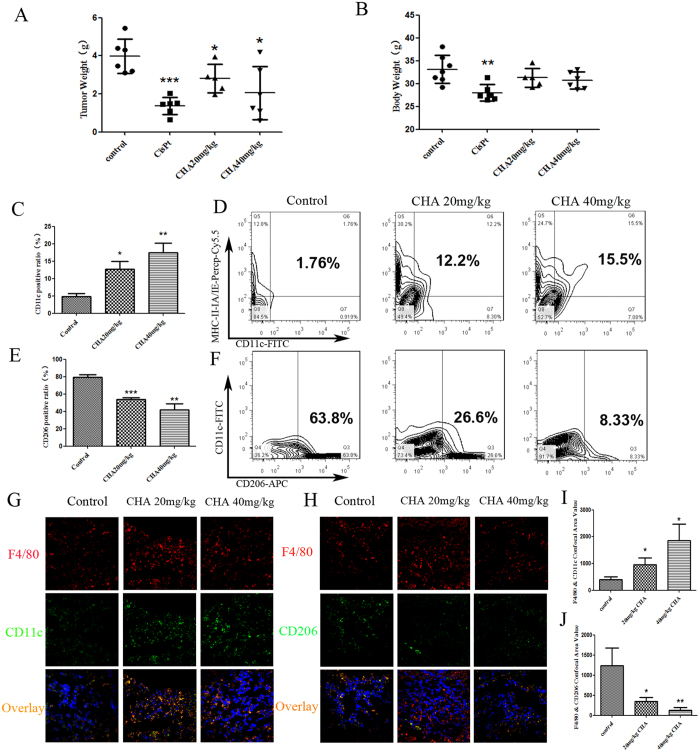
Glioblastoma is an aggressive tumor that is associated with distinctive infiltrating microglia/macrophages populations. Previous studies demonstrated that chlorogenic acid (5-caffeoylquinic acid, CHA), a phenolic compound with low molecular weight, has an anti-tumor effect in multiple malignant tumors. In the present study, we focused on the macrophage polarization to investigate the molecular mechanisms behind the anti-glioma response of CHA in vitro and in vivo. We found that CHA treatment increased the expression of M1 markers induced by LPS/IFNγ, including iNOS, MHC II (I-A/I-E subregions) and CD11c, and reduced the expression of M2 markers Arg and CD206 induced by IL-4, resulting in promoting the production of apoptotic-like cancer cells and inhibiting the growth of tumor cells by co-culture experiments. The activations of STAT1 and STAT6, which are two crucial signaling events in M1 and M2-polarization, were significantly promoted and suppressed by CHA in macrophages, respectively. Furthermore, In G422 xenograft mice, CHA increased the proportion of CD11c-positive M1 macrophages and decreased the distribution of CD206-positive M2 macrophages in tumor tissue, consistent with the reduction of tumor weight observed in CHA-treated mice. Overall these findings indicated CHA as a potential therapeutic approach to reduce glioma growth through promoting M1-polarized macrophage and inhibiting M2 phenotypic macrophage.
胶质母细胞瘤是一种侵袭性肿瘤,与独特的浸润性小胶质细胞/巨噬细胞群体有关。先前的研究表明,绿原酸(5-咖啡酰奎尼酸,CHA)是一种具有低分子量的酚类化合物,在多种恶性肿瘤中具有抗肿瘤作用。在本研究中,我们专注于巨噬细胞极化,以研究 CHA 在体外和体内抗神经胶质瘤反应的分子机制。我们发现 CHA 处理增加了 LPS/IFNγ诱导的 M1 标志物的表达,包括 iNOS、MHC II(I-A/I-E 亚区)和 CD11c,并降低了由 IL-4 诱导的 M2 标志物 Arg 和 CD206 的表达,从而促进了凋亡样癌细胞的产生,并通过共培养实验抑制了肿瘤细胞的生长。在巨噬细胞中,CHA 分别显著促进和抑制了 STAT1 和 STAT6 的激活,这是 M1 和 M2 极化中的两个关键信号事件。此外,在 G422 异种移植小鼠中,CHA 增加了肿瘤组织中 CD11c 阳性 M1 巨噬细胞的比例,并减少了 CD206 阳性 M2 巨噬细胞的分布,与 CHA 处理小鼠中观察到的肿瘤重量减轻一致。总体而言,这些发现表明 CHA 可能是一种通过促进 M1 极化的巨噬细胞和抑制 M2 表型的巨噬细胞来减少神经胶质瘤生长的治疗方法。