Mithal Leena B, Palac Hannah L, Yogev Ram, Ernst Linda M, Mestan Karen K
Department of Pediatrics, Division of Infectious Diseases, Northwestern University Feinberg School of Medicine, Chicago, Illinois, United States of America.
Department of Preventive Medicine, Biostatistics Collaboration Center, Northwestern University Feinberg School of Medicine, Chicago, Illinois, United States of America.
PLoS One. 2017 Jan 3;12(1):e0168677. doi: 10.1371/journal.pone.0168677. eCollection 2017.
Early onset sepsis (EOS) is a major cause of morbidity and mortality in preterm infants, yet diagnosis remains inadequate resulting in missed cases or prolonged empiric antibiotics with adverse consequences. Evaluation of acute phase reactant (APR) biomarkers in umbilical cord blood at birth may improve EOS detection in preterm infants with intrauterine infection.
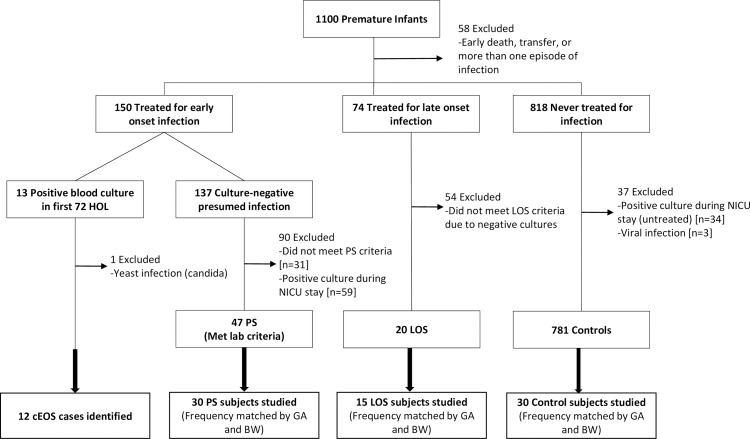
In this nested case-control study, infants (29.7 weeks gestation, IQR: 27.7-32.2) were identified from a longitudinal cohort with archived cord blood and placental histopathology. Patients were categorized using culture, laboratory, clinical, and antibiotic treatment data into sepsis groups: confirmed sepsis (cEOS, n = 12); presumed sepsis (PS, n = 30); and no sepsis (controls, n = 30). Nine APRs were measured in duplicate from cord blood using commercially available multiplex immunoassays (Bio-Plex Pro™). In addition, placental histopathologic data were linked to biomarker results.
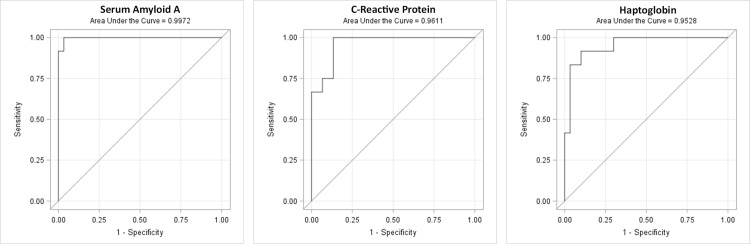
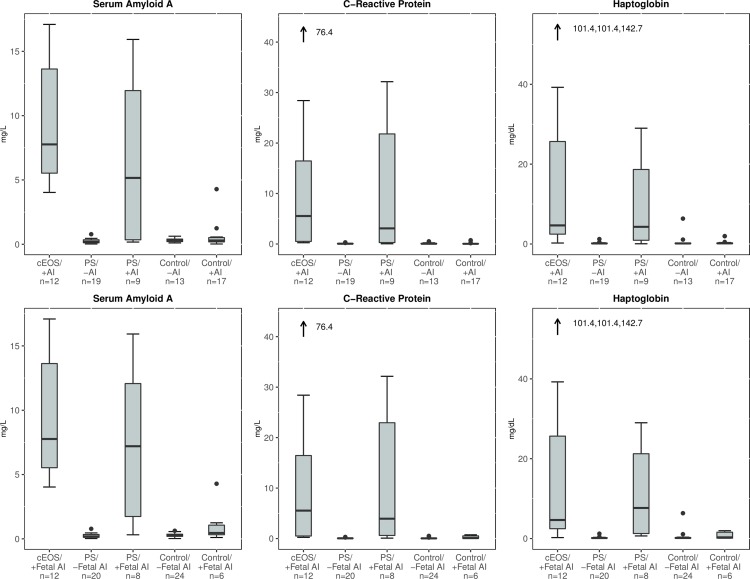
cEOS organisms were Escherichia coli, Streptococcus agalactiae, Proteus mirabilis, Haemophilus influenzae and Listeria monocytogenes. C-reactive protein (CRP), serum amyloid A (SAA), haptoglobin (Hp), serum amyloid P and ferritin were significantly elevated in cEOS compared to controls (p<0.01). SAA, CRP, and Hp were elevated in cEOS but not in PS (p<0.01) and had AUCs of 99%, 96%, and 95% respectively in predicting cEOS. Regression analysis revealed robust associations of SAA, CRP, and Hp with EOS after adjustment for covariates. Procalcitonin, fibrinogen, α-2-macroglobulin and tissue plasminogen activator were not significantly different across groups. Placental acute inflammation was associated with APR elevation and was present in all cEOS, 9 PS, and 17 control infants.
This study shows that certain APRs are elevated in cord blood of premature infants with EOS of intrauterine origin. SAA, CRP, and Hp at birth have potential diagnostic utility for risk stratification and identification of infants with EOS.
早发型败血症(EOS)是早产儿发病和死亡的主要原因,但诊断仍不充分,导致漏诊或经验性使用抗生素时间延长并产生不良后果。评估出生时脐血中的急性期反应物(APR)生物标志物可能会改善对宫内感染早产儿的EOS检测。
在这项巢式病例对照研究中,从一个保存了脐血和胎盘组织病理学资料的纵向队列中识别出婴儿(孕龄29.7周,四分位间距:27.7 - 32.2周)。根据培养、实验室、临床和抗生素治疗数据将患者分为败血症组:确诊败血症(cEOS,n = 12);疑似败血症(PS,n = 30);以及无败血症(对照组,n = 30)。使用市售的多重免疫分析方法(Bio-Plex Pro™)对脐血中的九种APR进行重复测量。此外,将胎盘组织病理学数据与生物标志物结果相关联。
cEOS的病原体为大肠杆菌、无乳链球菌、奇异变形杆菌、流感嗜血杆菌和单核细胞增生李斯特菌。与对照组相比,cEOS中的C反应蛋白(CRP)、血清淀粉样蛋白A(SAA)、触珠蛋白(Hp)、血清淀粉样蛋白P和铁蛋白显著升高(p<0.01)。SAA、CRP和Hp在cEOS中升高,但在PS中未升高(p<0.01),在预测cEOS时的曲线下面积分别为99%、96%和95%。回归分析显示,在调整协变量后,SAA、CRP和Hp与EOS有显著关联。降钙素原、纤维蛋白原、α-2-巨球蛋白和组织纤溶酶原激活剂在各组之间无显著差异。胎盘急性炎症与APR升高相关,所有cEOS婴儿、9例PS婴儿和17例对照婴儿中均存在胎盘急性炎症。
本研究表明,宫内源性EOS早产儿的脐血中某些APR升高。出生时的SAA、CRP和Hp对EOS婴儿的风险分层和识别具有潜在的诊断价值。