Zastrow Diane B, Zornio Patricia A, Dries Annika, Kohler Jennefer, Fernandez Liliana, Waggott Daryl, Walkiewicz Magdalena, Eng Christine M, Manning Melanie A, Farrelly Ellyn, Fisher Paul G, Ashley Euan A, Bernstein Jonathan A, Wheeler Matthew T
Stanford Center for Undiagnosed Diseases, Stanford University, Stanford, California 94305, USA.
Division of Cardiovascular Medicine, Stanford University, Stanford, California 94305, USA.
Cold Spring Harb Mol Case Stud. 2017 Jan;3(1):a001388. doi: 10.1101/mcs.a001388.
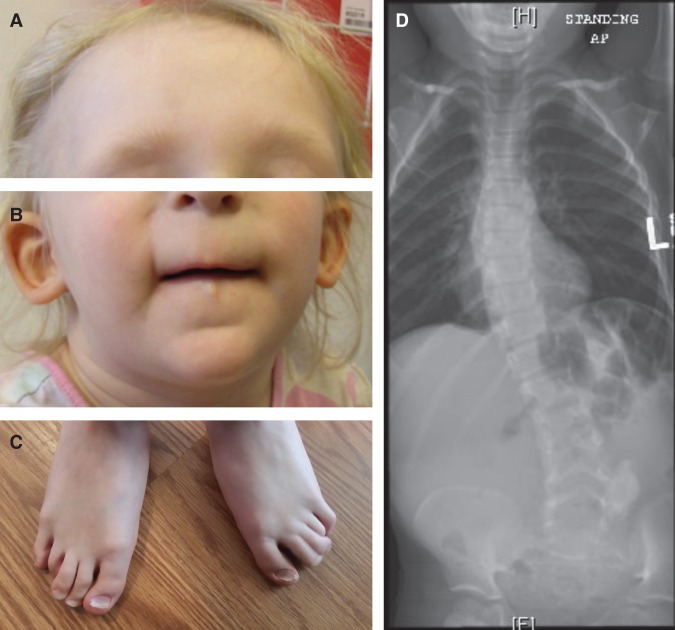
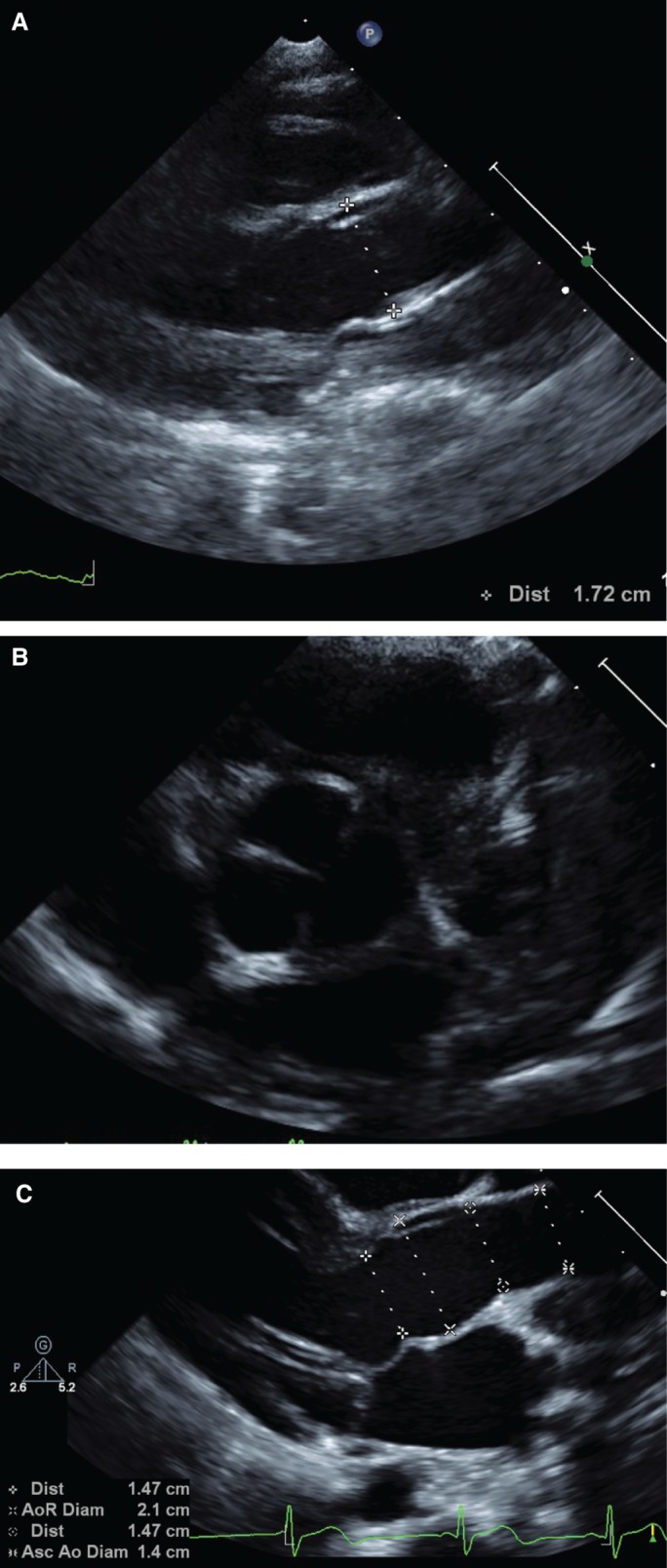
Here we describe a patient who presented with a history of congenital diaphragmatic hernia, inguinal hernia, and recurrent umbilical hernia. She also has joint laxity, hypotonia, and dysmorphic features. A unifying diagnosis was not identified based on her clinical phenotype. As part of her evaluation through the Undiagnosed Diseases Network, trio whole-exome sequencing was performed. Pathogenic variants in and were identified as causing two distinct autosomal dominant conditions, each with de novo inheritance. Fibrillin 1 ( mutations are associated with Marfan syndrome and a spectrum of similar phenotypes. mutations are associated with trichorhinophalangeal syndrome types I and III. Features of both conditions are evident in the patient reported here. Discrepant features of the conditions (e.g., stature) and the young age of the patient may have made a clinical diagnosis more difficult in the absence of exome-wide genetic testing.
在此,我们描述了一名患有先天性膈疝、腹股沟疝和复发性脐疝病史的患者。她还存在关节松弛、肌张力减退和畸形特征。基于其临床表型未确定统一诊断。作为通过未确诊疾病网络进行评估的一部分,进行了三联全外显子测序。在[基因名称1]和[基因名称2]中鉴定出致病变异,它们分别导致两种不同的常染色体显性疾病,均为新发遗传。原纤蛋白1(Fibrillin 1)([具体基因1])突变与马凡综合征及一系列相似表型相关。[具体基因2]突变与I型和III型毛发鼻指综合征相关。本文报道的患者中两种疾病的特征均很明显。在缺乏全外显子基因检测的情况下,这两种疾病的差异特征(如身高)以及患者的年轻年龄可能使临床诊断更加困难。