Clarke Charlene, Patterson Stuart James, Drewe Julian Ashley, van Helden Paul David, Miller Michele Ann, Parsons Sven David Charles
SAMRC Centre for TB Research; DST/NRF Centre of Excellence for Biomedical Tuberculosis Research; Division of Molecular Biology and Human Genetics, Faculty of Medicine and Health Sciences, Stellenbosch University, Cape Town, South Africa.
Veterinary Epidemiology, Economics and Public Health Group, Royal Veterinary College, Hawkshead Lane, North Mymms, Hertfordshire, AL9 7TA, UK.
BMC Vet Res. 2017 Jan 4;13(1):2. doi: 10.1186/s12917-016-0927-x.
Sensitive diagnostic tools are necessary for the detection of Mycobacterium suricattae infection in meerkats (Suricata suricatta) in order to more clearly understand the epidemiology of tuberculosis and the ecological consequences of the disease in this species. We therefore aimed to develop a cytokine release assay to measure antigen-specific cell-mediated immune responses of meerkats.
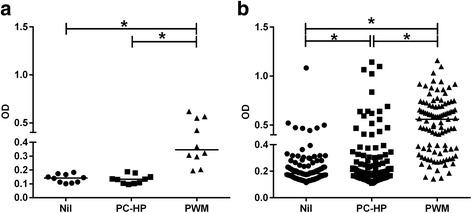
Enzyme-linked immunosorbent assays (ELISAs) were evaluated for the detection of interferon-gamma (IFN-γ) and IFN-γ inducible protein 10 (IP-10) in meerkat plasma. An IP-10 ELISA was selected to measure the release of this cytokine in whole blood in response to Bovigam® PC-HP Stimulating Antigen, a commercial peptide pool of M. bovis antigens. Using this protocol, captive meerkats with no known M. suricattae exposure (n = 10) were tested and results were used to define a diagnostic cut off value (mean plus 2 standard deviations). This IP-10 release assay (IPRA) was then evaluated in free-living meerkats with known M. suricattae exposure, categorized as having either a low, moderate or high risk of infection with this pathogen. In each category, respectively, 24.7%, 27.3% and 82.4% of animals tested IPRA-positive. The odds of an animal testing positive was 14.0 times greater for animals with a high risk of M. suricattae infection compared to animals with a low risk.
These results support the use of this assay as a measure of M. suricattae exposure in meerkat populations. Ongoing longitudinal studies aim to evaluate the value of the IPRA as a diagnostic test of M. suricattae infection in individual animals.
灵敏的诊断工具对于检测狐獴(南非狐)感染苏氏分枝杆菌是必要的,以便更清楚地了解结核病的流行病学以及该疾病在该物种中的生态后果。因此,我们旨在开发一种细胞因子释放检测方法,以测量狐獴的抗原特异性细胞介导免疫反应。
对酶联免疫吸附测定(ELISA)检测狐獴血浆中γ干扰素(IFN-γ)和IFN-γ诱导蛋白10(IP-10)进行了评估。选择一种IP-10 ELISA来测量全血中该细胞因子对Bovigam® PC-HP刺激抗原(一种牛分枝杆菌抗原的商业肽库)的反应释放量。使用该方案,对未接触过已知苏氏分枝杆菌的圈养狐獴(n = 10)进行检测,并将结果用于定义诊断临界值(平均值加2个标准差)。然后在已知接触过苏氏分枝杆菌的野生狐獴中评估这种IP-10释放检测(IPRA),这些狐獴被分类为感染该病原体的风险低、中或高。在每个类别中,分别有24.7%、27.3%和82.4%的动物IPRA检测呈阳性。与低风险动物相比,苏氏分枝杆菌感染风险高的动物检测呈阳性的几率高14.0倍。
这些结果支持使用该检测方法作为衡量狐獴群体中接触苏氏分枝杆菌的指标。正在进行的纵向研究旨在评估IPRA作为个体动物苏氏分枝杆菌感染诊断测试的价值。