Sun Daoyang, Li Shaohua, Niu Lixin, Reid Michael S, Zhang Yanlong, Jiang Cai-Zhong
Department of Landscape Architecture and Arts, Northwest A&F University, Yangling, Shaanxi 712100, China.
Department of Plant Sciences, University of California Davis, Davis, CA 95616, USA.
J Exp Bot. 2017 Feb 1;68(5):915-930. doi: 10.1093/jxb/erw490.
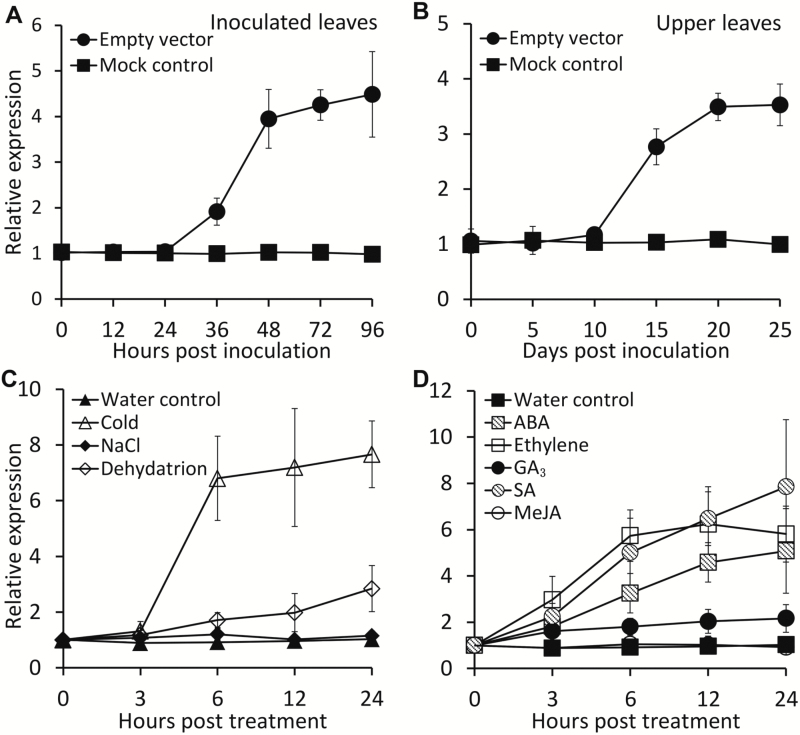
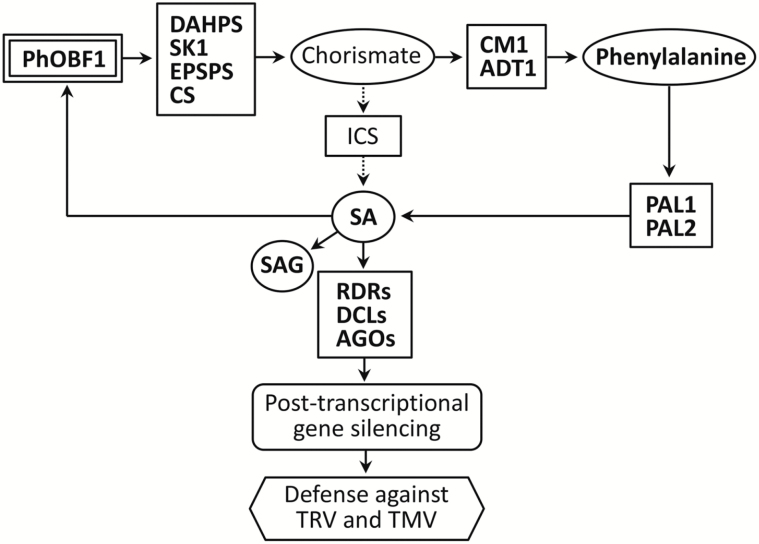
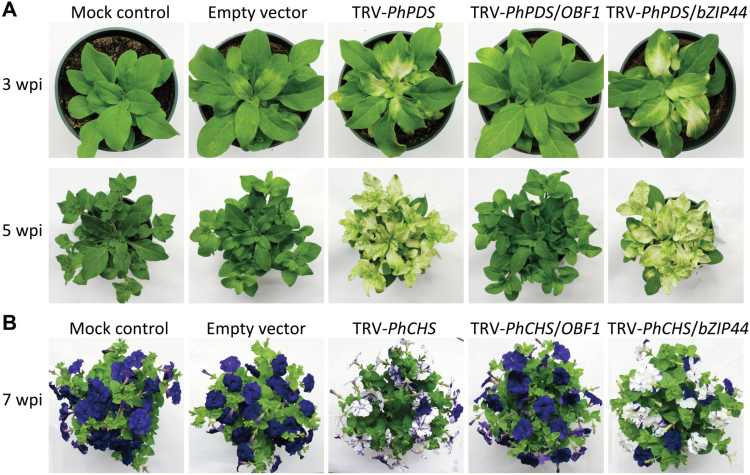
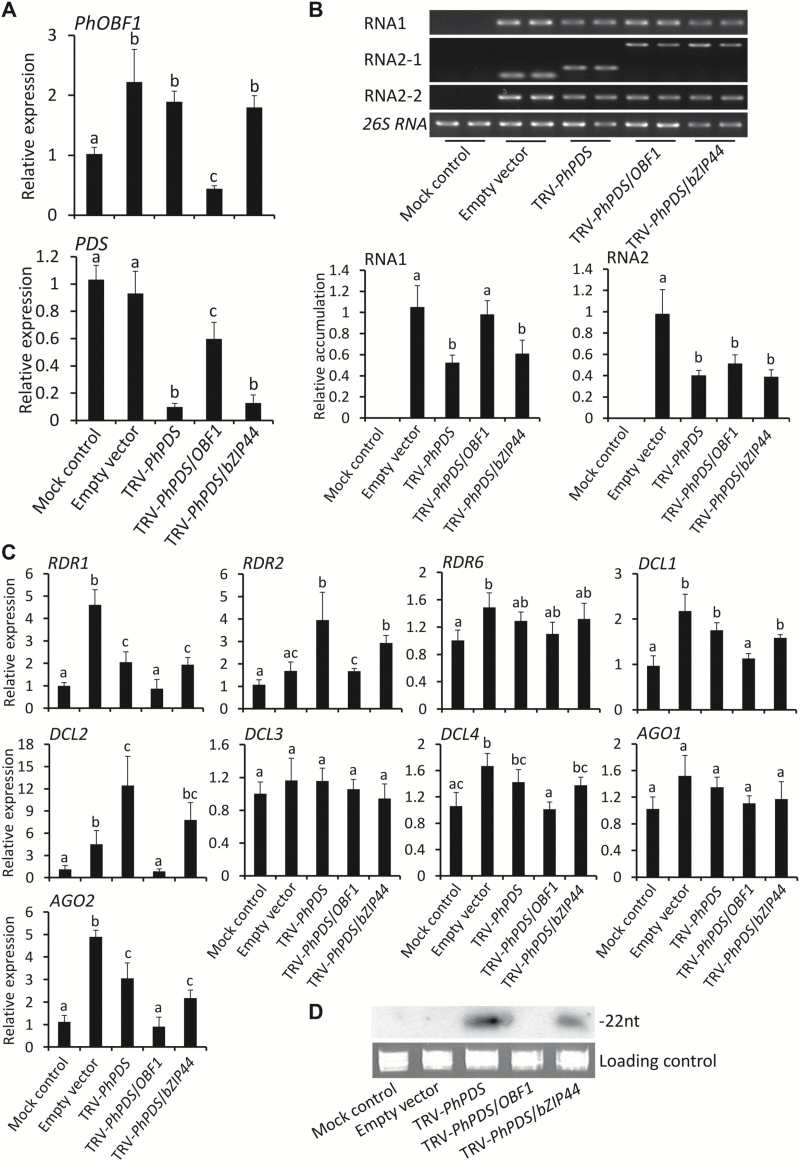
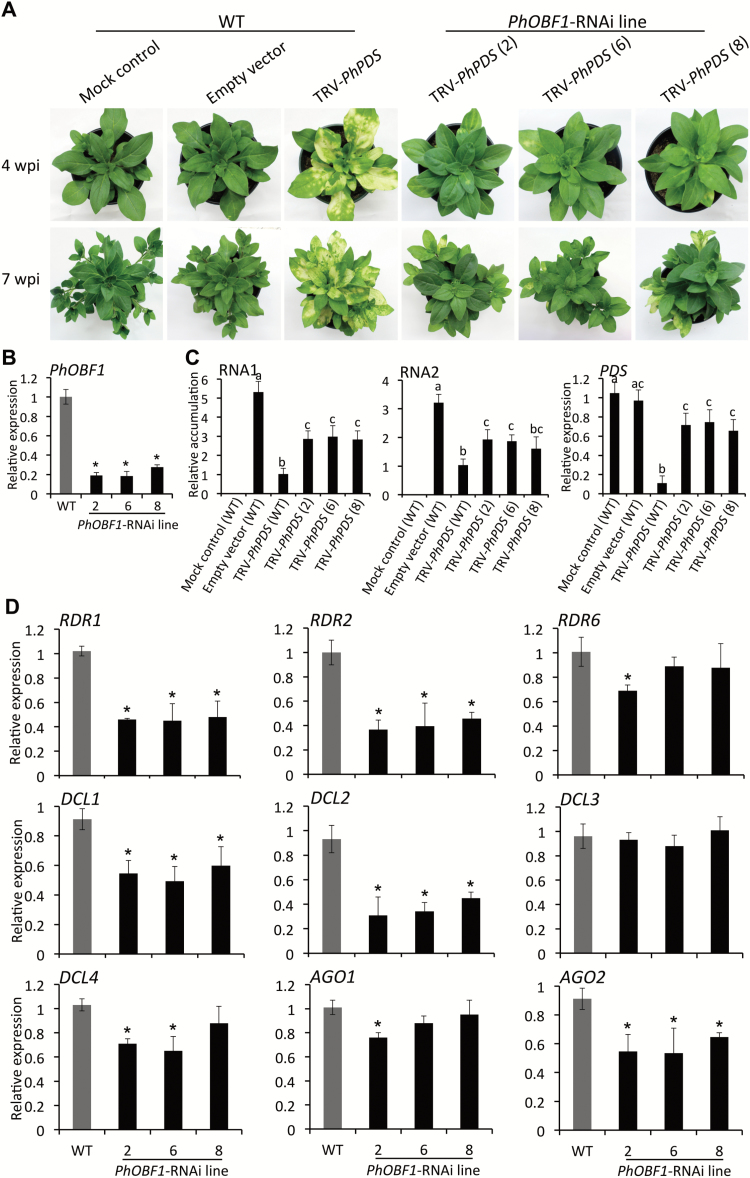
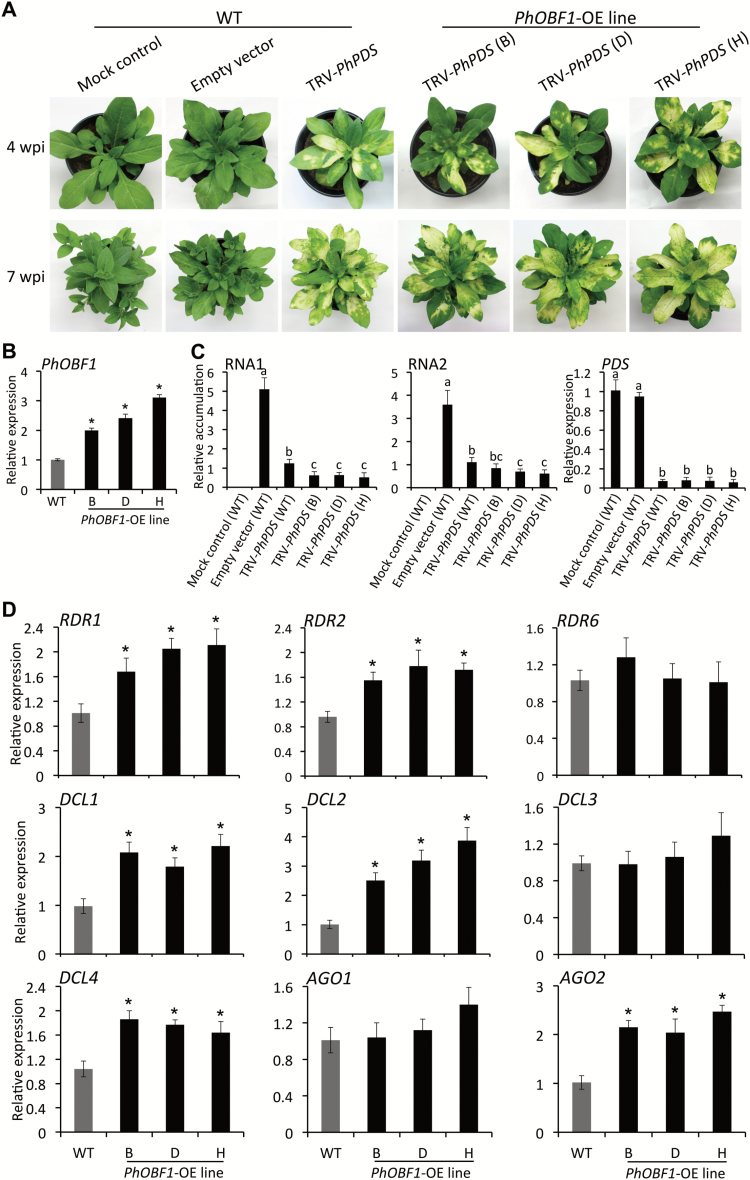
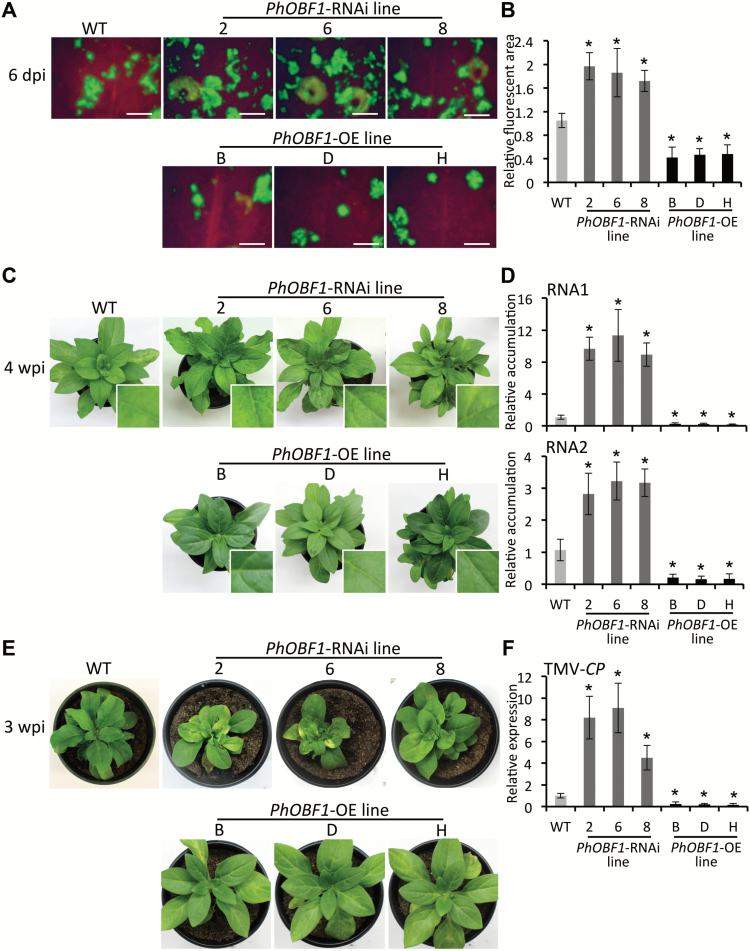
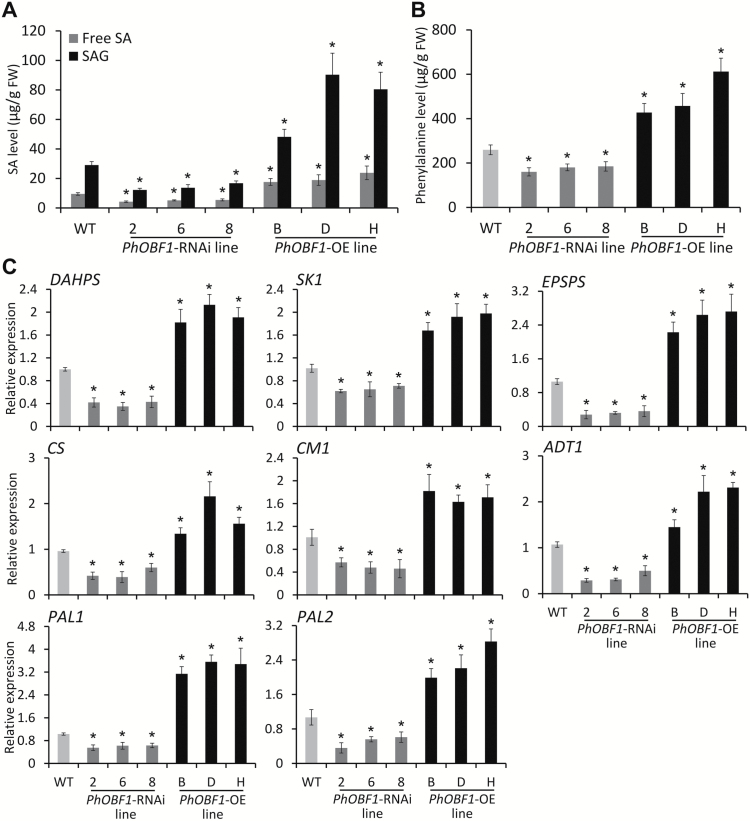
Virus-induced gene silencing (VIGS) is a common reverse genetics strategy for characterizing the function of genes in plants. The detailed mechanism governing RNA silencing efficiency triggered by viruses is largely unclear. Here, we reveal that a petunia (Petunia hybrida) ocs element binding factor, PhOBF1, one of the basic leucine zipper (bZIP) transcription factors, was up-regulated by Tobacco rattle virus (TRV) infection. Simultaneous silencing of PhOBF1 and a reporter gene, phytoene desaturase (PDS) or chalcone synthase (CHS), by TRV-based VIGS led to a failure of the development of leaf photobleaching or the white-corollas phenotype. PhOBF1 silencing caused down-regulation of RNA silencing-related genes, including RNA-dependent RNA polymerases (RDRs), Dicer-like RNase III enzymes (DCLs), and Argonautes (AGOs). After inoculation with the TRV-PhPDS, PhOBF1-RNAi lines exhibited a substantially impaired PDS silencing efficiency, whereas overexpression of PhOBF1 resulted in a recovery of the silencing phenotype (photobleaching) in systemic leaves. A compromised resistance to TRV and Tobacco mosaic virus was found in PhOBF1-RNAi lines, while PhOBF1-overexpressing lines displayed an enhanced resistance to their infections. Compared with wild-type plants, PhOBF1-silenced plants accumulated lower levels of free salicylic acid (SA), salicylic acid glucoside, and phenylalanine, contrarily to higher levels of those in plants overexpressing PhOBF1. Furthermore, transcripts of a number of genes associated with the shikimate and phenylpropanoid pathways were decreased or increased in PhOBF1-RNAi or PhOBF1-overexpressing lines, respectively. Taken together, the data suggest that PhOBF1 regulates TRV-induced RNA silencing efficiency through modulation of RDRs, DCLs, and AGOs mediated by the SA biosynthesis pathway.
病毒诱导的基因沉默(VIGS)是一种用于鉴定植物基因功能的常见反向遗传学策略。病毒引发的RNA沉默效率的详细调控机制在很大程度上尚不清楚。在此,我们发现矮牵牛(Petunia hybrida)ocs元件结合因子PhOBF1,即碱性亮氨酸拉链(bZIP)转录因子之一,在烟草脆裂病毒(TRV)感染后上调表达。基于TRV的VIGS同时沉默PhOBF1和报告基因八氢番茄红素去饱和酶(PDS)或查尔酮合酶(CHS),导致叶片光漂白或白色花冠表型无法显现出来。PhOBF1沉默导致RNA沉默相关基因下调表达包括RNA依赖性RNA聚合酶(RDRs)、Dicer样RNase III酶(DCLs)和AGO蛋白(AGOs)等。接种TRV-PhPDS后PhOBF1-RNAi株系的PDS沉默效率大幅受损而PhOBF1过表达则导致系统叶中沉默表型(光漂白)恢复正常。在PhOBF1-RNAi株系中发现对TRV和烟草花叶病毒的抗性受损而PhOBF1过表达株系对这些病毒感染表现出增强的抗性。与野生型植株相比PhOBF1沉默的植株积累的游离水杨酸(SA)、水杨酸糖苷和苯丙氨酸水平较低而PhOBF1过表达植株中这些物质的水平较高。此外在PhOBF1-RNAi或PhOBF1过表达株系中分别与莽草酸和苯丙烷途径相关的一些基因转录本减少或增加了。综上所述这些数据表明PhOBF1通过SA生物合成途径介导调节RDRs、DCLs和AGOs来调控TRV诱导的RNA沉默效率。