Nagahashi Masayuki, Yamada Akimitsu, Aoyagi Tomoyoshi, Allegood Jeremy, Wakai Toshifumi, Spiegel Sarah, Takabe Kazuaki
Division of Digestive and General Surgery, Niigata University Graduate School of Medical and Dental Sciences, Niigata City, 951-8510, Japan.
Division of Surgical Oncology, Department of Biochemistry and Molecular Biology, and the Massey Cancer Center, Virginia Commonwealth University School of Medicine, Richmond, Virginia 23298-0011, USA.
Heliyon. 2016 Dec 22;2(12):e00219. doi: 10.1016/j.heliyon.2016.e00219. eCollection 2016 Dec.
Sphingosine-1-phosphate (S1P) is a pleiotropic bioactive lipid mediator that regulates many physiological and pathological processes. It has been suggested that S1P gradient with high concentrations in the blood and lymphatic fluid and low concentrations in the peripheral tissue plays important roles in immune cell trafficking and potentially cancer progression. However, only a few reports have assessed S1P levels in the lymphatic fluid due to lack of an established easy-to-use method. Here, we report a simple technique for collection of lymphatic fluid to determine S1P.
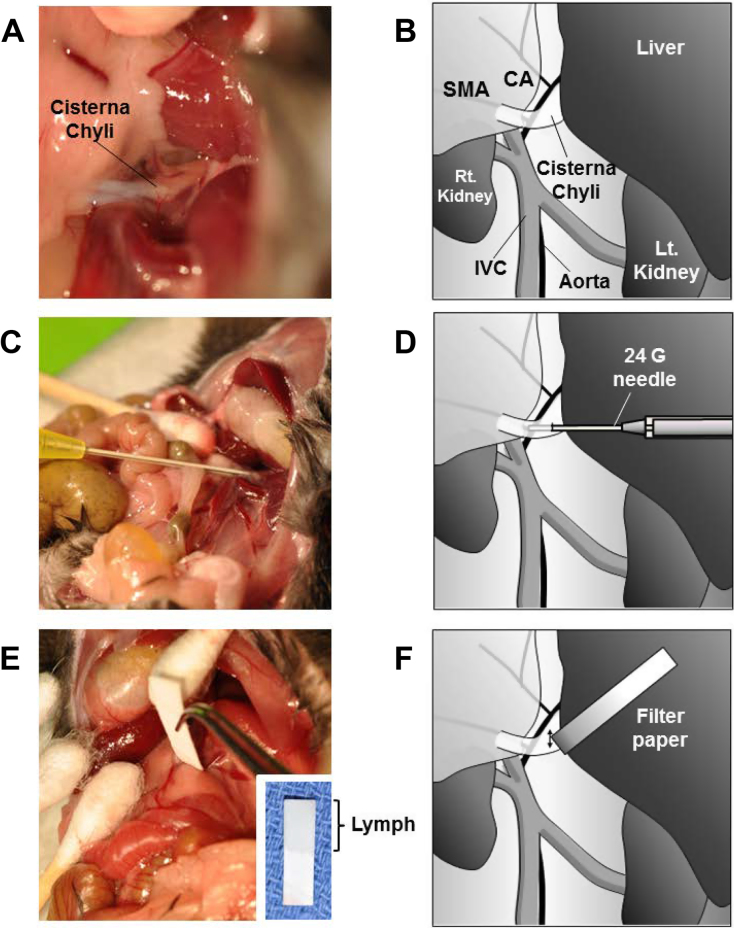
Lymphatic fluid was collected directly with a catheter needle (classical method) or was absorbed onto filter paper after incision of cisterna chyli (new method) in murine models. Blood, lymphatic fluid and mesenteric lymph nodes were corrected from wild type and sphingosine kinase 2 (SphK2) knockout mice to determine S1P levels by mass spectrometry.
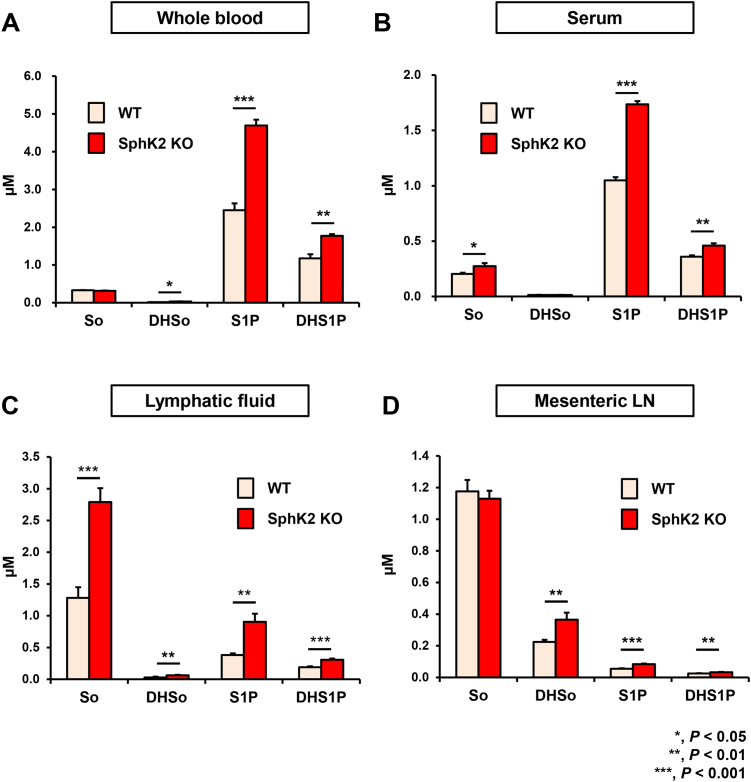
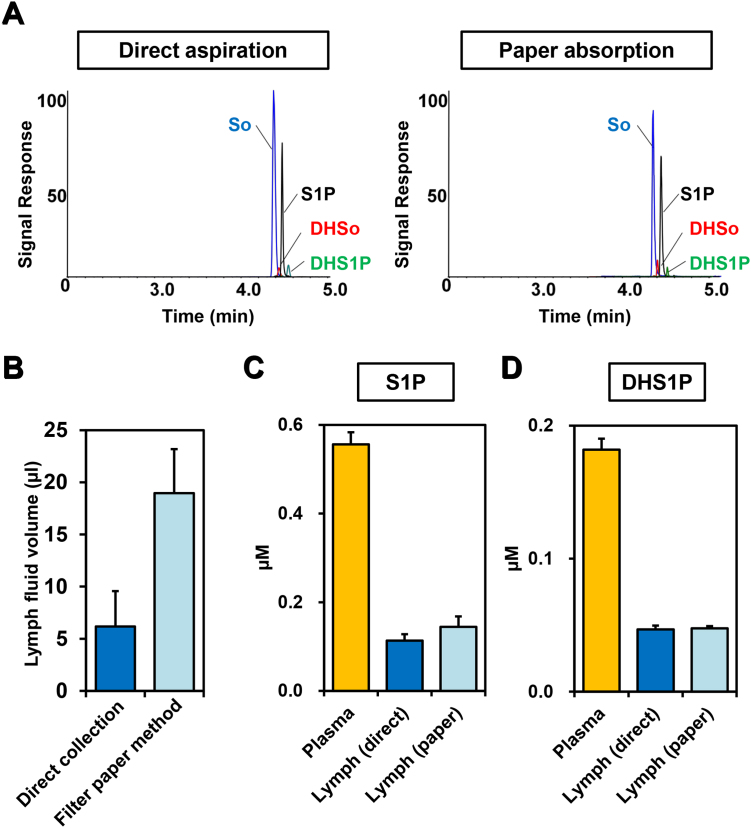
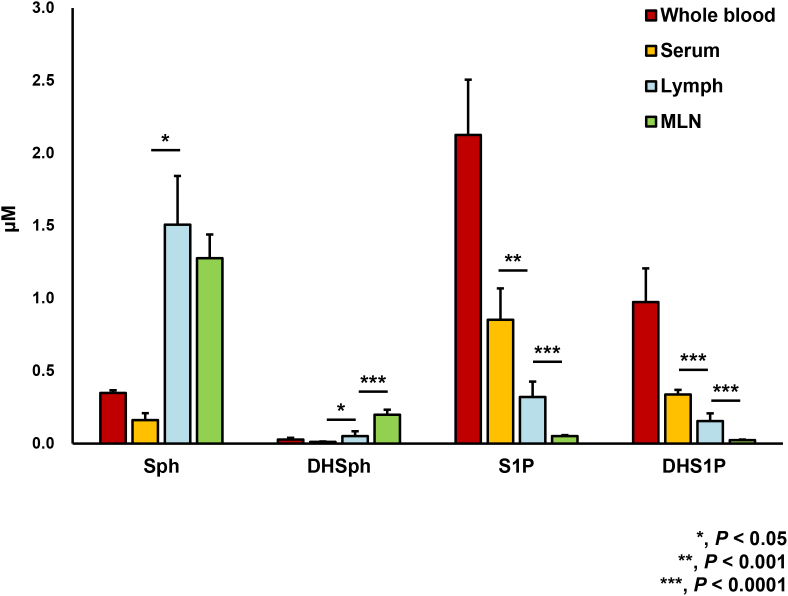
The volume of lymphatic fluid collected by the new method was at least three times greater than those collected by the classical method. S1P concentrations in lymphatic fluid are lower than in blood and higher than in lymph nodes. Interestingly, S1P levels in lymphatic fluid from SphK2 knockout mice were significantly higher than those in wild type, suggesting an important role of SphK2 and/or SphK1 to regulate S1P levels in lymphatic fluid.
In agreement with the previous theory, our results confirm "S1P gradient" among blood, lymphatic fluid and peripheral lymphatic tissues. Convenient methods for collection and measurement of sphingolipids in lymphatic fluid are expected to provide new insights on functions of sphingolipids.
1-磷酸鞘氨醇(S1P)是一种具有多效性的生物活性脂质介质,可调节多种生理和病理过程。有人提出,血液和淋巴液中高浓度而外周组织中低浓度的S1P梯度在免疫细胞运输以及潜在的癌症进展中发挥重要作用。然而,由于缺乏成熟易用的方法,仅有少数报告评估了淋巴液中的S1P水平。在此,我们报告一种用于收集淋巴液以测定S1P的简单技术。
在小鼠模型中,用导管针直接收集淋巴液(经典方法),或在切开乳糜池后将淋巴液吸附到滤纸上(新方法)。从野生型和鞘氨醇激酶2(SphK2)基因敲除小鼠中采集血液、淋巴液和肠系膜淋巴结,通过质谱法测定S1P水平。
新方法收集的淋巴液体积至少是经典方法收集量的三倍。淋巴液中的S1P浓度低于血液中的浓度,高于淋巴结中的浓度。有趣的是,SphK2基因敲除小鼠淋巴液中的S1P水平显著高于野生型小鼠,这表明SphK2和/或鞘氨醇激酶1(SphK1)在调节淋巴液中S1P水平方面具有重要作用。
与先前的理论一致,我们的结果证实了血液、淋巴液和外周淋巴组织之间存在“S1P梯度”。用于收集和测量淋巴液中鞘脂的便捷方法有望为鞘脂的功能提供新的见解。