Fischer Marlene, Schmutzhard Erich
Department of Anesthesiology, University Medical Center Hamburg-Eppendorf, Martinistrasse 52, 20246, Hamburg, Germany.
Department of Neurology, Medical University of Innsbruck, Innsbruck, Austria.
J Neurol. 2017 Aug;264(8):1608-1616. doi: 10.1007/s00415-016-8377-8. Epub 2017 Jan 4.
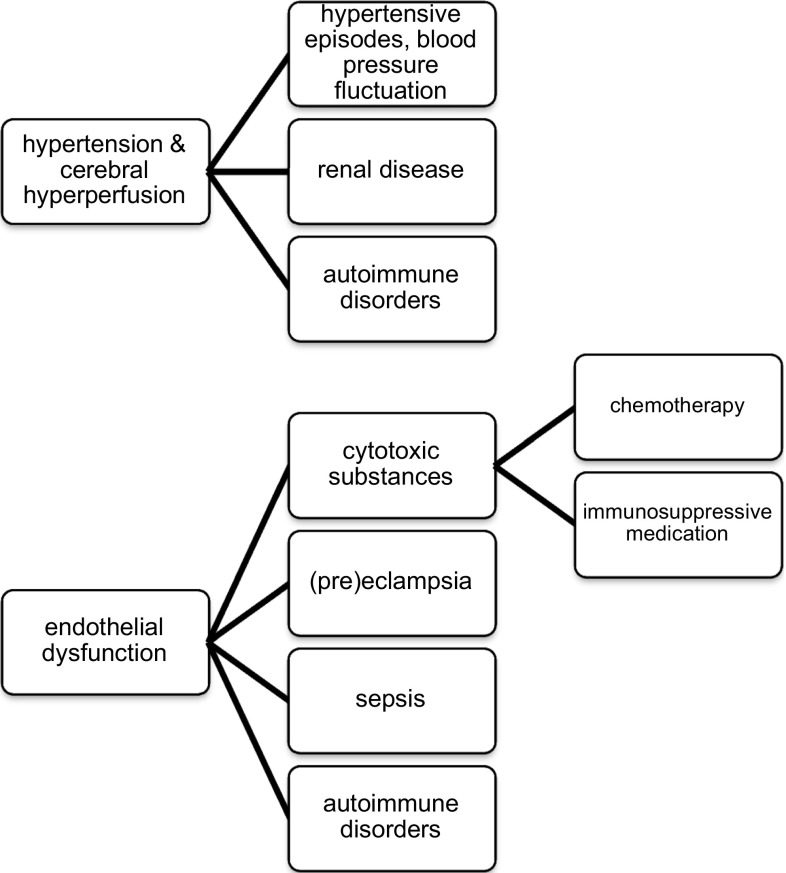
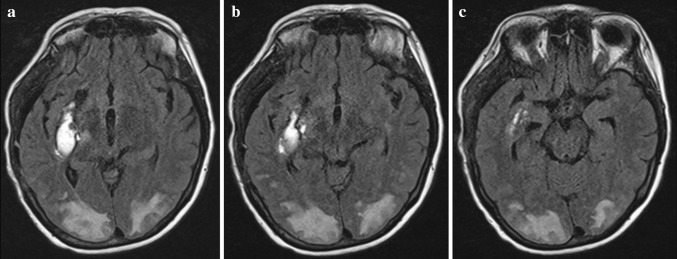
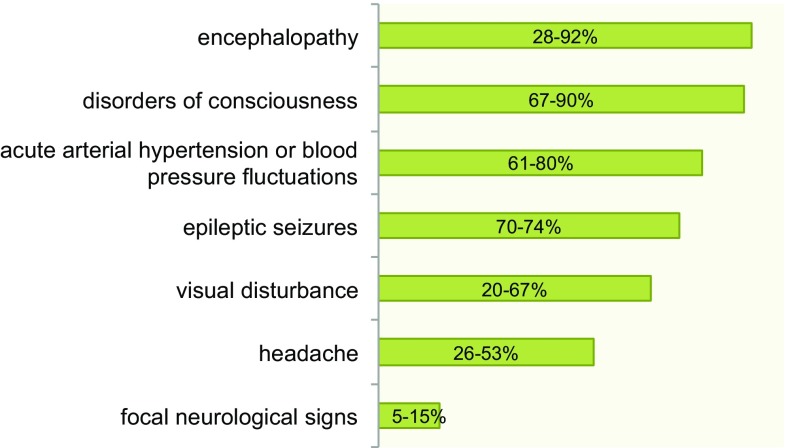
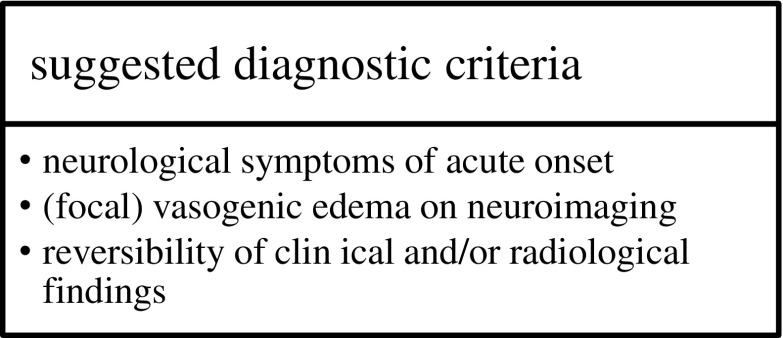
The posterior reversible encephalopathy syndrome (PRES) is a neurological disorder of (sub)acute onset characterized by varied neurological symptoms, which may include headache, impaired visual acuity or visual field deficits, disorders of consciousness, confusion, seizures, and focal neurological deficits. In a majority of patients the clinical presentation includes elevated arterial blood pressure up to hypertensive emergencies. Neuroimaging, in particular magnetic resonance imaging, frequently shows a distinctive parieto-occipital pattern with a symmetric distribution of changes reflecting vasogenic edema. PRES frequently develops in the context of cytotoxic medication, (pre)eclampsia, sepsis, renal disease or autoimmune disorders. The treatment is symptomatic and is determined by the underlying condition. The overall prognosis is favorable, since clinical symptoms as well as imaging lesions are reversible in most patients. However, neurological sequelae including long-term epilepsy may persist in individual cases.
后部可逆性脑病综合征(PRES)是一种(亚)急性起病的神经系统疾病,其特征为多种神经症状,可能包括头痛、视力障碍或视野缺损、意识障碍、精神错乱、癫痫发作和局灶性神经功能缺损。大多数患者的临床表现包括动脉血压升高至高血压急症。神经影像学检查,尤其是磁共振成像,常显示出一种独特的顶枕叶模式,其变化呈对称分布,反映血管源性水肿。PRES常发生于细胞毒性药物治疗、子痫前期、脓毒症、肾脏疾病或自身免疫性疾病的背景下。治疗以对症治疗为主,取决于潜在病因。总体预后良好,因为大多数患者的临床症状和影像学病变都是可逆的。然而,个别病例可能会遗留包括长期癫痫在内的神经后遗症。