Sharara Ala I, Chalhoub Jean M, Beydoun Maya, Shayto Rani H, Chehab Hamed, Harb Ali H, Mourad Fadi H, Sarkis Fayez S
Division of Gastroenterology, Department of Internal Medicine, American University of Beirut Medical Center, Beirut, Lebanon.
Clin Transl Gastroenterol. 2017 Jan 5;8(1):e211. doi: 10.1038/ctg.2016.65.
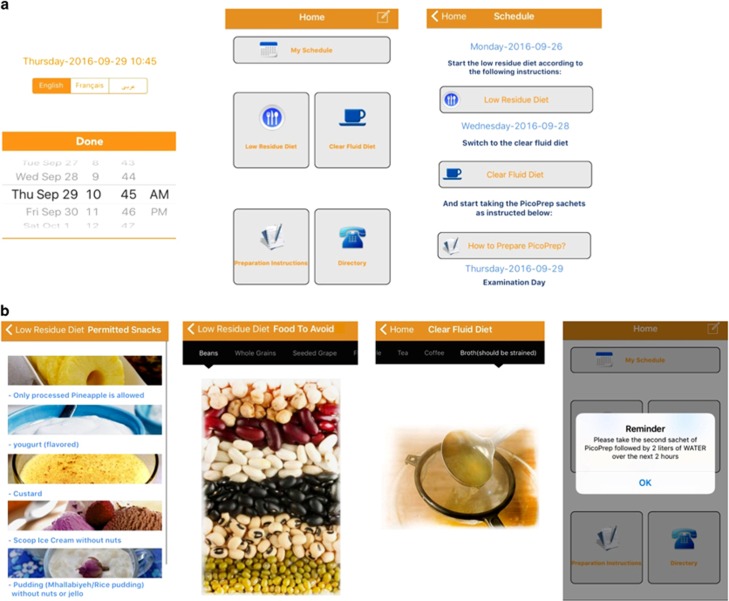
Adherence with diet and prescribed purgative is essential for proper cleansing with low-volume bowel preparations. The aim of this work was to assess the effect of a customized mobile application (App) on adherence and quality of bowel preparation.
One hundred and sixty (160) eligible patients scheduled for elective colonoscopy were randomly assigned to paper (control) or App-based instructions. The preparation consisted of low-fiber diet for 2 days, clear fluids for one day and split-dose sodium picosulfate/magnesium citrate (SPS). Before colonoscopy, information was collected regarding adherence with, and utility of the provided instructions. The colonoscopists, blinded to assignment, graded bowel preparation using the Aronchick, Ottawa, and Chicago preparation scales. The primary endpoint was adherence with instructions. Quality of preparation was a secondary endpoint.
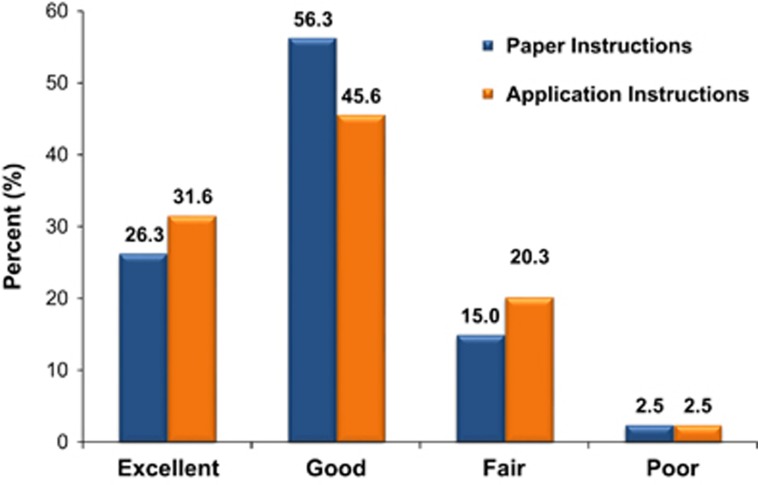
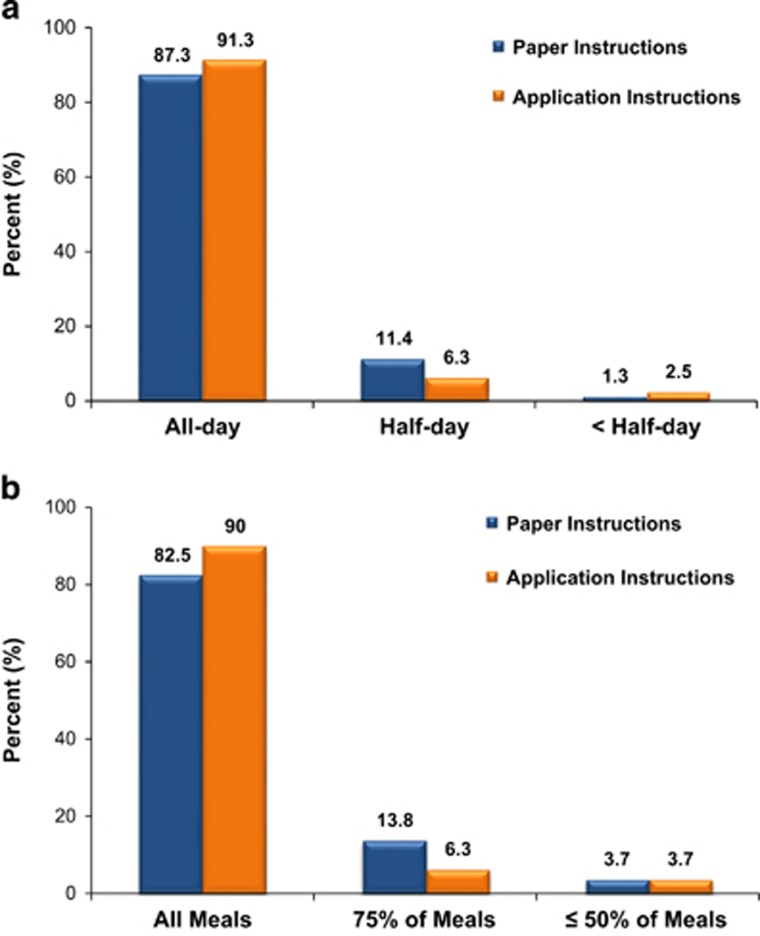
No difference in overall adherence or bowel cleanliness was observed between the study arms. Adherence was reported in 82.4% of App vs. 73.4% of controls (P=0.40). An adequate bowel preparation on the Aronchick scale was noted in 77.2 vs. 82.5%, respectively (P=0.68). Mean scores on the Ottawa and Chicago scales were also similar. Gender, age, time of colonoscopy, and BMI did not influence preparation or adherence. Compliance with the clear fluid diet component was noted in 94% of patients with BMI<30 vs. 77% with BMI≥30 (P<0.01). SPS was well tolerated by 81.9% of patients. The App was user-friendly and received higher overall rating in this respect than paper instructions (P<0.01).
SPS is well tolerated and effective for bowel cleansing regardless of instruction method. Customized smartphone applications are effective, well-accepted and could replace standard paper instructions for bowel preparation.ClinicalTrials.gov: NCT02410720.
坚持饮食和按规定服用泻药对于使用低容量肠道准备剂进行适当清洁至关重要。本研究的目的是评估定制移动应用程序(App)对肠道准备依从性和质量的影响。
160例计划进行择期结肠镜检查的合格患者被随机分配至纸质(对照)组或基于App的指导组。准备措施包括2天低纤维饮食、1天清流饮食以及分剂量服用比沙可啶钠/枸橼酸镁(SPS)。在结肠镜检查前,收集有关对所提供指导的依从性和实用性的信息。结肠镜检查医生在不知道分组情况的前提下,使用阿隆奇克、渥太华和芝加哥准备量表对肠道准备情况进行分级。主要终点是对指导的依从性。准备质量是次要终点。
研究组之间在总体依从性或肠道清洁度方面未观察到差异。报告显示,使用App组的依从率为82.4%,对照组为73.4%(P=0.40)。阿隆奇克量表显示肠道准备充分的比例分别为77.2%和82.5%(P=0.68)。渥太华和芝加哥量表的平均得分也相似。性别、年龄、结肠镜检查时间和体重指数均未影响准备情况或依从性。体重指数<30的患者中94%遵守了清流饮食部分,而体重指数≥30的患者中这一比例为77%(P<0.01)。81.9%的患者对SPS耐受性良好。该App用户友好,在这方面获得的总体评分高于纸质指导(P<0.01)。
无论采用何种指导方法,SPS耐受性良好且对肠道清洁有效。定制的智能手机应用程序有效且易于接受,可替代肠道准备的标准纸质指导。ClinicalTrials.gov:NCT02410720。