Autuori Maria C, Pai Yun J, Stuckey Daniel J, Savery Dawn, Marconi Anna M, Massa Valentina, Lythgoe Mark F, Copp Andrew J, David Anna L, Greene Nicholas D E
Newlife Birth Defects Research Centre and Developmental Biology and Cancer Programme, Great Ormond Street Institute of Child Health, University College London, London, UK.
Department of Obstetrics and Gynaecology, San Paolo Hospital, Milan, Italy.
Prenat Diagn. 2017 Mar;37(3):273-281. doi: 10.1002/pd.5004. Epub 2017 Feb 17.
We used non-invasive high-frequency ultrasound (HFUS) imaging to investigate embryonic brain development in a mouse model for neural tube defects (NTDs) and non-ketotic hyperglycinemia (NKH).
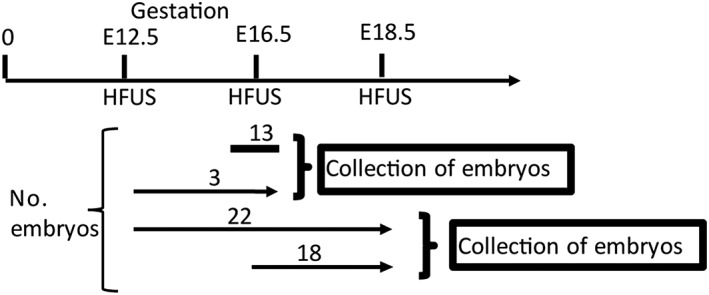
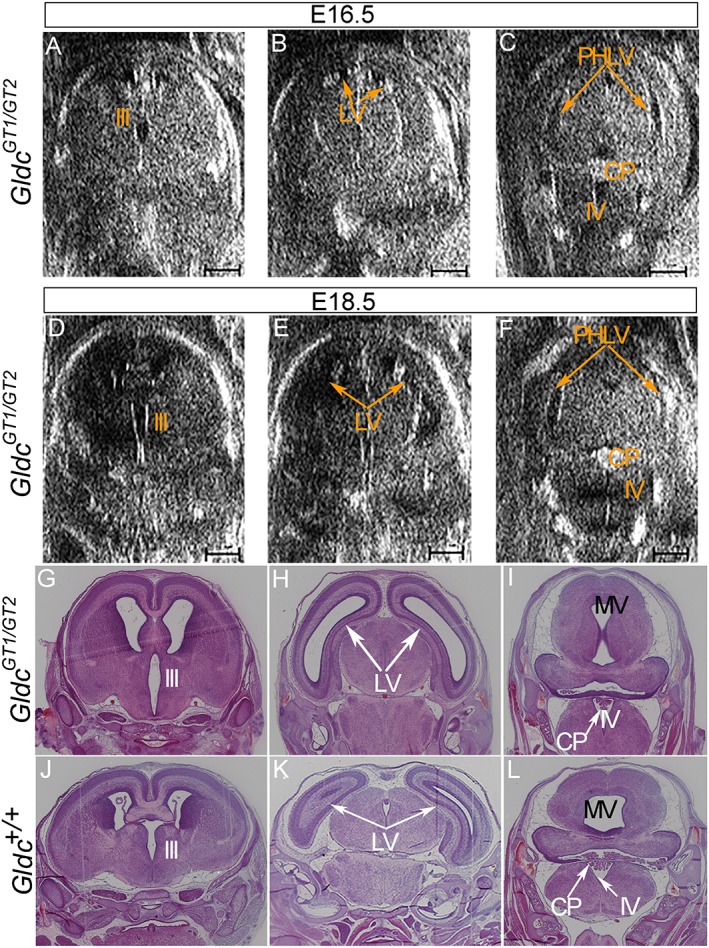
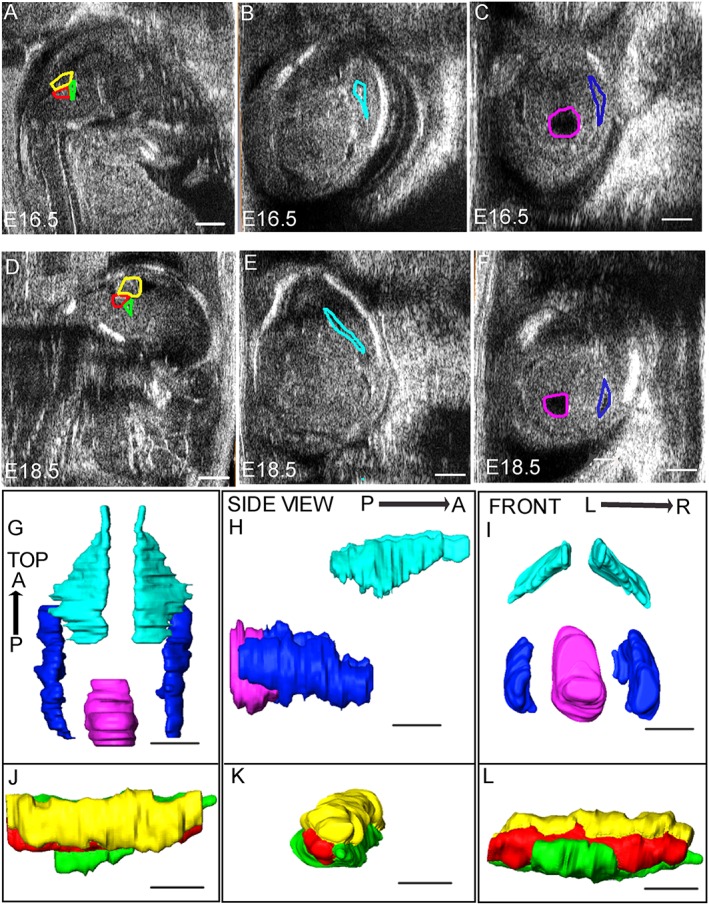
Using HFUS, we imaged embryos carrying loss of function alleles of Gldc encoding glycine decarboxylase, a component of the glycine cleavage system in mitochondrial folate metabolism, which is known to be associated with cranial NTDs and NKH in humans. We serially examined the same litter during the second half of embryonic development and quantified cerebral structures. Genotype was confirmed using PCR. Histology was used to confirm ultrasound findings.
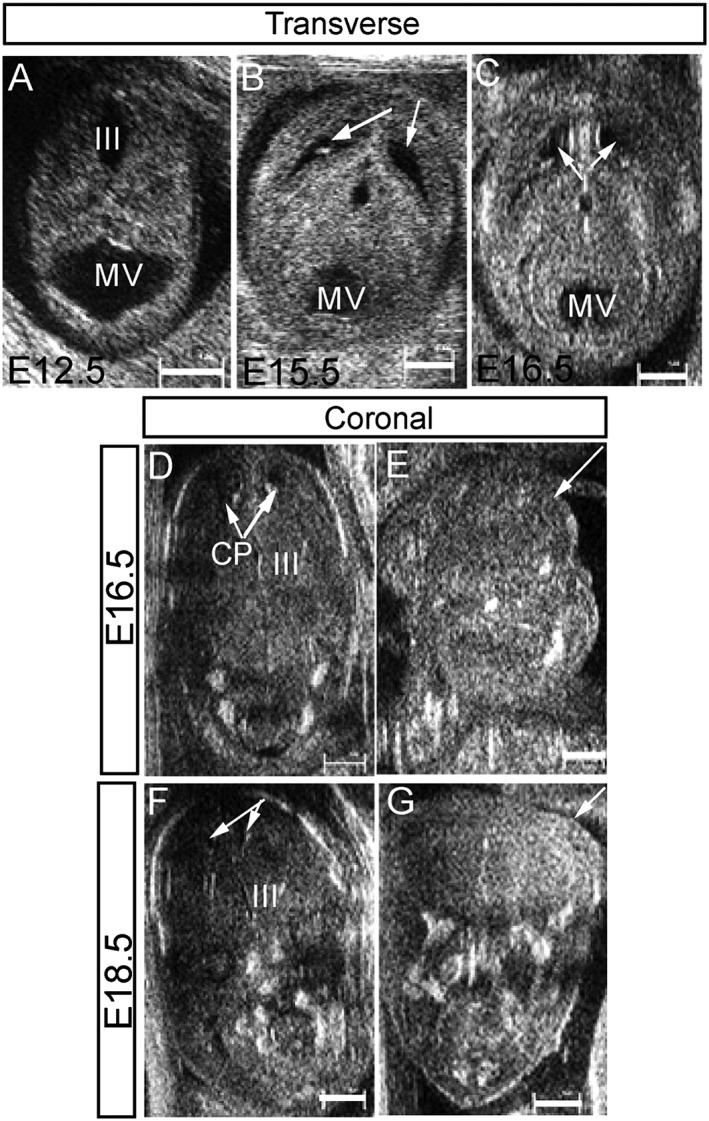
High-frequency ultrasound allowed in utero detection of two major brain abnormalities in Gldc-deficient mouse embryos, cranial NTDs (exencephaly) and ventriculomegaly (corresponding with the previous finding of post-natal hydrocephalus). Serial ultrasound allowed individual embryos to be analysed at successive gestational time points. From embryonic day 16.5 to 18.5, the lateral ventricle volume reduced in wild-type and heterozygous embryos but increased in homozygous Gldc-deficient embryos.
Exencephaly and ventriculomegaly were detectable by HFUS in homozygous Gldc-deficient mouse embryos indicating this to be an effective tool to study CNS development. Longitudinal analysis of the same embryo allowed the prenatal onset and progression of ventricle enlargement in Gldc-deficient mice to be determined. © 2017 The Authors. Prenatal Diagnosis published by John Wiley & Sons, Ltd.
我们使用非侵入性高频超声(HFUS)成像技术,在神经管缺陷(NTDs)和非酮症高甘氨酸血症(NKH)小鼠模型中研究胚胎脑发育情况。
我们利用HFUS对携带编码甘氨酸脱羧酶(Gldc)功能缺失等位基因的胚胎进行成像,甘氨酸脱羧酶是线粒体叶酸代谢中甘氨酸裂解系统的一个组成部分,已知其与人类颅骨NTDs和NKH有关。在胚胎发育后半期,我们对同一窝小鼠进行连续检查,并对脑结构进行量化分析。通过聚合酶链反应(PCR)确认基因型。组织学检查用于证实超声检查结果。
高频超声能够在子宫内检测到Gldc基因缺陷小鼠胚胎的两种主要脑部异常,即颅骨NTDs(无脑畸形)和脑室扩大(与之前出生后脑积水的发现一致)。连续超声检查允许在连续的妊娠时间点对单个胚胎进行分析。从胚胎第16.5天到18.5天,野生型和杂合子胚胎的侧脑室体积减小,而纯合子Gldc基因缺陷胚胎的侧脑室体积增大。
高频超声能够检测到纯合子Gldc基因缺陷小鼠胚胎中的无脑畸形和脑室扩大,表明这是研究中枢神经系统发育的有效工具。对同一胚胎的纵向分析能够确定Gldc基因缺陷小鼠脑室扩大的产前起始和进展情况。© 2017作者。《产前诊断》由约翰·威利父子有限公司出版。