Grímsson FriĐgeir, Zetter Reinhard, Labandeira Conrad C, Engel Michael S, Wappler Torsten
University of Vienna, Department of Palaeontology , Vienna , Austria.
Department of Paleobiology, National Museum of Natural History, Smithsonian Institution, Washington, DC, USA; Department of Entomology, University of Maryland, College Park, MD, USA; College of Life Sciences, Capital Normal University, Beijing, China.
Grana. 2017 Jan 2;56(1):37-70. doi: 10.1080/00173134.2015.1108997. Epub 2016 Feb 23.
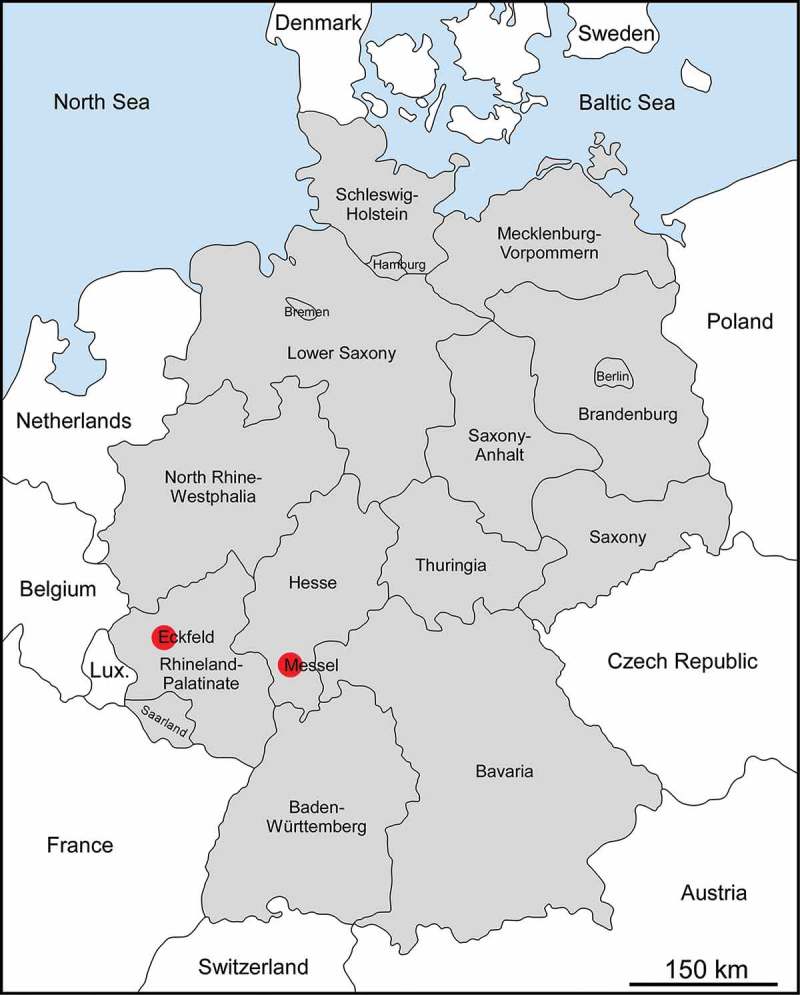
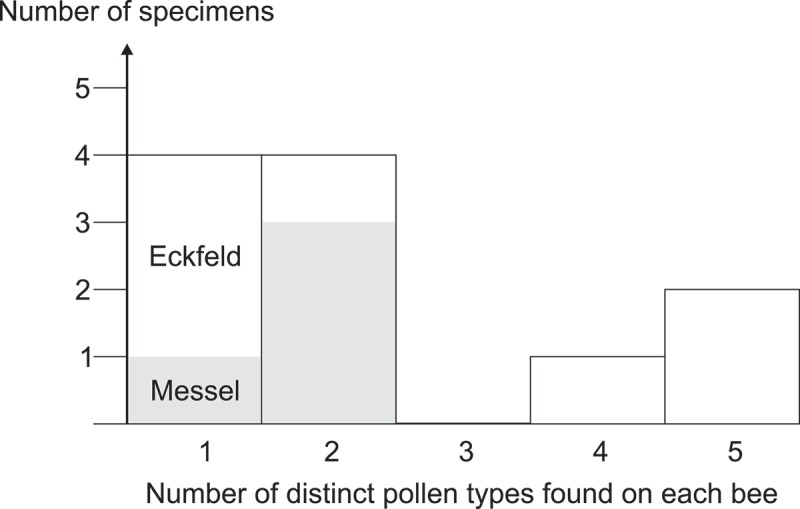
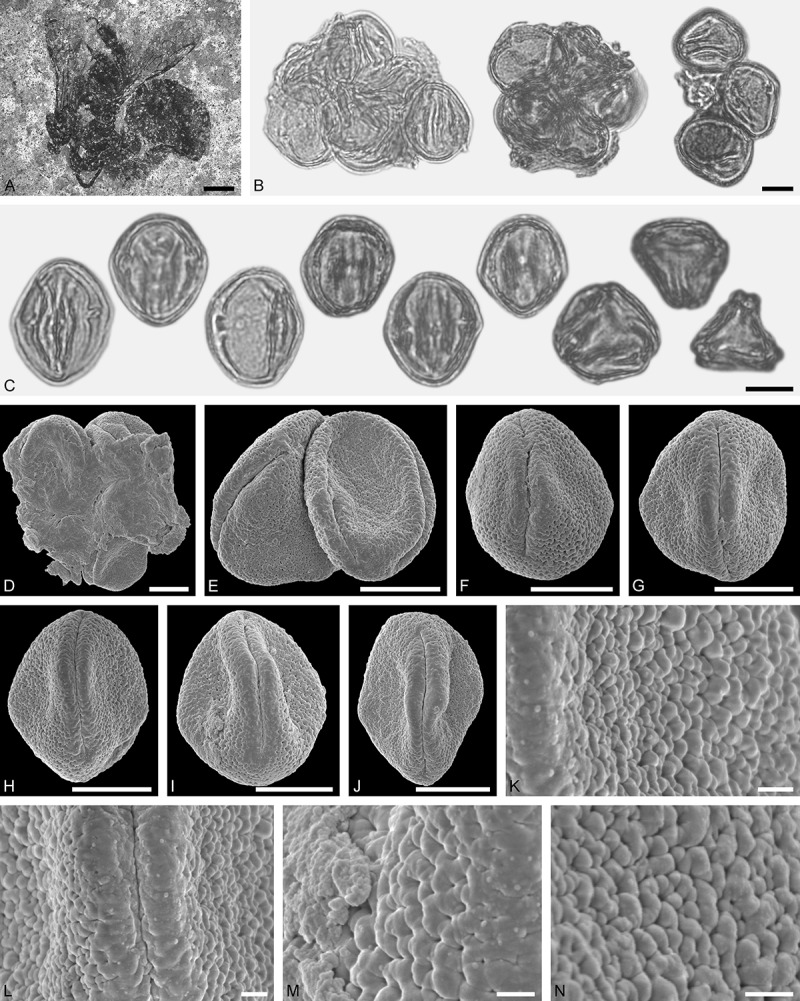
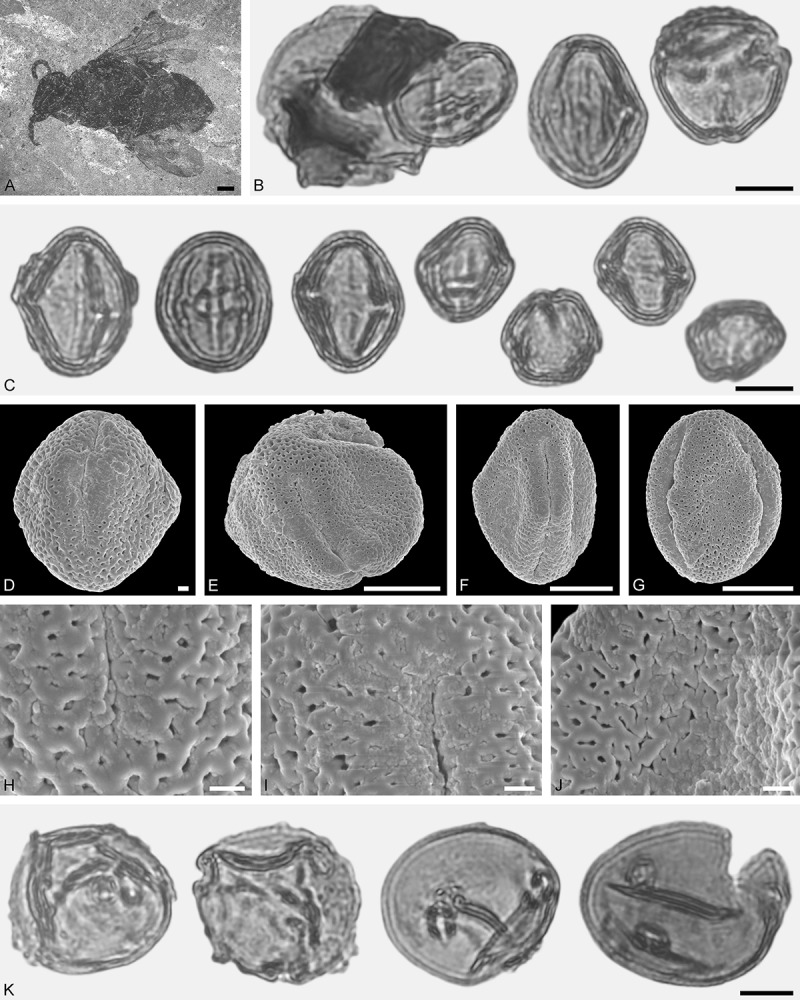
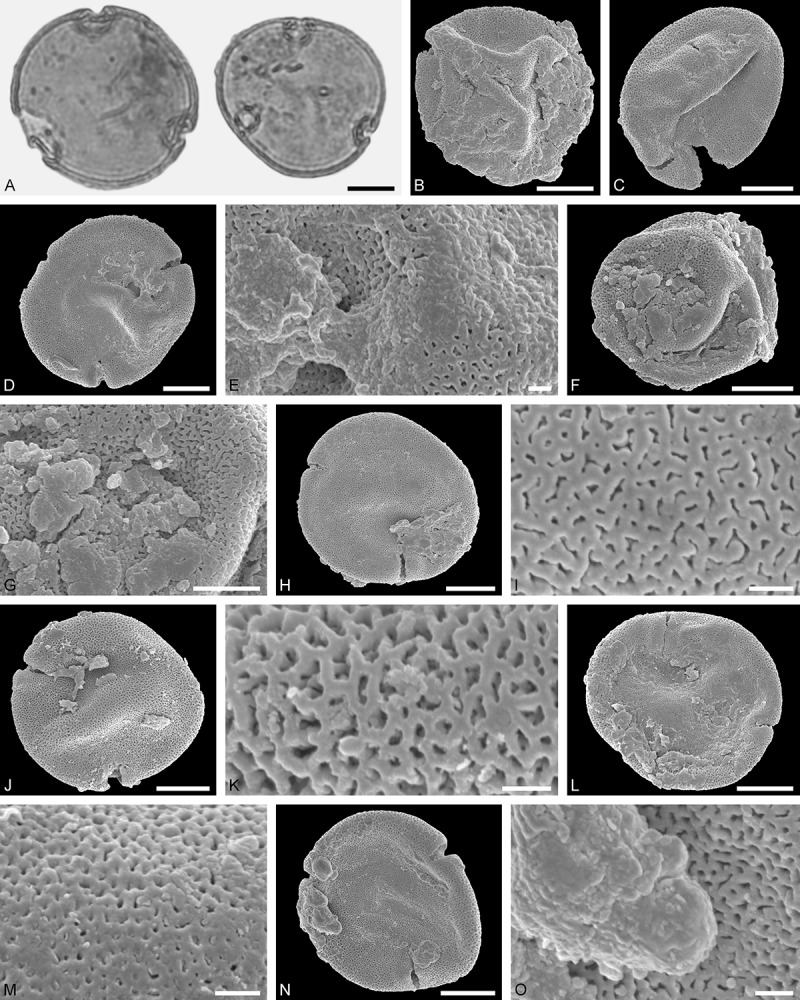
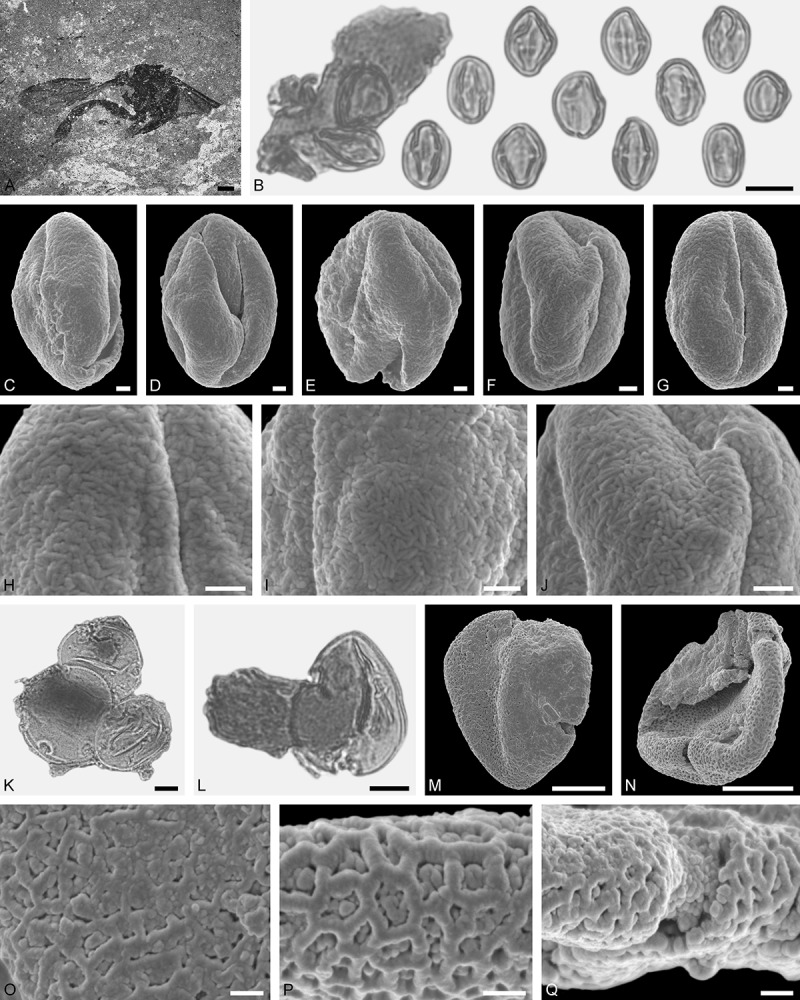
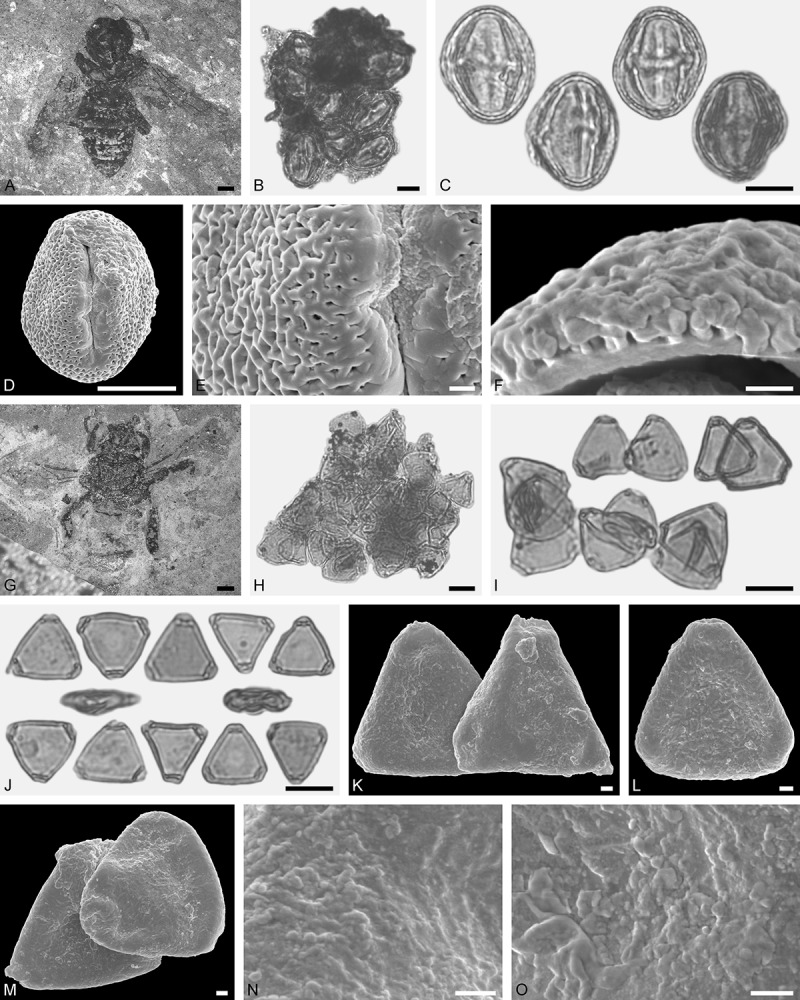
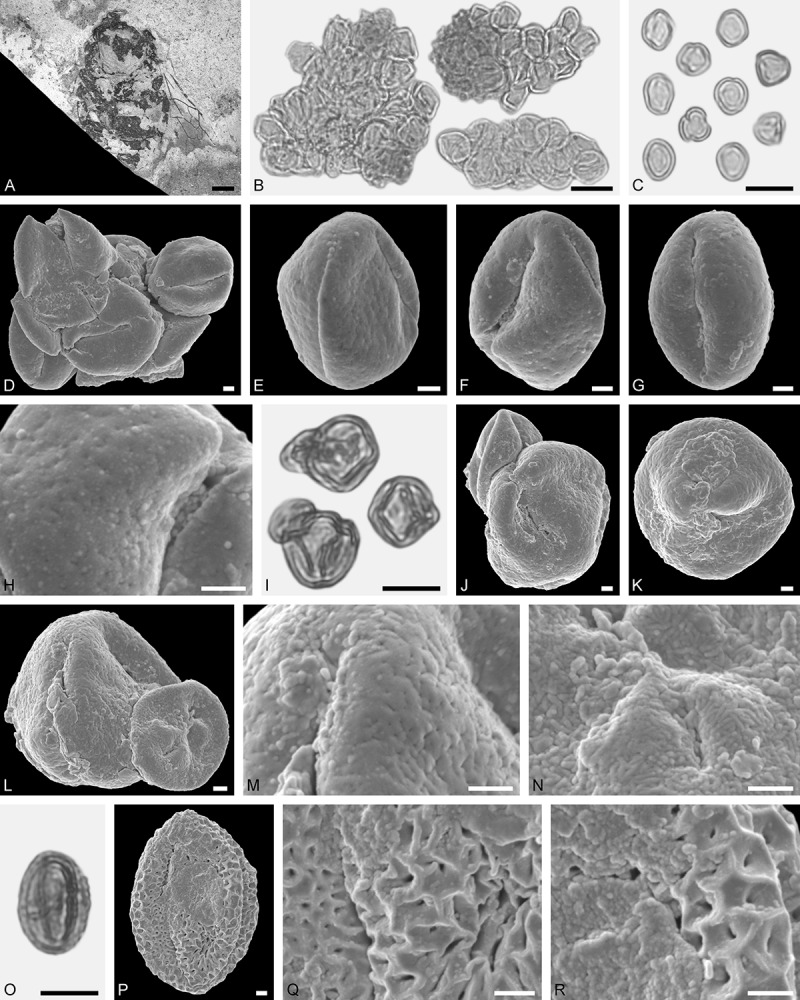
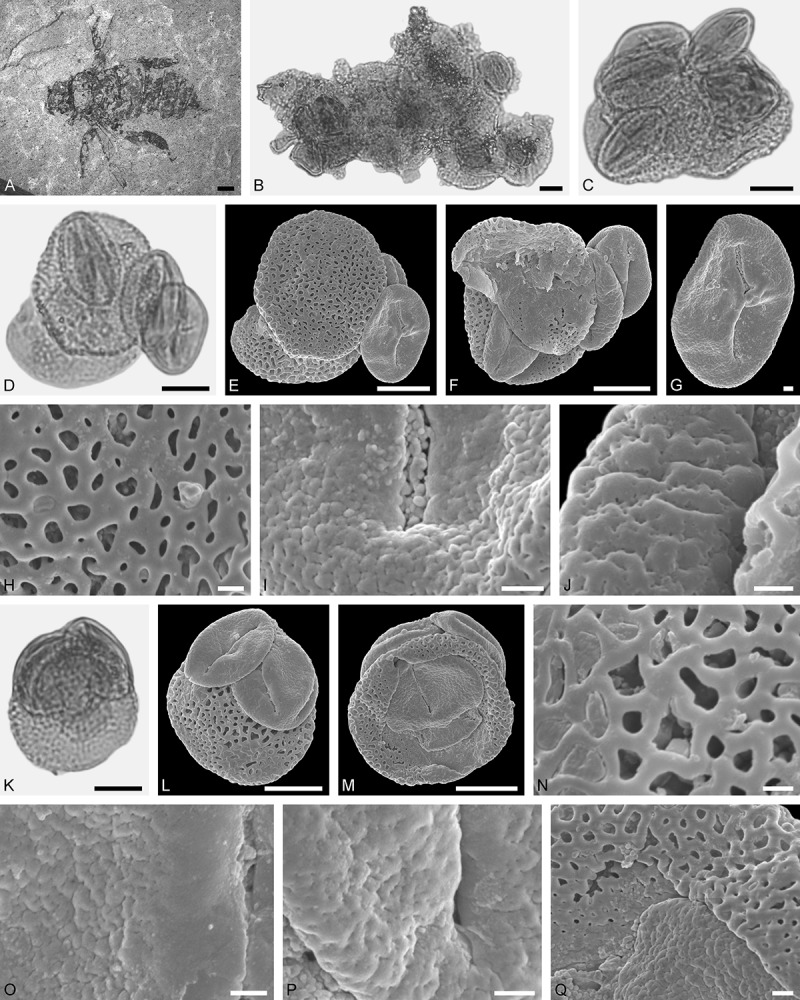
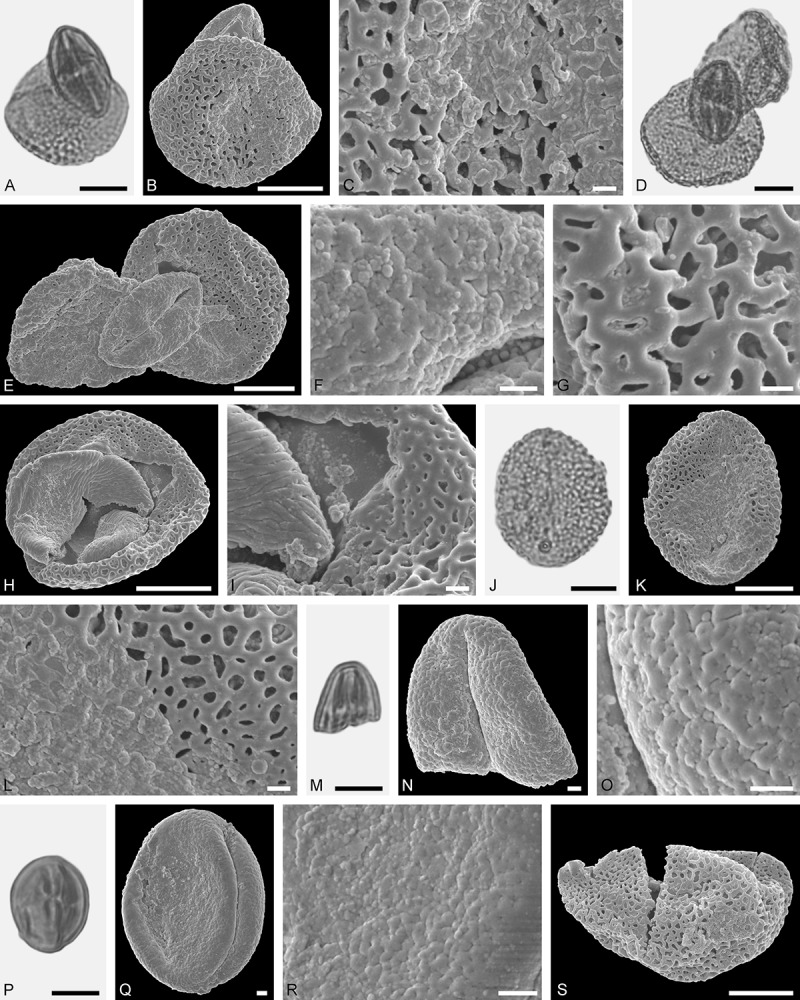
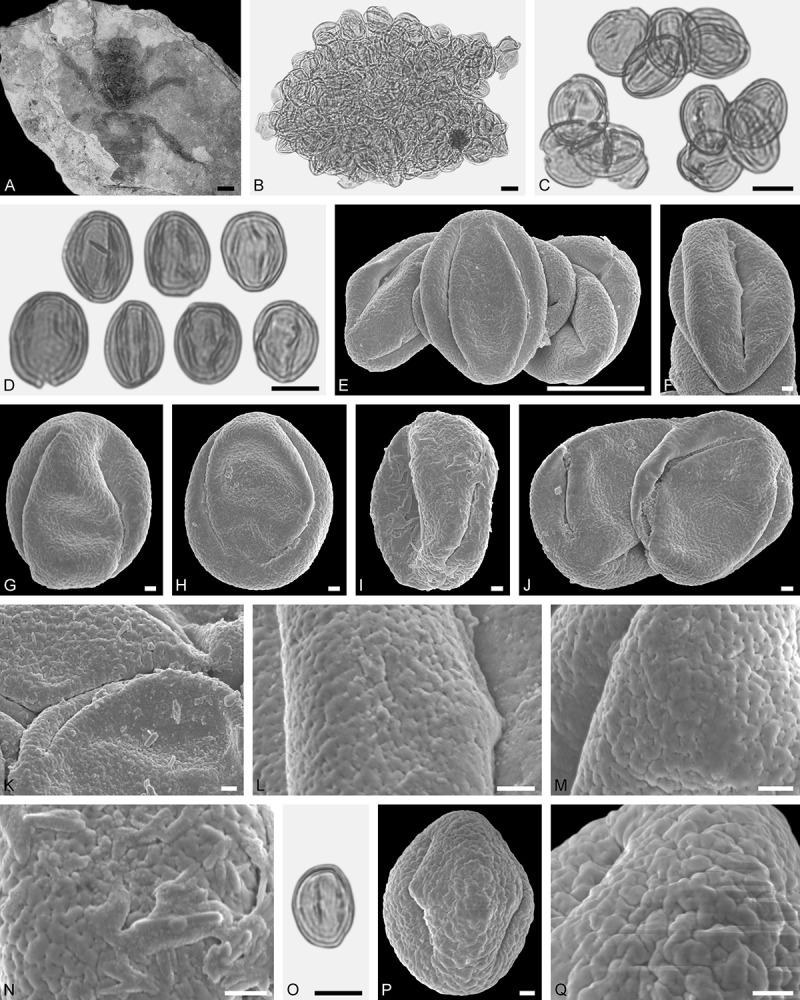
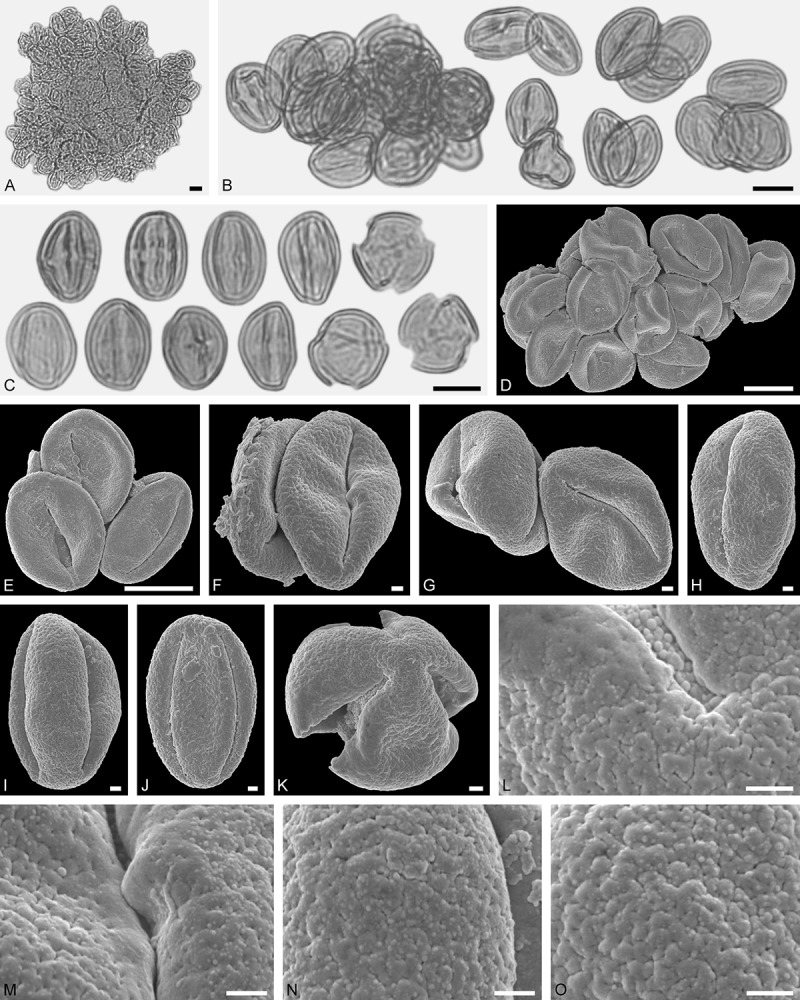
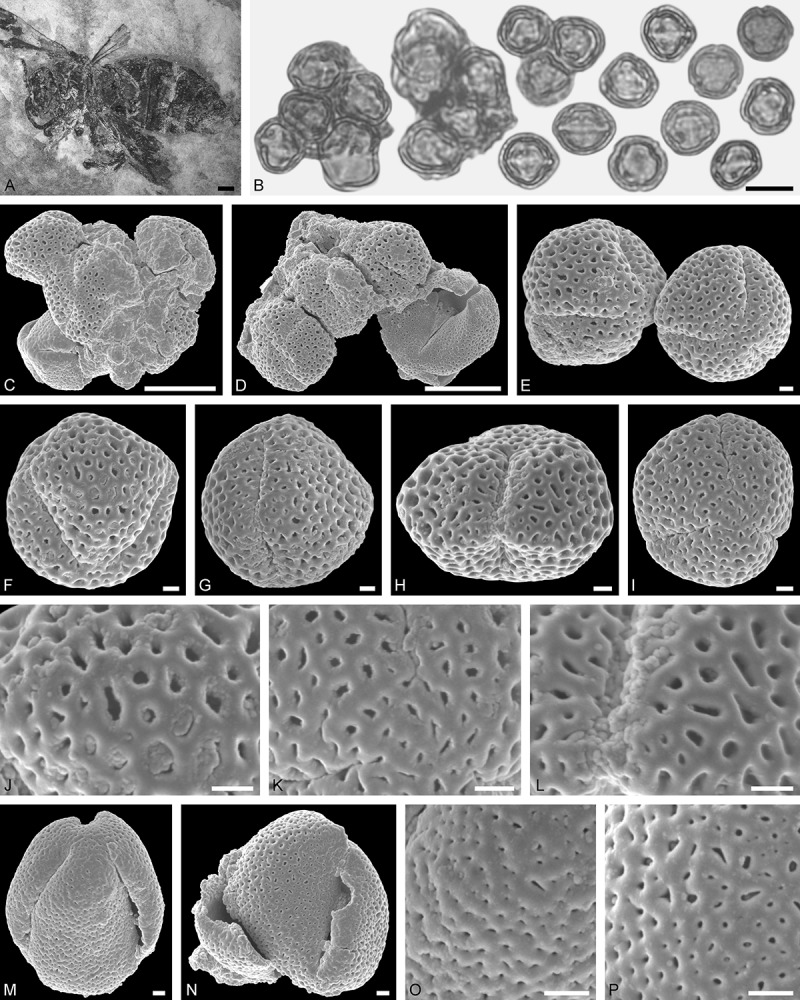
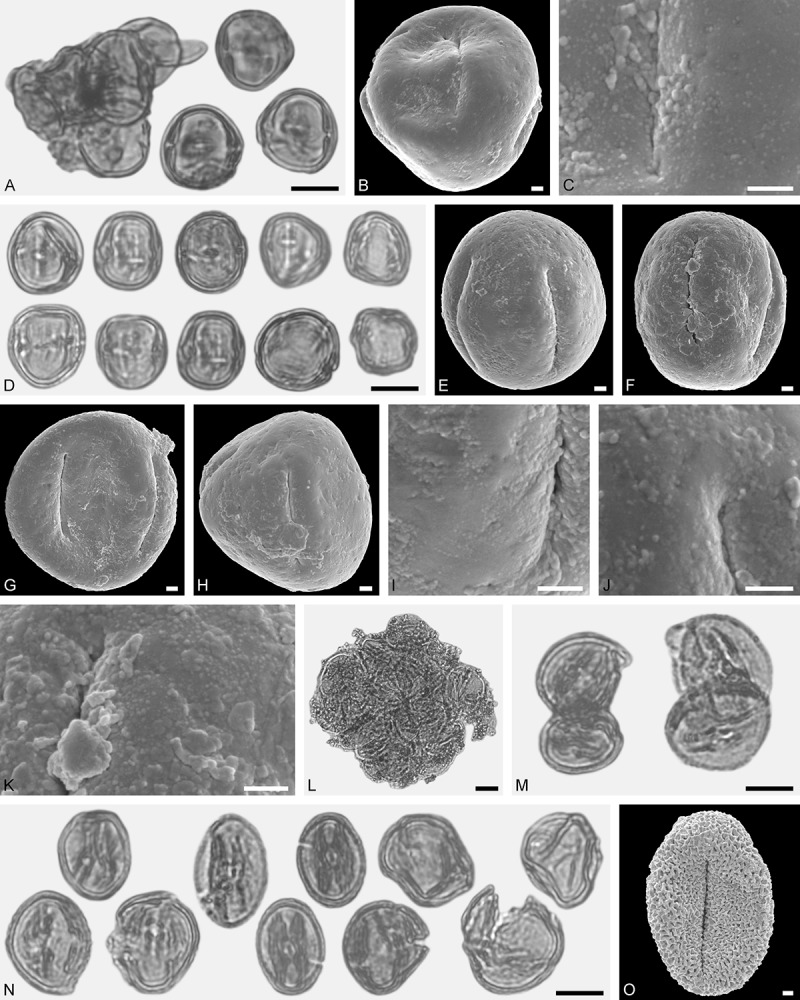
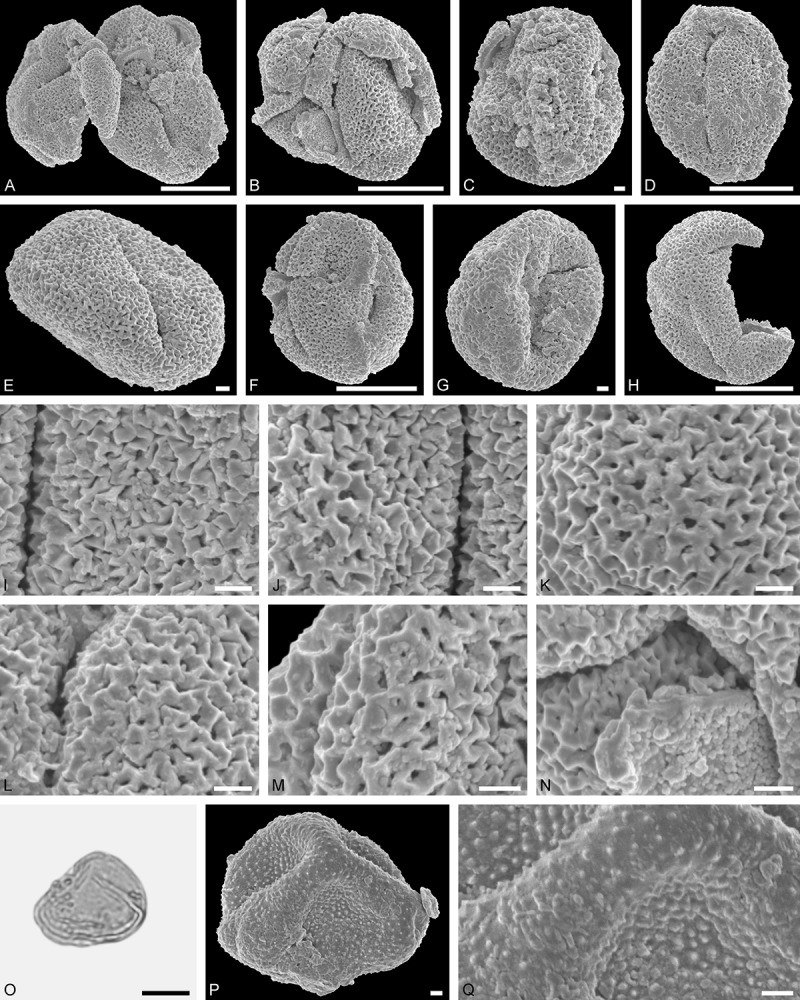
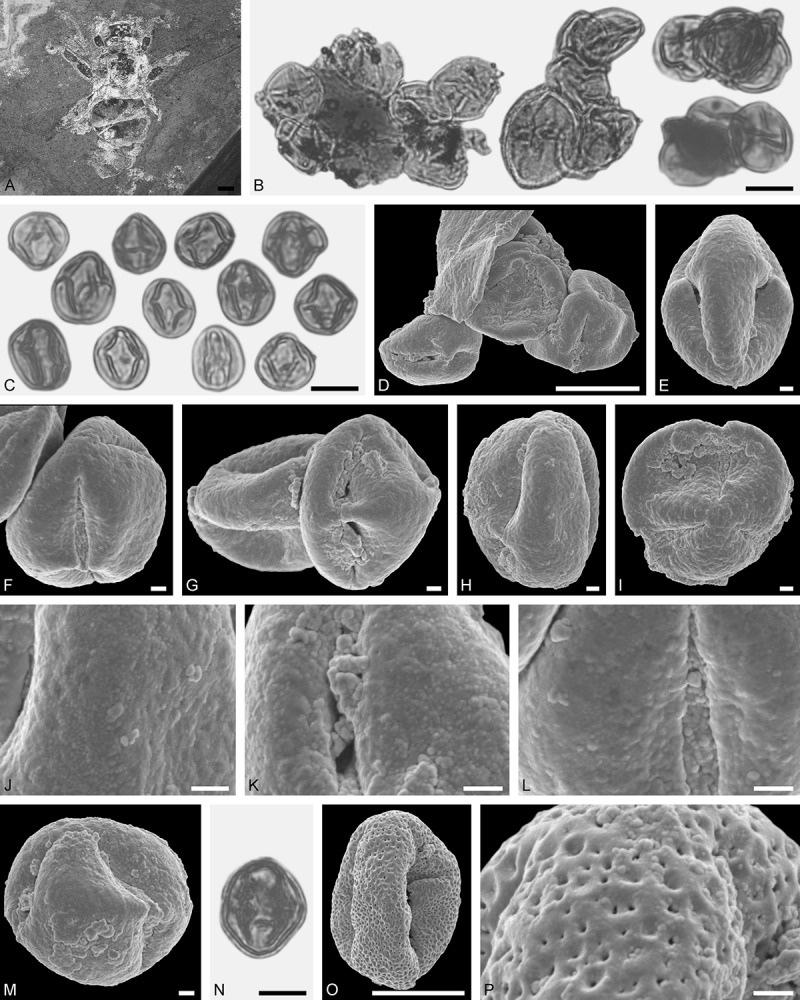
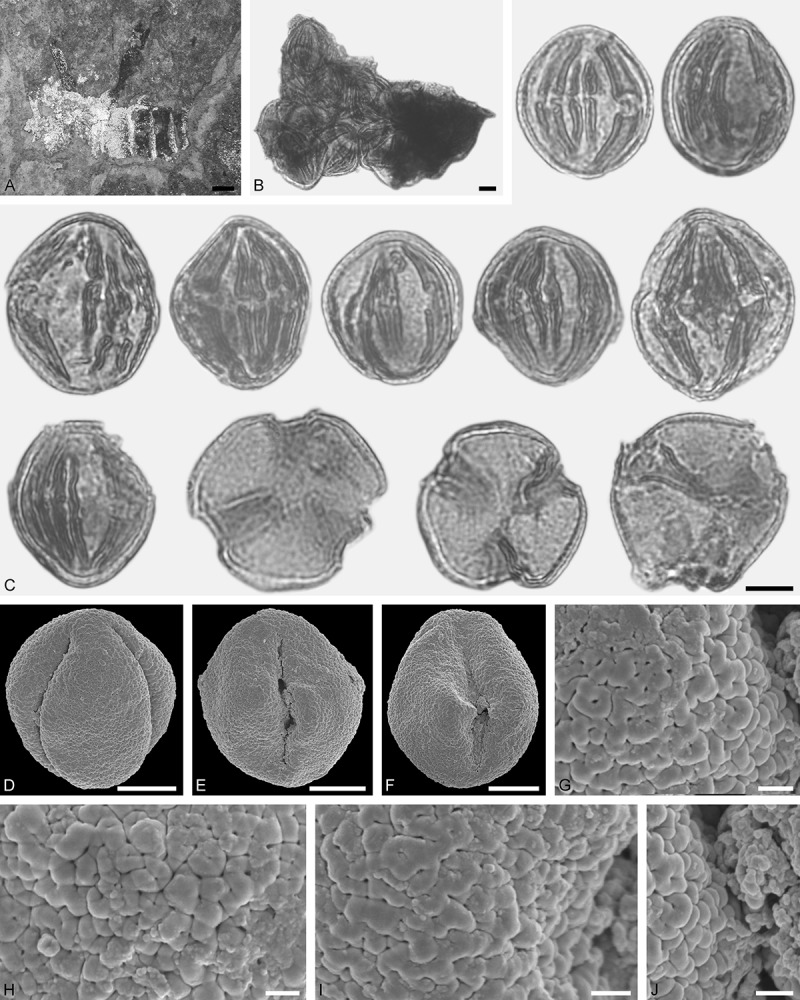
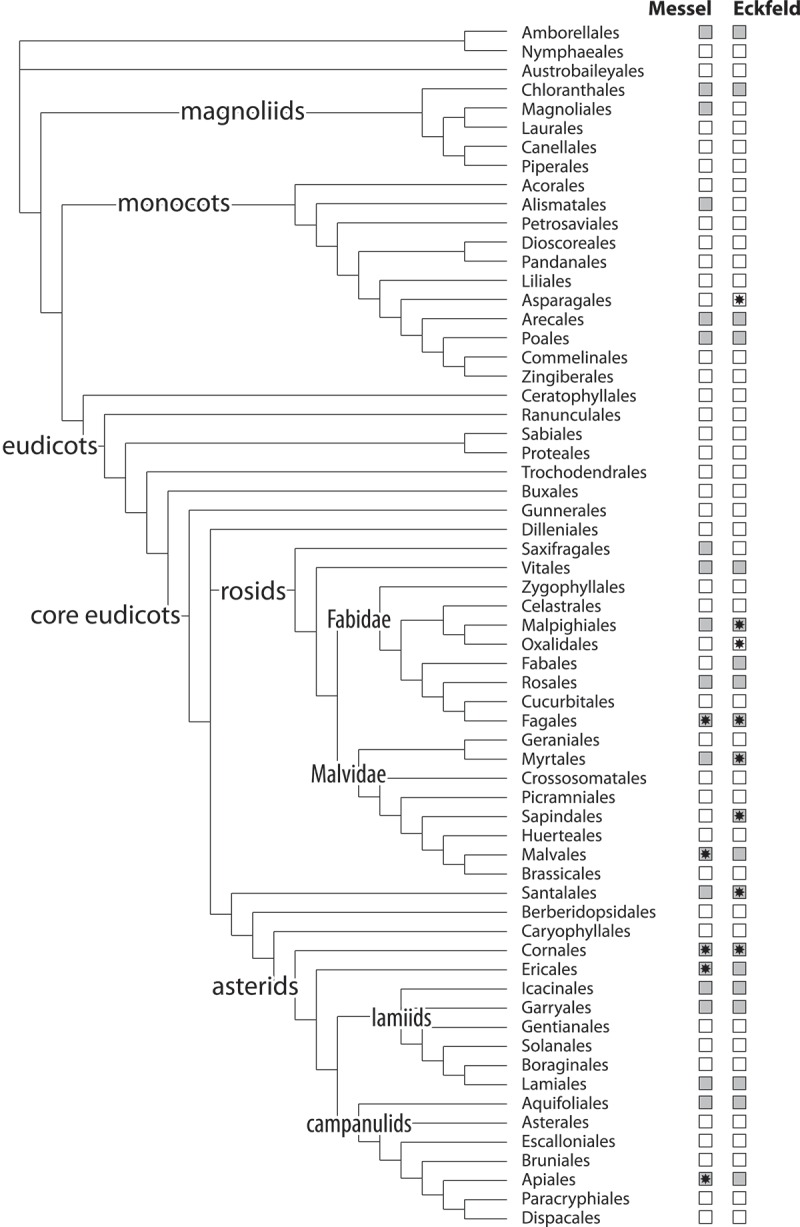
The middle Eocene Messel and Eckfeld localities are renowned for their excellently preserved faunas and diverse floras. Here we describe for the first time pollen from insect-pollinated plants found on well-preserved ancient bees using light and scanning electron microscopy. There have been 140 pollen types reported from Messel and 162 pollen types from Eckfeld. Here we document 23 pollen types, six from Messel and 18 from Eckfeld (one is shared). The taxa reported here are all pollinated by insects and mostly not recovered in the previously studied dispersed fossil pollen records. Typically, a single or two pollen types are found on each fossil bee specimen, the maximum number of distinct pollen types on a single individual is five. Only five of the 23 pollen types obtained are angiosperms of unknown affinity, the remainder cover a broad taxonomic range of angiosperm trees and include members of several major clades: monocots (1 pollen type), fabids (7), malvids (4), asterids (5) and other core eudicots (1). Seven types each can be assigned to individual genera or infrafamilial clades. Since bees visit only flowers in the relative vicinity of their habitat, the recovered pollen provides a unique insight into the autochthonous palaeo-flora. The coexistence of taxa such as and other Tilioideae, Mastixoideae, and confirms current views that diverse, thermophilic forests thrived at the Messel and Eckfeld localities, probably under a warm subtropical, fully humid climate. Our study calls for increased attention to pollen found on pollen-harvesting insects such as bees, which can provide new insights on insect-pollinated plants and complement even detailed palaeo-palynological knowledge obtained mostly from pollen of wind-pollinated plants in the dispersed pollen record of sediments. In the case of and the pollen collected by the middle Eocene bees represent the earliest unambiguous records of their respective genera.
始新世中期的梅塞尔和埃克费尔德地区以其保存极为完好的动物群和多样的植物群而闻名。在此,我们首次利用光学显微镜和扫描电子显微镜描述了在保存完好的古代蜜蜂身上发现的虫媒植物花粉。梅塞尔地区已报道了140种花粉类型,埃克费尔德地区有162种花粉类型。在此我们记录了23种花粉类型,其中6种来自梅塞尔,18种来自埃克费尔德(有一种是共有的)。这里报道的分类群均由昆虫授粉,且大多未在之前研究的分散化石花粉记录中发现。通常,每个化石蜜蜂标本上发现一两种花粉类型,单个个体上不同花粉类型的最大数量为五种。所获得的23种花粉类型中只有5种是亲缘关系不明的被子植物,其余的涵盖了被子植物树木广泛的分类范围,包括几个主要分支的成员:单子叶植物(1种花粉类型)、豆类(7种)、锦葵类(4种)、菊类(5种)和其他核心真双子叶植物(1种)。每种有7种类型可归为单个属或亚科分支。由于蜜蜂只访问其栖息地相对附近的花朵,所发现的花粉为当地古植物群提供了独特的见解。椴亚科、 Mastixoideae亚科等分类群的共存证实了当前的观点,即在梅塞尔和埃克费尔德地区曾有多样的、喜温的森林繁荣生长,可能处于温暖的亚热带、完全湿润的气候条件下。我们的研究呼吁更多关注在蜜蜂等采集花粉的昆虫身上发现的花粉,这可以为虫媒植物提供新的见解,并补充从沉积物分散花粉记录中主要由风媒植物花粉获得甚至详细的古孢粉学知识。就[具体植物名称1]和[具体植物名称2]而言,始新世中期蜜蜂采集的花粉代表了它们各自属的最早明确记录。