Lin Yan-Ren, Li Chao-Jui, Syu Shih-Han, Wen Cheng-Hao, Buddhakosai Waradee, Wu Han-Ping, Hsu Chen Cheng, Lu Huai-En, Chen Wen-Liang
Department of Emergency Medicine, Changhua Christian Hospital, Changhua, Taiwan; School of Medicine, Kaohsiung Medical University, Kaohsiung, Taiwan; School of Medicine, Chung Shan Medical University, Taichung, Taiwan.
Department of Emergency Medicine, Chang Gung Memorial Hospital-Kaohsiung Medical Center, Chang Gung University College of Medicine, Kaohsiung, Taiwan; Department of Public Health, College of Health Science, Kaohsiung Medical University, Kaohsiung, Taiwan.
Biomed Res Int. 2016;2016:2106342. doi: 10.1155/2016/2106342. Epub 2016 Dec 12.
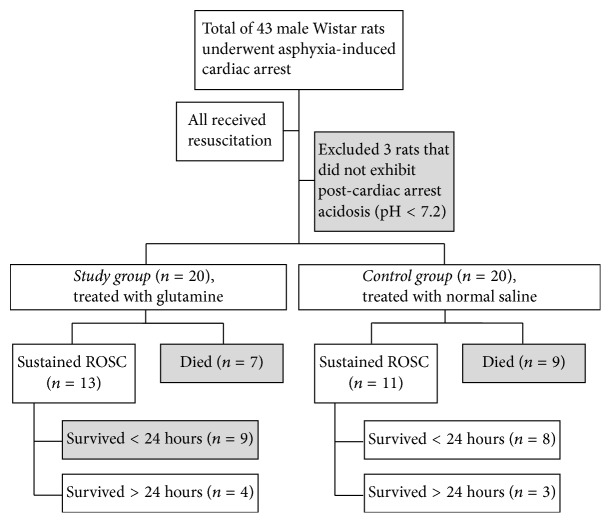
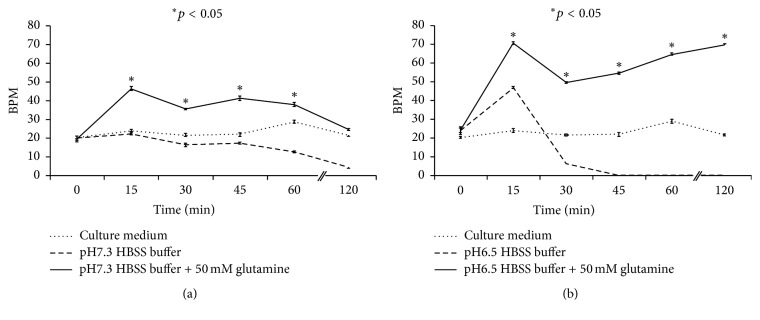
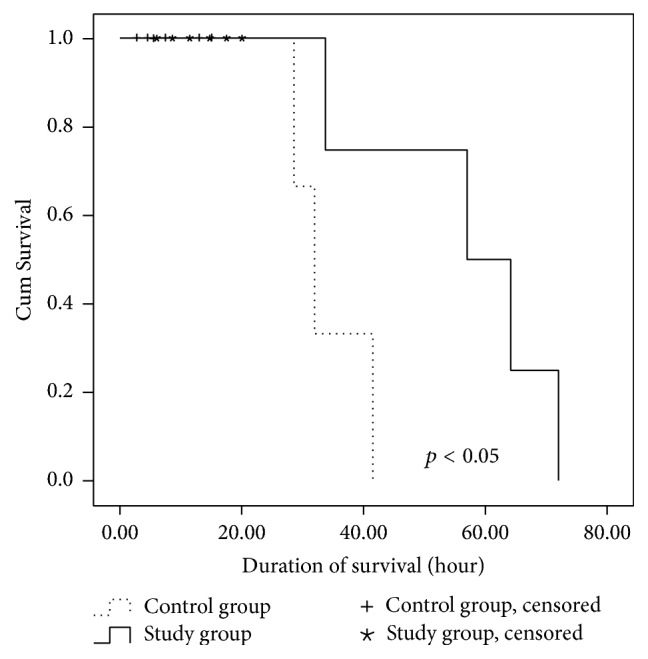
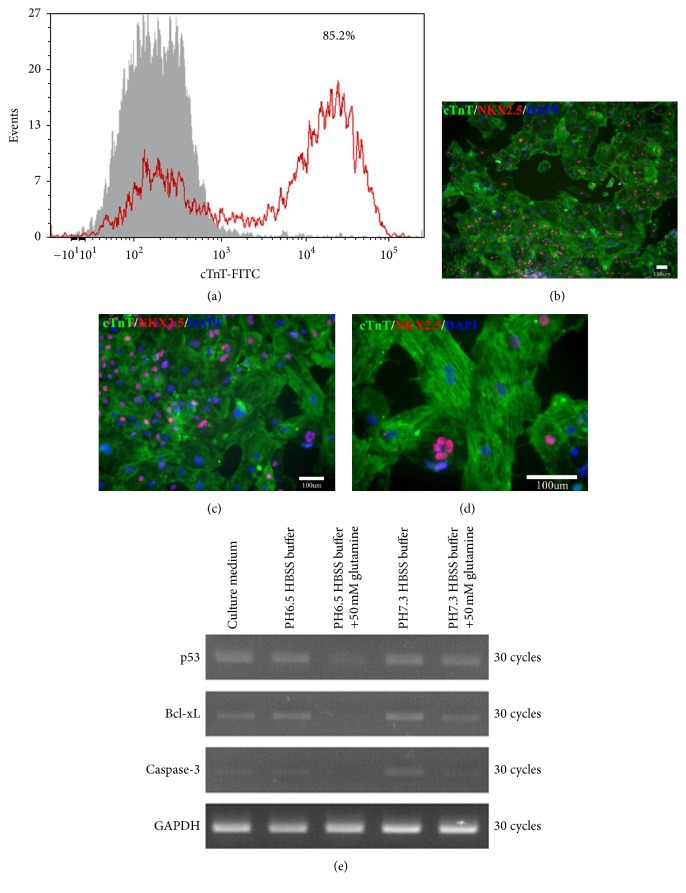
Postcardiac arrest acidosis can decrease survival. Effective medications without adverse side effects are still not well characterized. We aimed to analyze whether early administration of glutamine could improve survival and protect cardiomyocytes from postcardiac arrest acidosis using animal and cell models. Forty Wistar rats with postcardiac arrest acidosis (blood pH < 7.2) were included. They were divided into study (500 mg/kg L-alanyl-L-glutamine, = 20) and control (normal saline, = 20) groups. Each of the rats received resuscitation. The outcomes were compared between the two groups. In addition, cardiomyocytes derived from human induced pluripotent stem cells were exposed to HBSS with different pH levels (7.3 or 6.5) or to culture medium (control). Apoptosis-related markers and beating function were analyzed. We found that the duration of survival was significantly longer in the study group ( < 0.05). In addition, in pH 6.5 or pH 7.3 HBSS buffer, the expression levels of cell stress (p53) and apoptosis (caspase-3, Bcl-xL) markers were significantly lower in cardiomyocytes treated with 50 mM L-glutamine than those without L-glutamine (RT-PCR). L-glutamine also increased the beating function of cardiomyocytes, especially at the lower pH level (6.5). More importantly, glutamine decreased cardiomyocyte apoptosis and increased these cells' beating function at a low pH level.
心脏骤停后酸中毒会降低生存率。尚无充分表征的无不良副作用的有效药物。我们旨在使用动物和细胞模型分析早期给予谷氨酰胺是否能提高生存率,并保护心肌细胞免受心脏骤停后酸中毒的影响。纳入40只患有心脏骤停后酸中毒(血液pH < 7.2)的Wistar大鼠。将它们分为研究组(500 mg/kg L-丙氨酰-L-谷氨酰胺,n = 20)和对照组(生理盐水,n = 20)。每组大鼠均接受复苏。比较两组的结果。此外,将源自人诱导多能干细胞的心肌细胞暴露于不同pH水平(7.3或6.5)的HBSS或培养基(对照)中。分析凋亡相关标志物和搏动功能。我们发现研究组的生存时间明显更长(P < 0.05)。此外,在pH 6.5或pH 7.3的HBSS缓冲液中,用50 mM L-谷氨酰胺处理的心肌细胞中细胞应激(p53)和凋亡(caspase-3、Bcl-xL)标志物的表达水平明显低于未用L-谷氨酰胺处理的细胞(逆转录-聚合酶链反应)。L-谷氨酰胺还增强了心肌细胞的搏动功能,尤其是在较低pH水平(6.5)时。更重要的是,谷氨酰胺在低pH水平下减少了心肌细胞凋亡并增强了这些细胞的搏动功能。