Vogel Anna-Lena, Knier Benjamin, Lammens Katja, Kalluri Sudhakar Reddy, Kuhlmann Tanja, Bennett Jeffrey L, Korn Thomas
Klinikum rechts der Isar, Department of Neurology, Technical University of Munich, Munich, Germany.
Klinikum rechts der Isar, Department of Experimental Neuroimmunology, Technical University of Munich, Munich, Germany.
Eur J Immunol. 2017 Mar;47(3):458-469. doi: 10.1002/eji.201646855. Epub 2017 Jan 25.
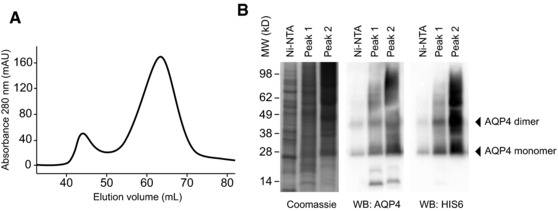
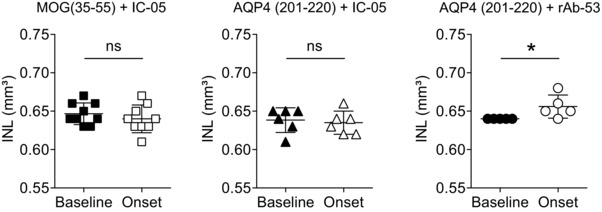
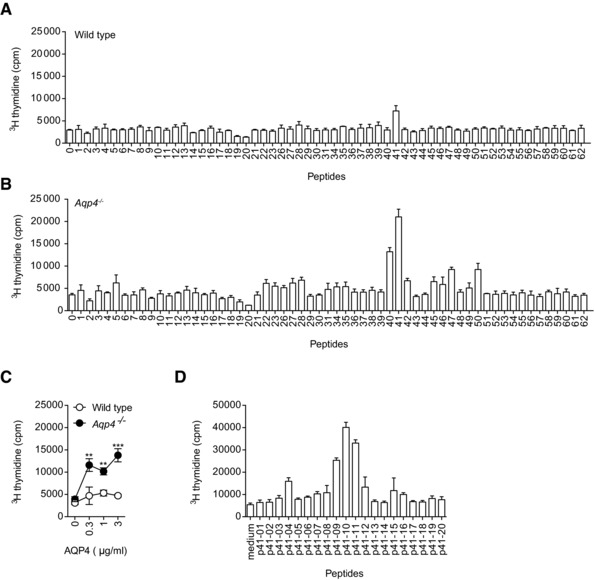
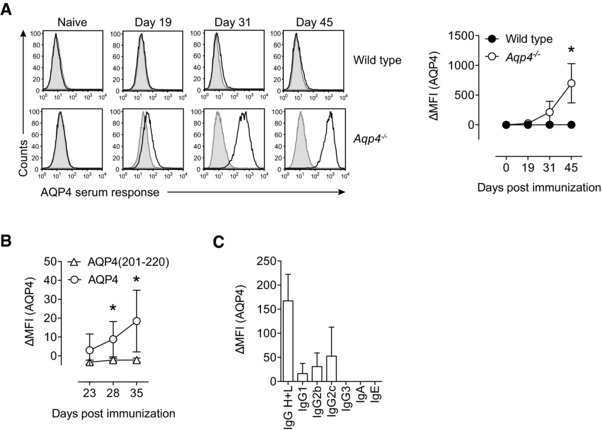
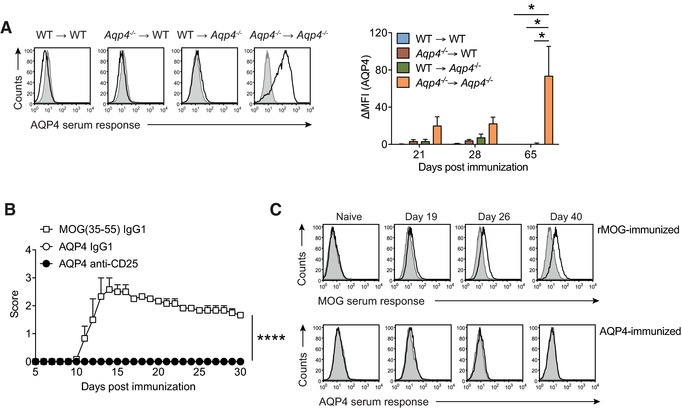
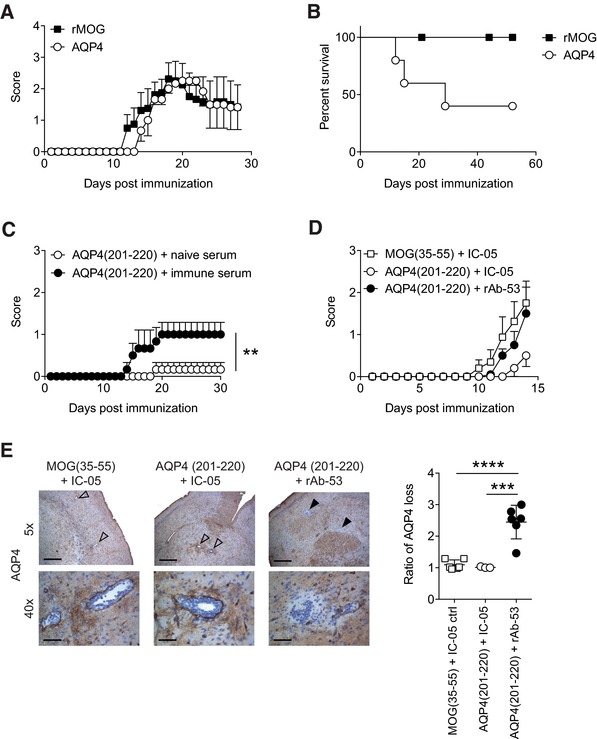
Neuromyelitis optica (NMO) is an autoimmune disorder of the central nervous system (CNS) mediated by antibodies to the water channel protein AQP4 expressed in astrocytes. The contribution of AQP4-specific T cells to the class switch recombination of pathogenic AQP4-specific antibodies and the inflammation of the blood-brain barrier is incompletely understood, as immunogenic naturally processed T-cell epitopes of AQP4 are unknown. By immunizing Aqp4 mice with full-length murine AQP4 protein followed by recall with overlapping peptides, we here identify AQP4(201-220) as the major immunogenic IA -restricted epitope of AQP4. We show that WT mice do not harbor AQP4(201-220)-specific T-cell clones in their natural repertoire due to deletional tolerance. However, immunization with AQP4(201-220) of Rag1 mice reconstituted with the mature T-cell repertoire of Aqp4 mice elicits an encephalomyelitic syndrome. Similarly to the T-cell repertoire, the B-cell repertoire of WT mice is "purged" of AQP4-specific B cells, and robust serum responses to AQP4 are only mounted in Aqp4 mice. While AQP4(201-220)-specific T cells alone induce encephalomyelitis, NMO-specific lesional patterns in the CNS and the retina only occur in the additional presence of anti-AQP4 antibodies. Thus, failure of deletional T-cell and B-cell tolerance against AQP4 is a prerequisite for clinically manifest NMO.
视神经脊髓炎(NMO)是一种中枢神经系统(CNS)的自身免疫性疾病,由针对星形胶质细胞中表达的水通道蛋白AQP4的抗体介导。由于AQP4的免疫原性天然加工T细胞表位尚不清楚,因此AQP4特异性T细胞对致病性AQP4特异性抗体的类别转换重组和血脑屏障炎症的作用尚未完全了解。通过用全长小鼠AQP4蛋白免疫Aqp4小鼠,然后用重叠肽进行再次刺激,我们在此确定AQP4(201-220)是AQP4的主要免疫原性IA限制性表位。我们发现野生型小鼠由于缺失耐受,其天然库中不存在AQP4(201-220)特异性T细胞克隆。然而,用Aqp4小鼠成熟T细胞库重建的Rag1小鼠用AQP4(201-220)免疫会引发脑脊髓炎综合征。与T细胞库类似,野生型小鼠的B细胞库中清除了AQP4特异性B细胞,只有Aqp4小鼠才会对AQP4产生强烈的血清反应。虽然单独的AQP4(201-220)特异性T细胞可诱导脑脊髓炎,但只有在存在抗AQP4抗体的情况下,CNS和视网膜中才会出现NMO特异性病变模式。因此,针对AQP4的T细胞和B细胞缺失耐受失败是临床显性NMO的先决条件。