Department of Neurology, Weill Institute for Neurosciences, University of California, San Francisco, CA 94143.
Program in Immunology, University of California, San Francisco, CA 94143.
Proc Natl Acad Sci U S A. 2023 Jul 25;120(30):e2306572120. doi: 10.1073/pnas.2306572120. Epub 2023 Jul 18.
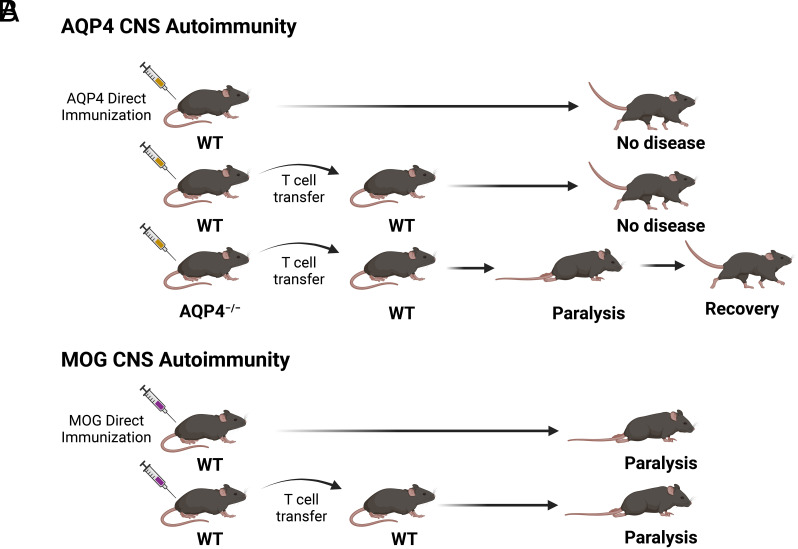
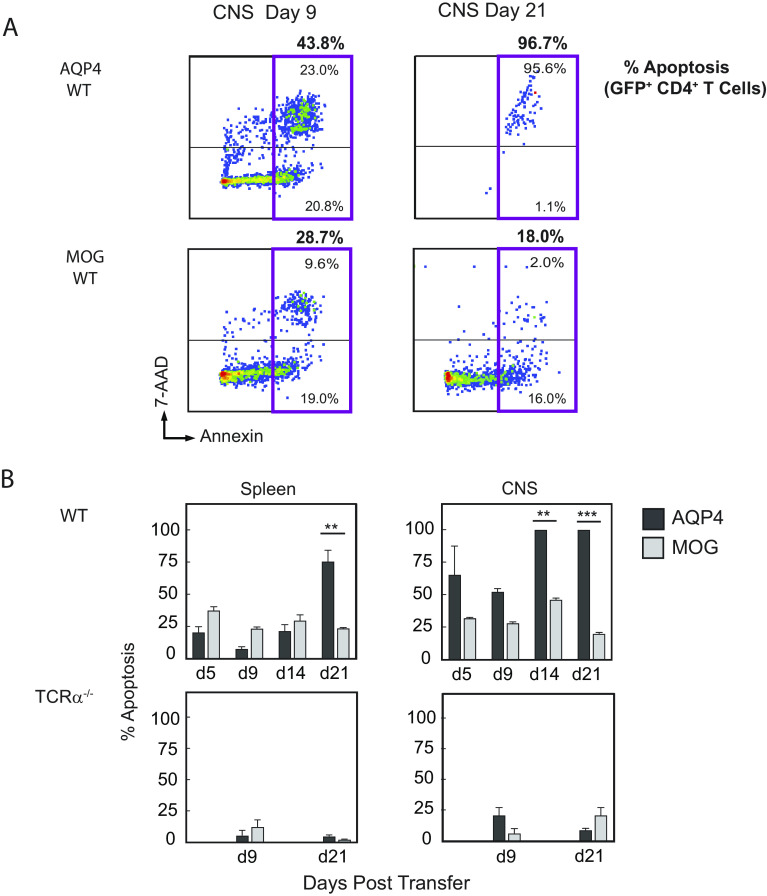
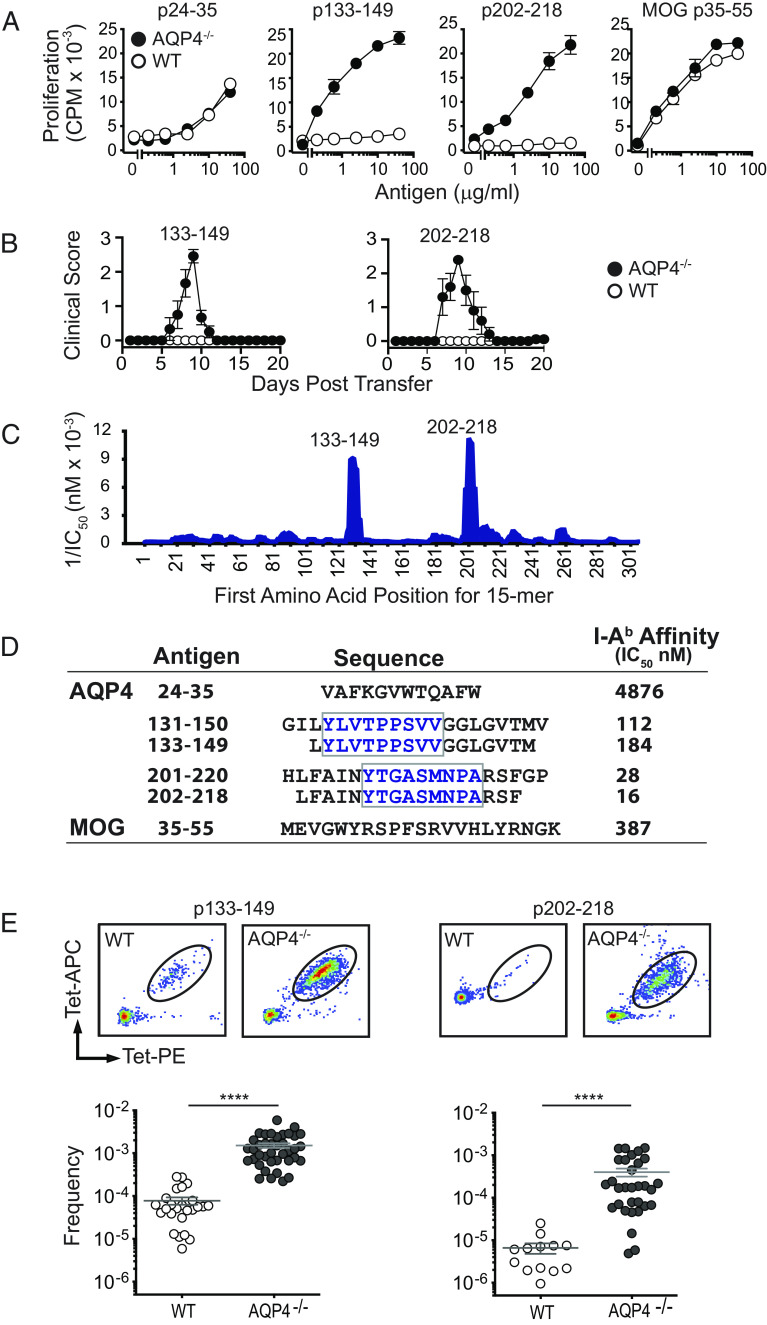
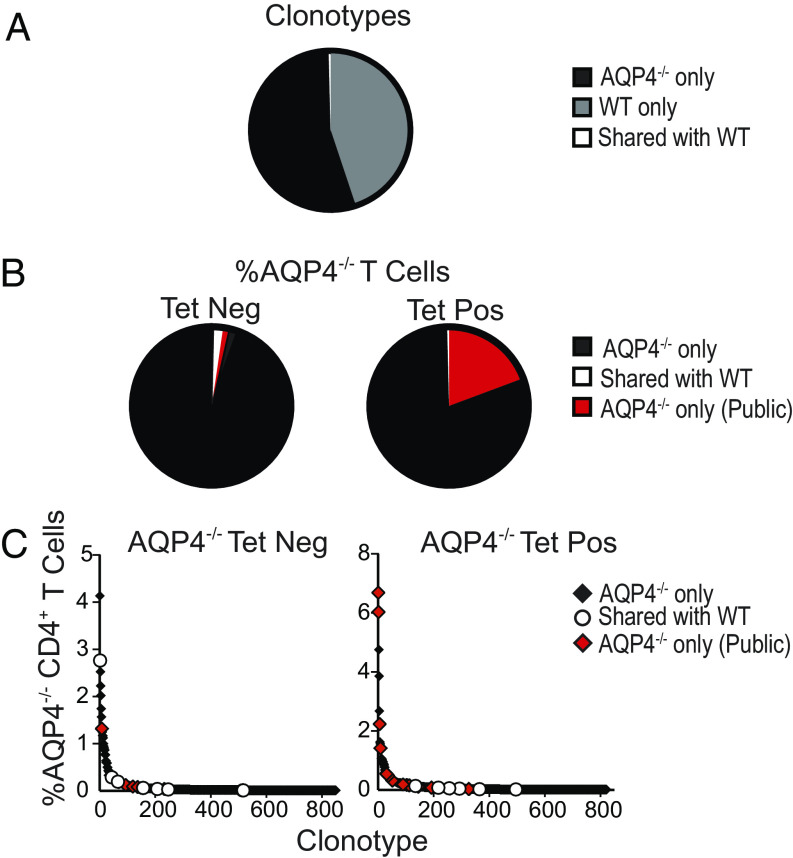
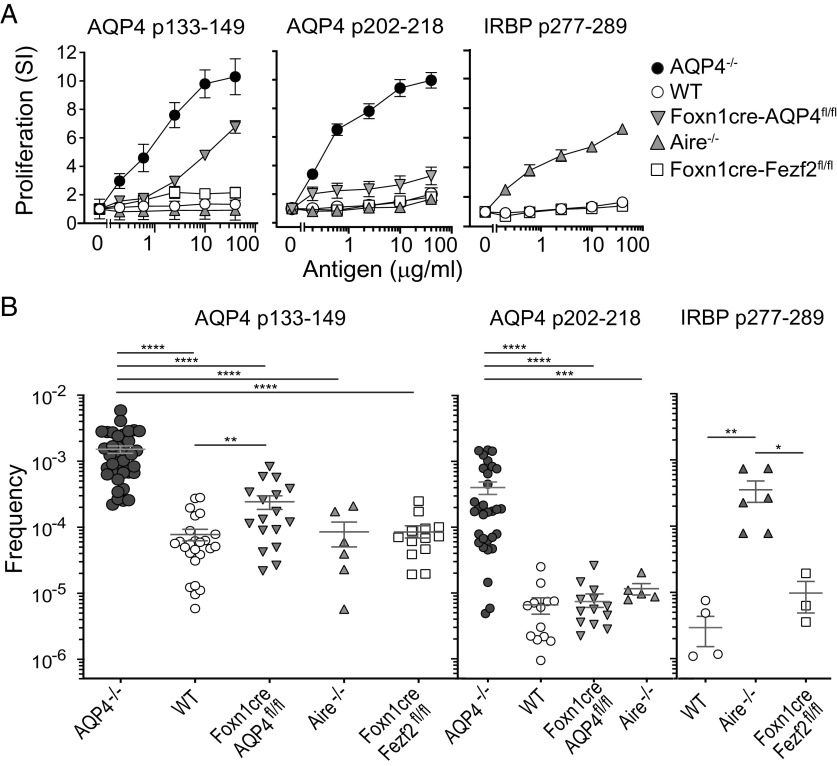
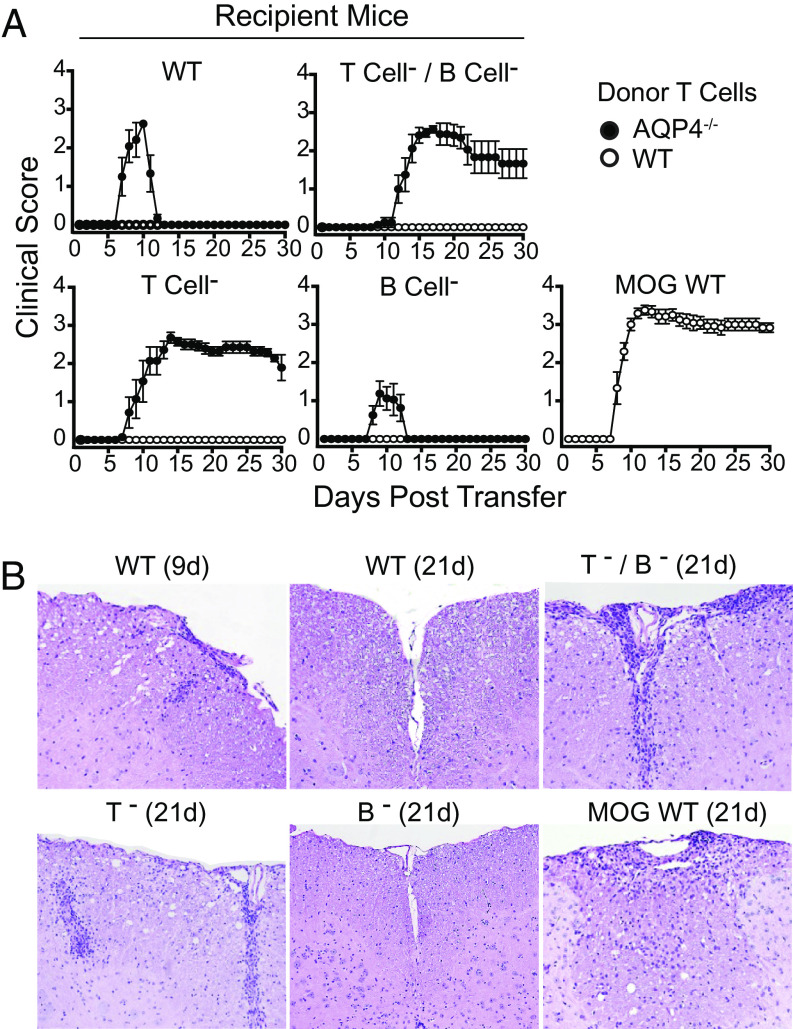
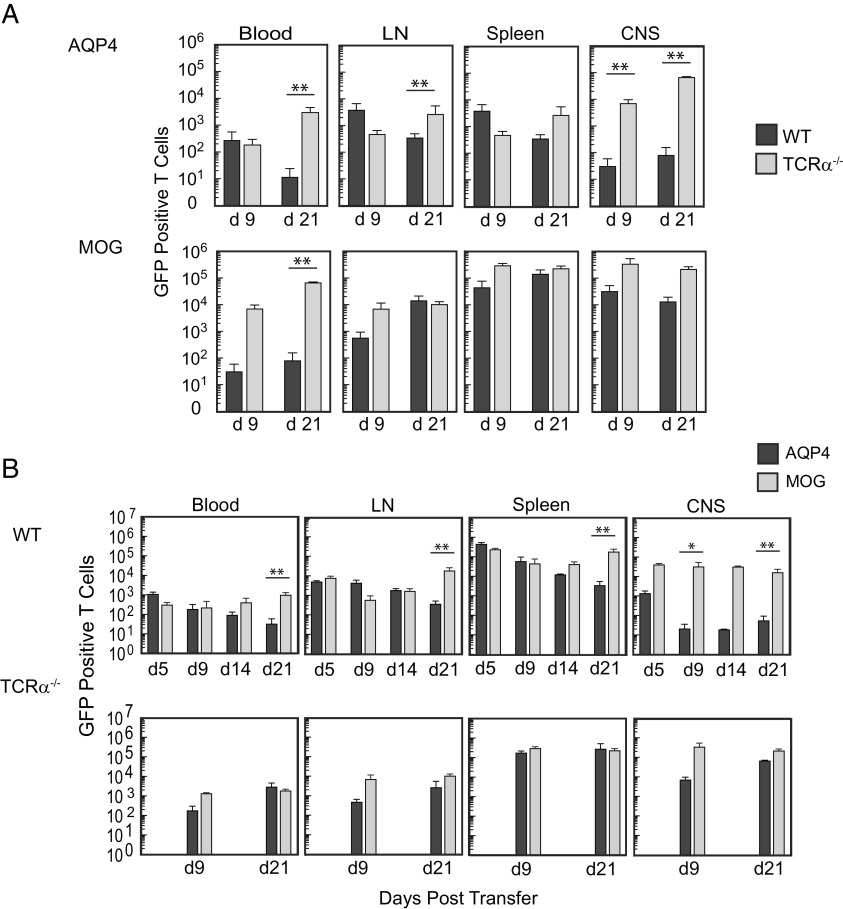
Aquaporin-4 (AQP4)-specific Th17 cells are thought to have a central role in neuromyelitis optica (NMO) pathogenesis. When modeling NMO, only AQP4-reactive Th17 cells from AQP4-deficient (AQP4), but not wild-type (WT) mice, caused CNS autoimmunity in recipient WT mice, indicating that a tightly regulated mechanism normally ensures tolerance to AQP4. Here, we found that pathogenic AQP4 T cell epitopes bind MHC II with exceptionally high affinity. Examination of T cell receptor (TCR) α/β usage revealed that AQP4-specific T cells from AQP4 mice employed a distinct TCR repertoire and exhibited clonal expansion. Selective thymic AQP4 deficiency did not fully restore AQP4-reactive T cells, demonstrating that thymic negative selection alone did not account for AQP4-specific tolerance in WT mice. Indeed, AQP4-specific Th17 cells caused paralysis in recipient WT or B cell-deficient mice, which was followed by complete recovery that was associated with apoptosis of donor T cells. However, donor AQP4-reactive T cells survived and caused persistent paralysis in recipient mice deficient in both T and B cells or mice lacking T cells only. Thus, AQP4 CNS autoimmunity was limited by T cell-dependent deletion of AQP4-reactive T cells. In contrast, myelin oligodendrocyte glycoprotein (MOG)-specific T cells survived and caused sustained disease in WT mice. These findings underscore the importance of peripheral T cell deletional tolerance to AQP4, which may be relevant to understanding the balance of AQP4-reactive T cells in health and in NMO. T cell tolerance to AQP4, expressed in multiple tissues, is distinct from tolerance to MOG, an autoantigen restricted in its expression.
水通道蛋白 4(AQP4)特异性 Th17 细胞被认为在视神经脊髓炎(NMO)发病机制中起核心作用。在模拟 NMO 时,只有来自 AQP4 缺陷(AQP4)而非野生型(WT)小鼠的 AQP4 反应性 Th17 细胞会在 WT 小鼠的受体内引起中枢神经系统自身免疫,这表明一种紧密调控的机制通常可确保对 AQP4 的耐受。在这里,我们发现致病性 AQP4 T 细胞表位与 MHC II 结合具有极高的亲和力。对 T 细胞受体(TCR)α/β使用情况的检查表明,AQP4 小鼠的 AQP4 特异性 T 细胞采用了独特的 TCR 库,并表现出克隆扩增。选择性胸腺 AQP4 缺陷并不能完全恢复 AQP4 反应性 T 细胞,这表明胸腺阴性选择本身并不能解释 WT 小鼠中 AQP4 特异性的耐受。事实上,AQP4 特异性 Th17 细胞在 WT 或 B 细胞缺陷小鼠的受体内引起瘫痪,随后完全恢复,与供体 T 细胞凋亡有关。然而,供体 AQP4 反应性 T 细胞在同时缺乏 T 细胞和 B 细胞或仅缺乏 T 细胞的受体小鼠中存活并引起持续瘫痪。因此,AQP4 中枢神经系统自身免疫受到依赖 T 细胞的 AQP4 反应性 T 细胞删除的限制。相比之下,髓鞘少突胶质细胞糖蛋白(MOG)特异性 T 细胞在 WT 小鼠中存活并引起持续性疾病。这些发现强调了外周 T 细胞删除性耐受 AQP4 的重要性,这可能与理解 AQP4 反应性 T 细胞在健康和 NMO 中的平衡有关。AQP4 的 T 细胞耐受在多种组织中表达,与 MOG 的耐受不同,MOG 的表达受限。