Gonzalez Daniel, Bradley John S, Blumer Jeffrey, Yogev Ram, Watt Kevin M, James Laura P, Palazzi Debra L, Bhatt-Mehta Varsha, Sullivan Janice E, Zhang Li, Murphy Jennifer, Ussery Xilla T, Puttagunta Sailaja, Dunne Michael W, Cohen-Wolkowiez Michael
From the*Division of Pharmacotherapy and Experimental Therapeutics, UNC Eshelman School of Pharmacy, The University of North Carolina at Chapel Hill, Chapel Hill, North Carolina; †University of California San Diego School of Medicine and Rady Children's Hospital, San Diego, California; ‡University of Toledo Medical Center, Toledo, Ohio; §Ann & Robert H. Lurie Children's Hospital of Chicago, Feinberg School of Medicine, Northwestern University, Chicago, Illinois; ¶Department of Pediatrics, Duke University Medical Center, and ‖Duke Clinical Research Institute, Duke University Medical Center, Durham, North Carolina; **Arkansas Children's Hospital Research Institute and University of Arkansas for Medical Sciences, Little Rock, Arkansas; ††Infectious Diseases Section, Baylor College of Medicine, Houston, Texas; ‡‡College of Pharmacy and Department of Pediatrics, University of Michigan, Ann Arbor, Michigan; §§Kosair Charities Pediatric Clinical Research Unit, Department of Pediatrics, University of Louisville, and ¶¶Kosair Children's Hospital, Louisville, Kentucky; ‖‖Institute for Clinical Pharmacodynamics, Latham, New York; and ***Durata Therapeutics, a subsidiary of Actavis plc, Branford, Connecticut.
Pediatr Infect Dis J. 2017 Jul;36(7):645-653. doi: 10.1097/INF.0000000000001538.
Dalbavancin is a novel lipoglycopeptide antibiotic that has potent in vitro activity against Gram-positive microorganisms.
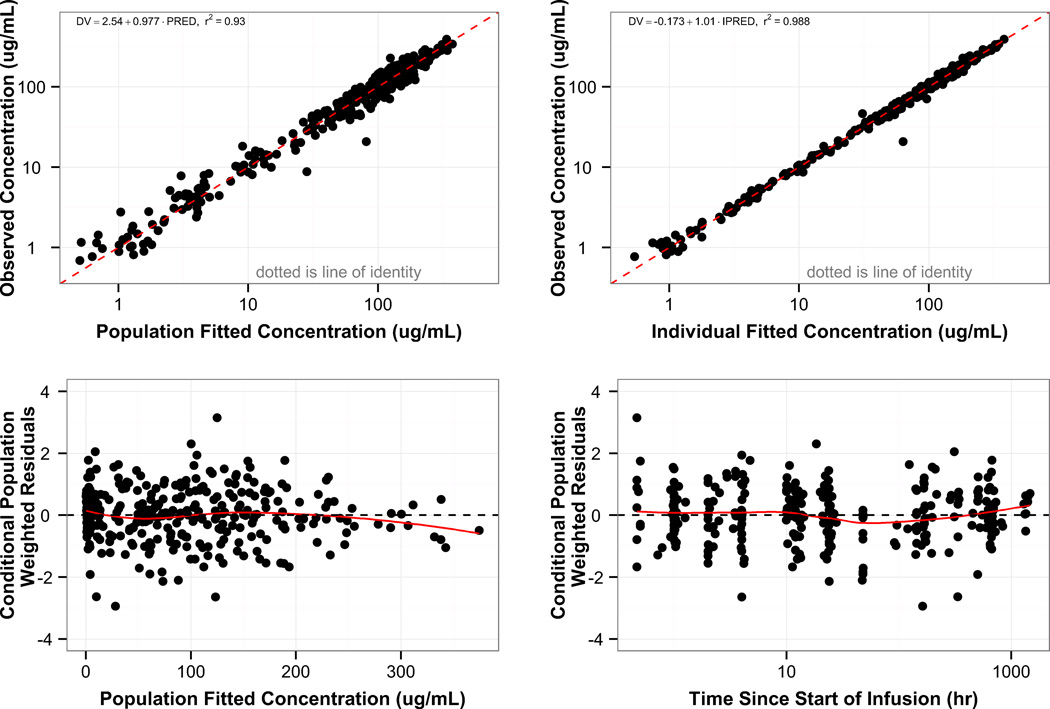
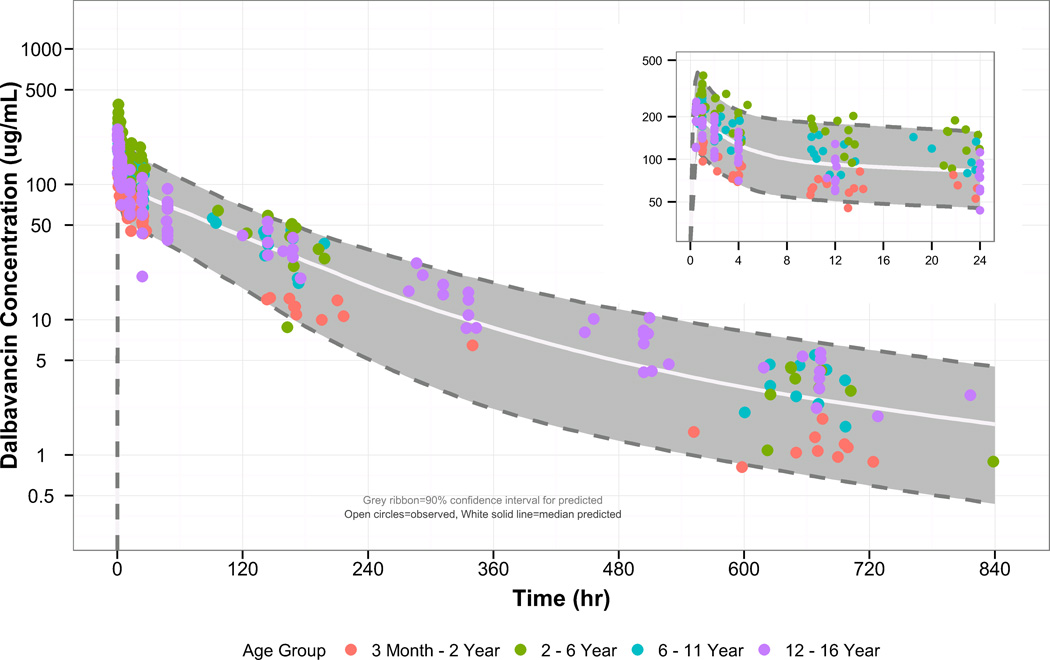
We performed a phase 1, open-label, multicenter study to investigate the pharmacokinetics (PK) and safety of a single dose of intravenous dalbavancin in hospitalized pediatric subjects 3 months to 11 years of age. We combined these data with previously collected adolescent PK data and performed a population PK analysis.
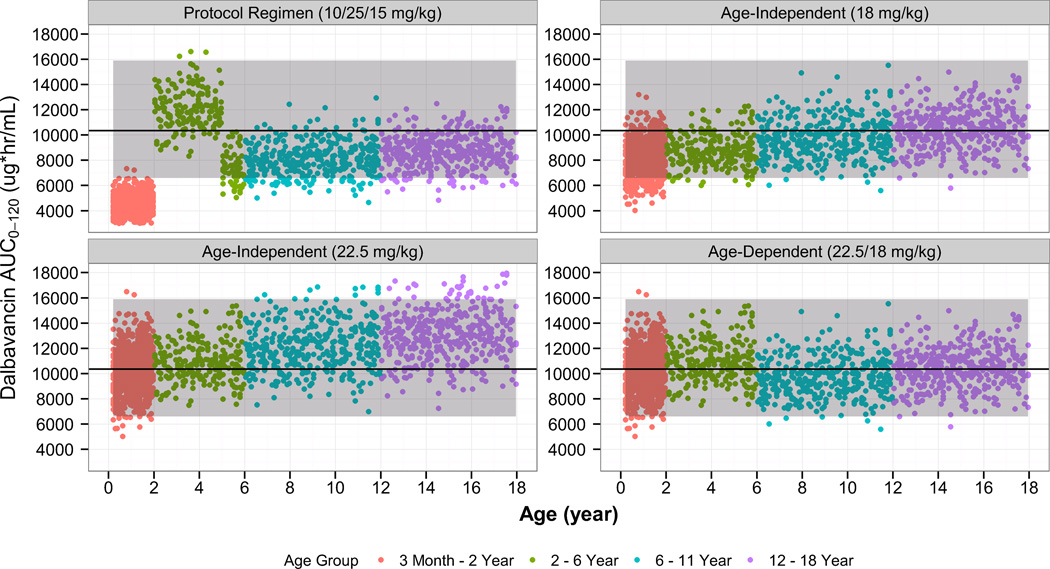
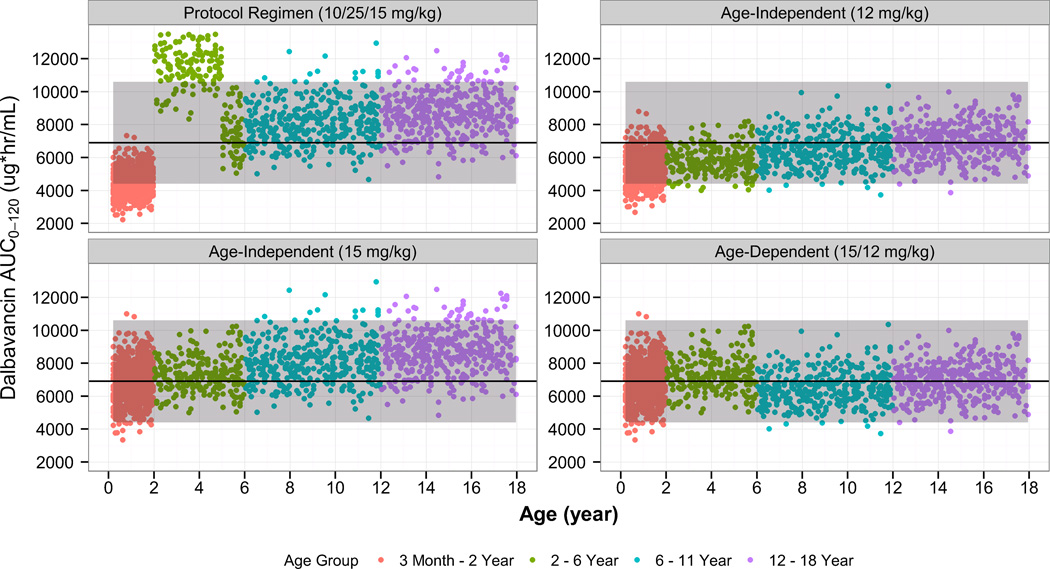
Model development was performed using 311 dalbavancin plasma concentrations from 43 subjects. The median age was 5.9 years (range: 0.3-16.9). A 3-compartment, linear PK model was developed. Based on simulations, the following age-dependent dosing regimen was found to achieve similar dalbavancin exposure to that in adults administered a 2-dose regimen: children 6 to <18 years of age, 12 mg/kg (1000 mg maximum) on day 1 and 6 mg/kg (500 mg maximum) on day 8 and children 3 months to <6 years of age, 15 mg/kg (1000 mg maximum) on day 1 and 7.5 mg/kg (500 mg maximum) on day 8. Similarly, the following age-dependent regimen was found to match adult exposure after a single-dose (1500 mg): 6 to <18 years of age, 18 mg/kg (1500 mg maximum) on day 1 and 3 months to <6 years of age, 22.5 mg/kg (1500 mg maximum) on day 1. Nineteen subjects experienced 36 treatment-emergent adverse events. Five of 36 adverse events were assessed as possibly or probably related to treatment.
Dalbavancin pediatric dosing that matched adult exposure was identified. Overall, dalbavancin was well tolerated in our study population.
达巴万星是一种新型脂糖肽类抗生素,对革兰氏阳性微生物具有强大的体外活性。
我们开展了一项1期开放标签多中心研究,以调查单剂量静脉注射达巴万星在3个月至11岁住院儿科患者中的药代动力学(PK)和安全性。我们将这些数据与之前收集的青少年PK数据相结合,并进行了群体PK分析。
使用来自43名受试者的311个达巴万星血浆浓度进行模型开发。中位年龄为5.9岁(范围:0.3 - 16.9岁)。建立了一个三室线性PK模型。基于模拟,发现以下年龄依赖性给药方案可使达巴万星的暴露量与接受两剂量方案的成人相似:6至<18岁儿童,第1天12 mg/kg(最大1000 mg),第8天6 mg/kg(最大500 mg);3个月至<6岁儿童,第1天15 mg/kg(最大1000 mg),第8天7.5 mg/kg(最大500 mg)。同样,发现以下年龄依赖性方案在单剂量(1500 mg)后与成人暴露量相当:6至<18岁儿童,第1天18 mg/kg(最大1500 mg);3个月至<6岁儿童,第1天22.5 mg/kg(最大1500 mg)。19名受试者发生了36起治疗中出现的不良事件。36起不良事件中有5起被评估为可能或很可能与治疗有关。
确定了与成人暴露量匹配的达巴万星儿科给药方案。总体而言,达巴万星在我们的研究人群中耐受性良好。