Kim Sung-Min, Noh Min-Young, Kim Heejaung, Cheon So-Young, Lee Kang Mi, Lee Jaeick, Cha Eunju, Park Kyung Seok, Lee Kwang-Woo, Sung Jung-Joon, Kim Seung Hyun
Department of Neurology, Seoul National University, College of Medicine, Seoul, Korea.
Department of Neurology, Hanyang University, College of Medicine, Seoul, Korea.
Oncotarget. 2017 Feb 14;8(7):11855-11867. doi: 10.18632/oncotarget.14416.
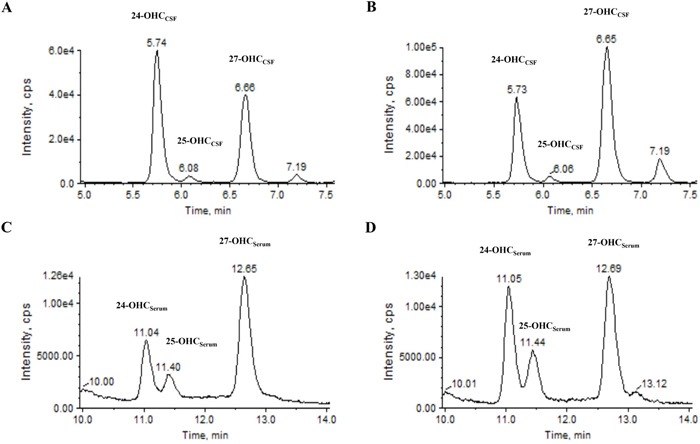
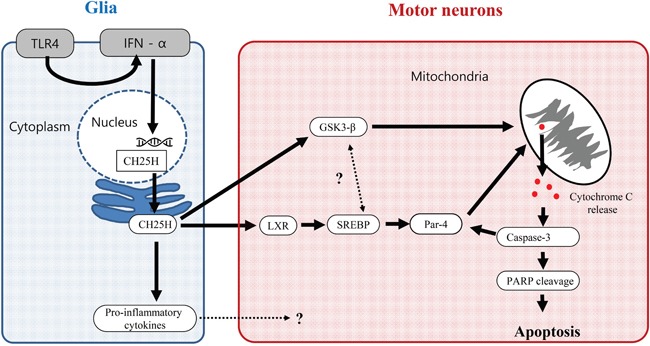
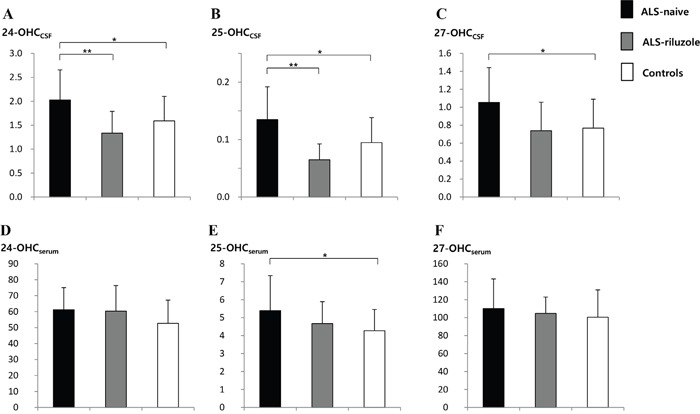
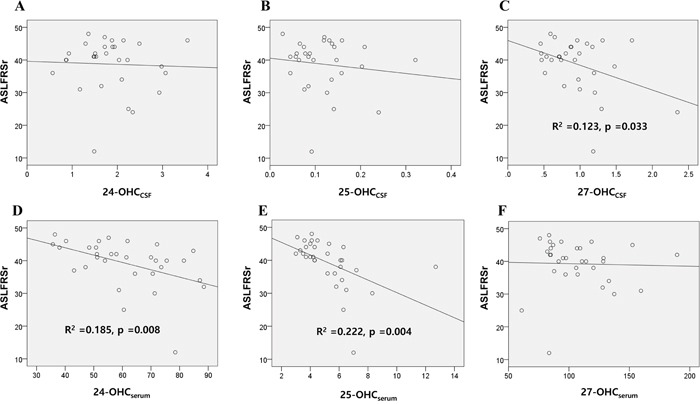
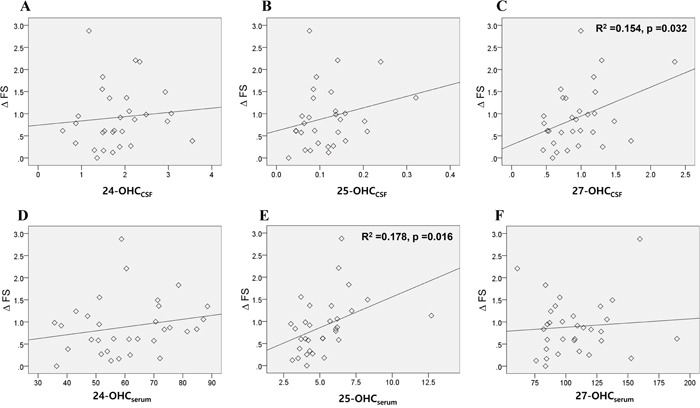
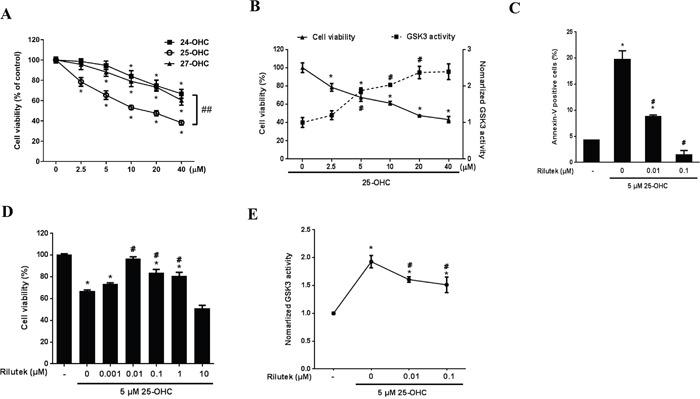
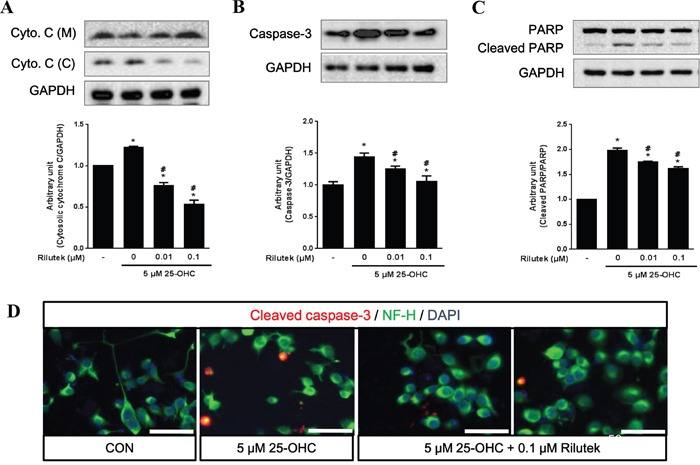
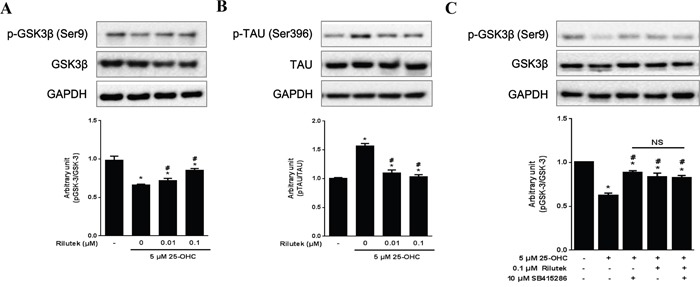
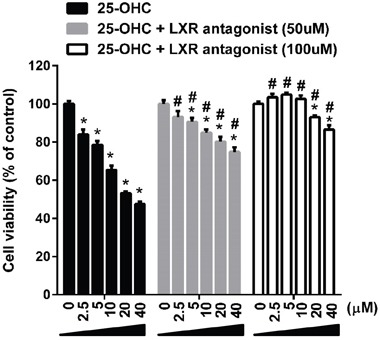
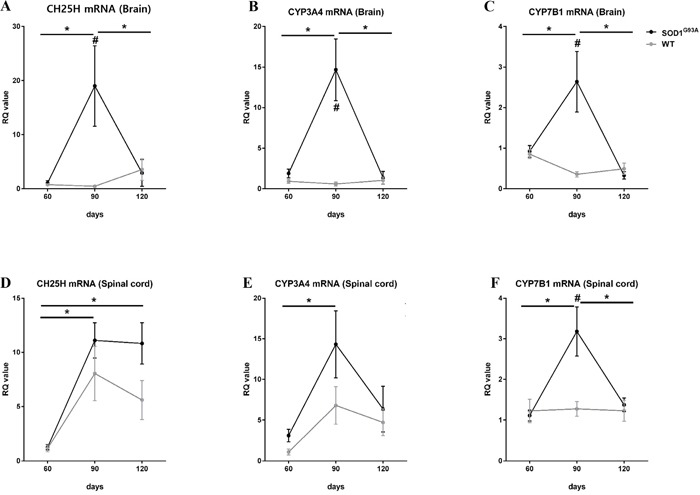
This study aimed to evaluate the levels of three major hydroxycholesterols (24-, 25-, and 27-hydroxycholesterols) in the serum and cerebrospinal fluid (CSF) of patients with amyotrophic lateral sclerosis (ALS), as well as to show their role in the pathogenesis of ALS experimental models. The level of 25-hydroxycholesterol were higher in untreated ALS patients (n = 30) than in controls without ALS (n = 33) and ALS patients treated with riluzole (n = 9) both in their serum and CSF. The level of 25-hydroxycholesterol in the serum of ALS patients were significantly associated with their disease severity and rate of progression. In the motor neuron-like cell line (NSC34) with the human mutant G93A superoxide dismutase 1 gene (mSOD1-G93A), 25-hydroxycholesterol induced motor neuronal death/ apoptosis via glycogen synthase kinase-3β and liver X receptor pathways; riluzole treatment attenuated these effects. The expressions of enzymes that synthesize 25-hydroxycholesterol were significantly increased in the brains of early symptomatic mSOD1G93A mice. Our data, obtained from patients with ALS, a cellular model of ALS, and an animal model of ALS, suggests that 25-hydroxycholesterol could be actively involved in the pathogenesis of ALS, mostly in the early symptomatic disease stage, by mediating neuronal apoptosis.
本研究旨在评估肌萎缩侧索硬化症(ALS)患者血清和脑脊液(CSF)中三种主要羟基胆固醇(24 -、25 -和27 -羟基胆固醇)的水平,并揭示它们在ALS实验模型发病机制中的作用。未经治疗的ALS患者(n = 30)血清和脑脊液中25 -羟基胆固醇的水平高于无ALS的对照组(n = 33)和接受利鲁唑治疗的ALS患者(n = 9)。ALS患者血清中25 -羟基胆固醇的水平与疾病严重程度和进展速度显著相关。在携带人类突变G93A超氧化物歧化酶1基因(mSOD1 - G93A)的运动神经元样细胞系(NSC34)中,25 -羟基胆固醇通过糖原合酶激酶 - 3β和肝X受体途径诱导运动神经元死亡/凋亡;利鲁唑治疗可减弱这些作用。在早期有症状的mSOD1G93A小鼠大脑中,合成25 -羟基胆固醇的酶的表达显著增加。我们从ALS患者、ALS细胞模型和ALS动物模型中获得的数据表明,25 -羟基胆固醇可能通过介导神经元凋亡而积极参与ALS的发病机制,主要是在疾病早期有症状阶段。