Fakkert Ingrid E, van der Veer Eveline, Abma Elske Marije, Lefrandt Joop D, Wolffenbuttel Bruce H R, Oosterwijk Jan C, Slart Riemer H J A, Westrik Iris G, de Bock Geertruida H, Mourits Marian J E
Department of Epidemiology, University of Groningen, University Medical Center Groningen, Groningen, The Netherlands.
Department of Laboratory Medicine, University of Groningen, University Medical Center Groningen, Groningen, The Netherlands.
PLoS One. 2017 Jan 6;12(1):e0169673. doi: 10.1371/journal.pone.0169673. eCollection 2017.
Risk-reducing salpingo-oophorectomy (RRSO) reduces ovarian cancer risk in BRCA1/2 mutation carriers. Premenopausal RRSO is hypothesized to increase fracture risk more than natural menopause. Elevated bone turnover markers (BTMs) might predict fracture risk. We investigated BTM levels after RRSO and aimed to identify clinical characteristics associated with elevated BTMs.
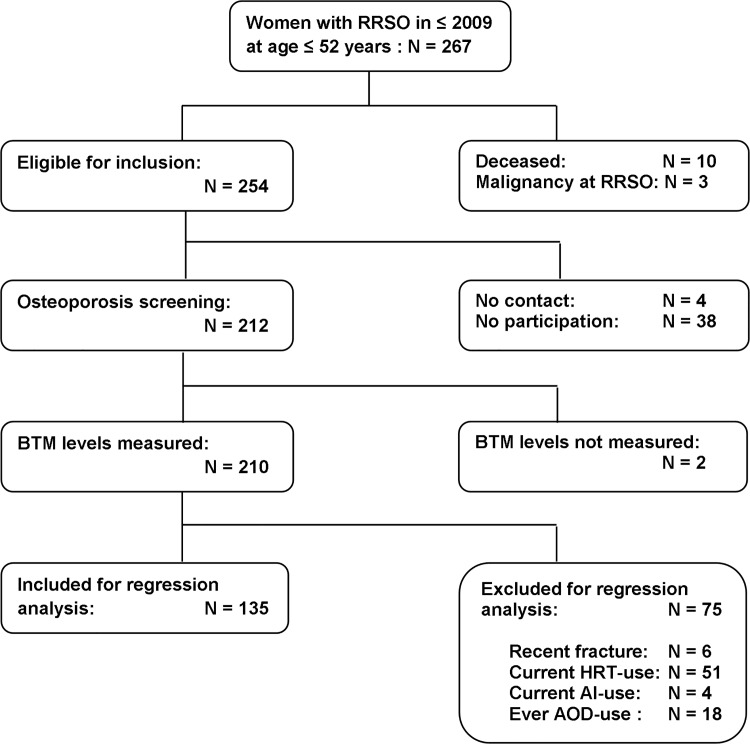
Osteocalcin (OC), procollagen type I N-terminal peptide (PINP) and serum C-telopeptide of type I collagen (sCTx) were measured in 210 women ≥ 2 years after RRSO before age 53. BTM Z-scores were calculated using an existing reference cohort of age-matched women. Clinical characteristics were assessed by questionnaire.
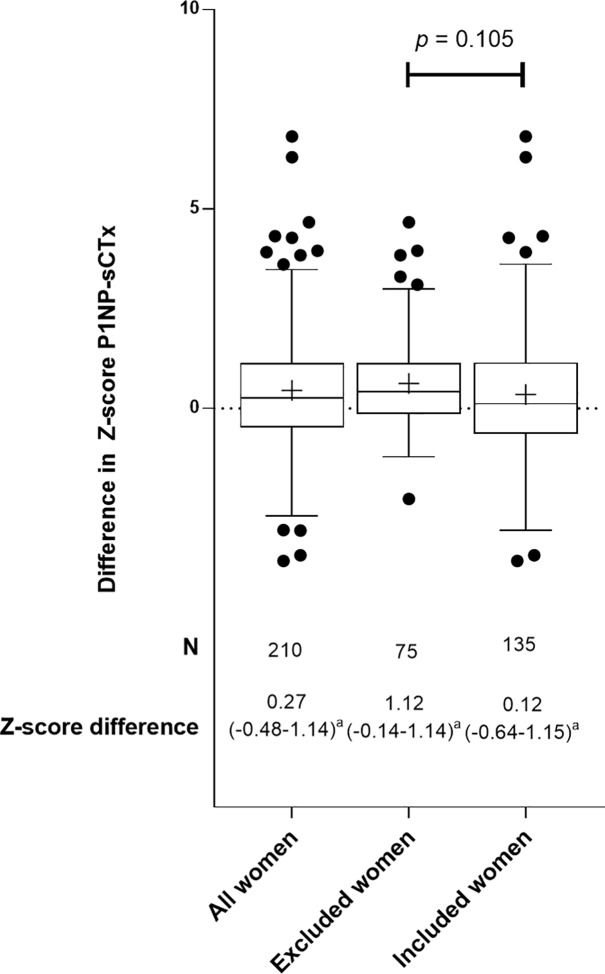
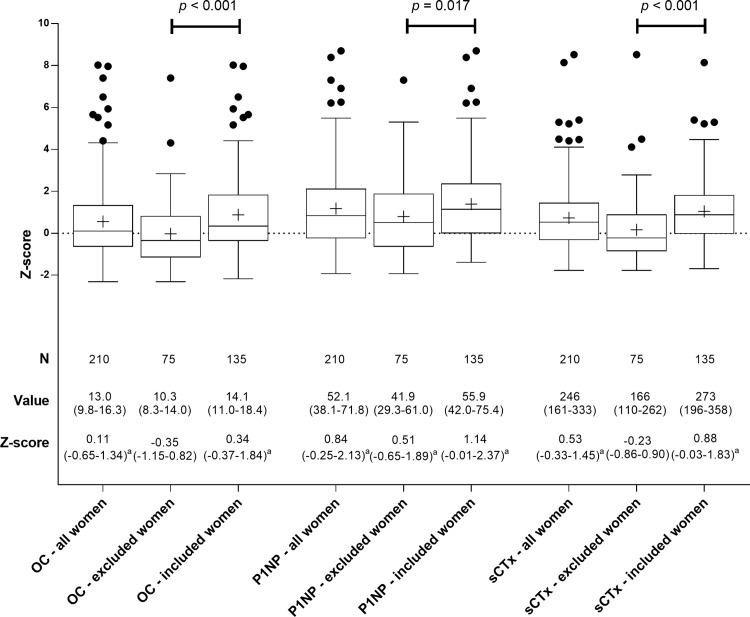
BTMs after RRSO were higher than age-matched reference values: median Z-scores OC 0.11, p = 0.003; PINP 0.84, p < 0.001; sCTx 0.53, p < 0.001 (compared to Z = 0). After excluding women with recent fractures or BTM interfering medication, Z-scores increased to 0.34, 1.14 and 0.88, respectively. Z-scores for OC and PINP were inversely correlated to age at RRSO. No correlation was found with fracture incidence or history of breast cancer.
Five years after RRSO, BTMs were higher than age-matched reference values. Since elevated BTMs might predict higher fracture risk, prospective studies are required to evaluate the clinical implications of this finding.
降低风险的输卵管卵巢切除术(RRSO)可降低BRCA1/2突变携带者患卵巢癌的风险。据推测,绝经前RRSO比自然绝经更易增加骨折风险。骨转换标志物(BTMs)升高可能预示骨折风险。我们研究了RRSO术后的BTM水平,并旨在确定与BTMs升高相关的临床特征。
对210名年龄在53岁之前RRSO术后≥2年的女性测量骨钙素(OC)、I型前胶原N端肽(PINP)和I型胶原血清C端肽(sCTx)。使用现有的年龄匹配女性参考队列计算BTM Z分数。通过问卷调查评估临床特征。
RRSO术后的BTMs高于年龄匹配的参考值:OC的Z分数中位数为0.11,p = 0.003;PINP为0.84,p < 0.001;sCTx为0.53,p < 0.001(与Z = 0相比)。排除近期有骨折或服用影响BTM药物的女性后,Z分数分别升至分别为0.34、1.14和0.88。OC和PINP的Z分数与RRSO时的年龄呈负相关。未发现与骨折发生率或乳腺癌病史相关。
RRSO术后5年,BTMs高于年龄匹配的参考值。由于BTMs升高可能预示更高的骨折风险,因此需要进行前瞻性研究来评估这一发现的临床意义。