Montagne Rémi, Baranzelli Anne, Muharram Ghaffar, Catherine Leroy, Lesaffre Marie, Vinchent Audrey, Kherrouche Zoulika, Werkmeister Elisabeth, Cortot Alexis B, Tulasne David
University Lille, CNRS, Institut Pasteur de Lille, UMR 8161-M3T-Mechanisms of Tumorigenesis and Targeted Therapies, F-59000 Lille, France.
University Lille, CHU Lille, Thoracic Oncology Department, F-59000 Lille, France.
Oncotarget. 2017 Feb 14;8(7):11268-11283. doi: 10.18632/oncotarget.14499.
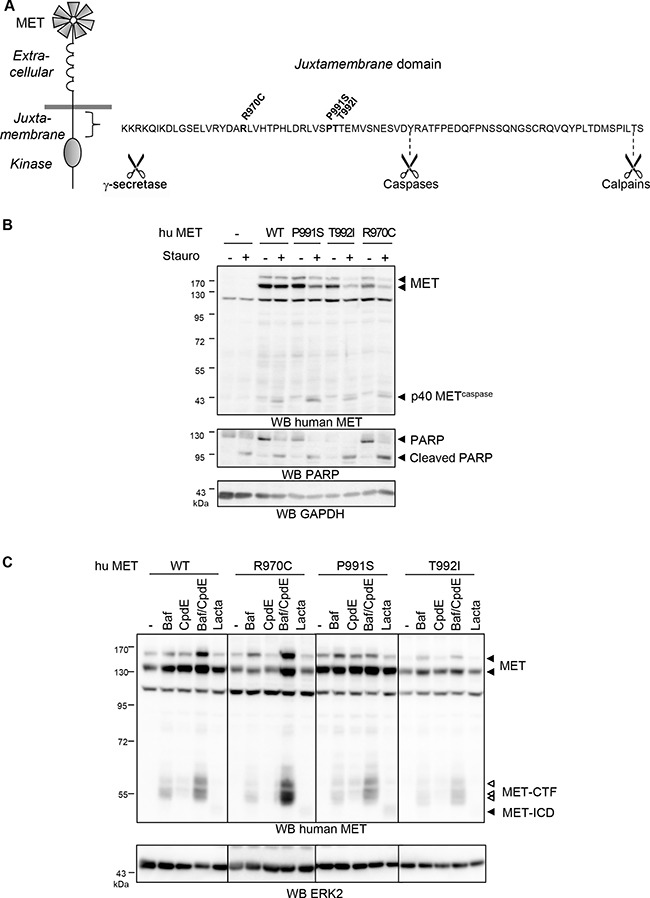
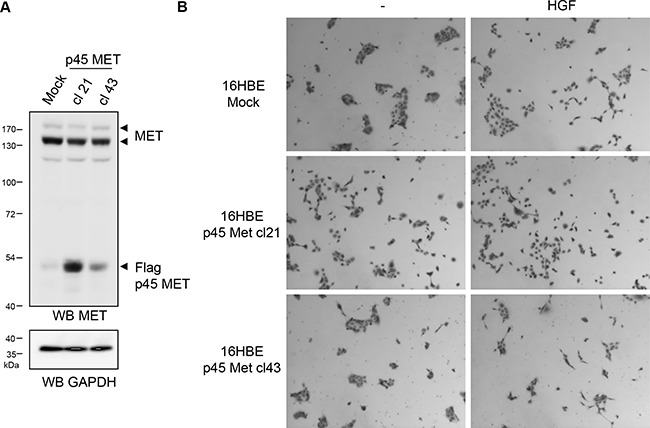
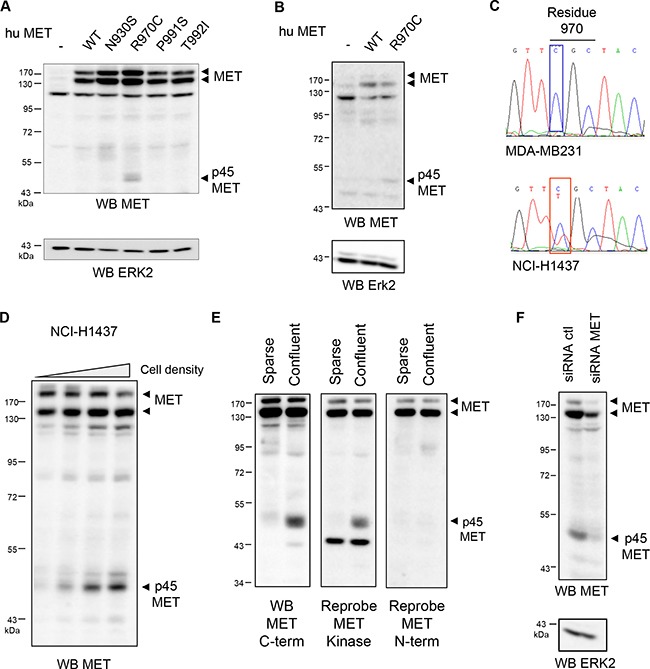
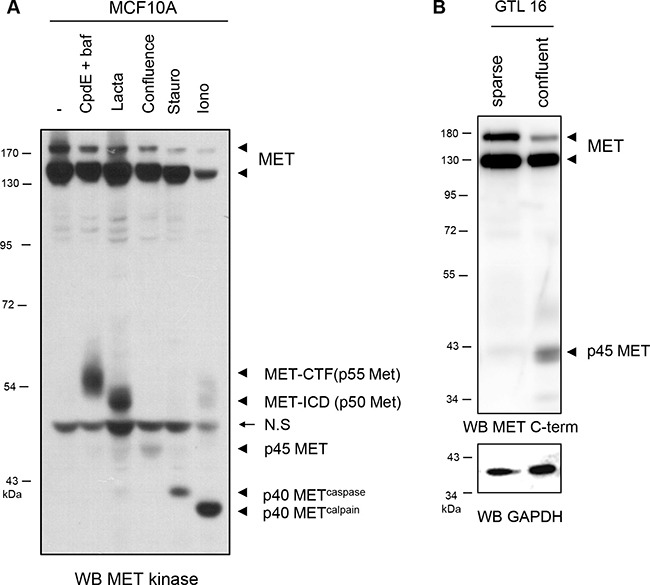
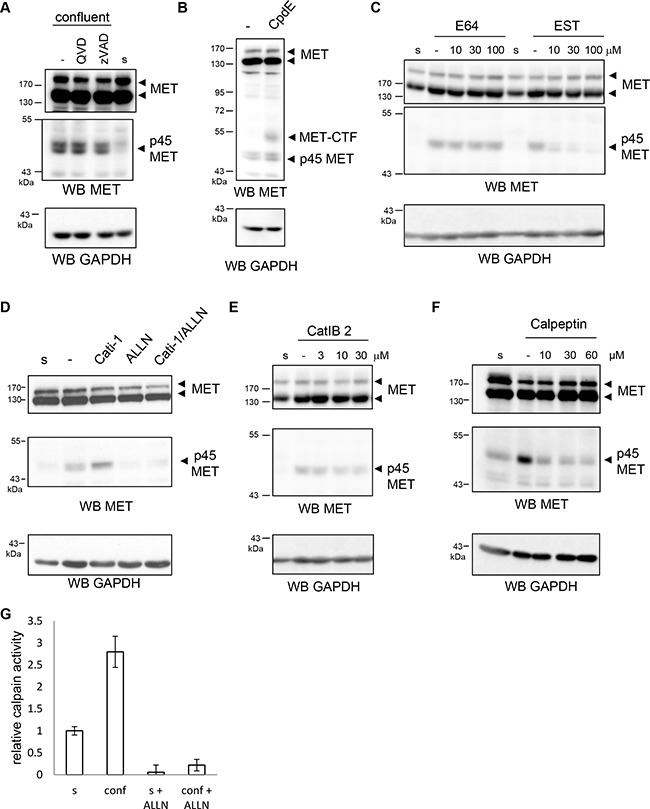
The receptor tyrosine kinase MET and its ligand, the hepatocyte growth factor, are essential to embryonic development, whereas deregulation of MET signaling is associated with tumorigenesis leading to various cancers, including lung carcinoma. Mutations in the MET kinase domain lead to constitutive kinase activity and are associated with tumorigenesis. In lung cancer, however, some mutations are found in the juxtamembrane domain, and their functional consequences are unknown. Because the juxtamembrane domain of MET is targeted by several proteolytic cleavages, involved in its degradation during cell death or under steady-state conditions, we evaluated the influence of these mutations on the MET proteolytic cleavages. In stably transfected epithelial cells expressing MET, the juxtamembrane mutations R970C, P991S, and T992I were found not to modify the known caspase or presenilin-dependent regulated intramembrane proteolysis. Yet when overexpressed, the R970C variant caused generation of an as yet undescribed 45-kDa fragment (p45 MET). This fragment was found in the confluent lung cancer cell line NCI-H1437 carrying the R970C mutation and at a lesser extent in cell lines expressing WT MET, suggesting that R970C mutation favors this cleavage. Generation of p45 MET required the activity of the calpain proteases, confirming the involvement of proteolysis. Ectopic expression of reconstituted p45 MET in epithelial cell lines favored cell scattering and invasion indicating active role of this fragment in HGF/SF induced responses. Hence, although the juxtamembrane mutations of MET do not affect its known proteolytic cleavages, the R970C MET variant favors calpain dependent proteolytic cleavage in lung cancer cells.
受体酪氨酸激酶MET及其配体肝细胞生长因子对胚胎发育至关重要,而MET信号失调与导致包括肺癌在内的各种癌症的肿瘤发生相关。MET激酶结构域中的突变导致组成型激酶活性,并与肿瘤发生相关。然而,在肺癌中,一些突变存在于近膜结构域,其功能后果尚不清楚。由于MET的近膜结构域受到几种蛋白水解切割的作用,参与其在细胞死亡期间或稳态条件下的降解,我们评估了这些突变对MET蛋白水解切割的影响。在稳定转染表达MET的上皮细胞中,发现近膜突变R970C、P991S和T992I不会改变已知的半胱天冬酶或早老素依赖性调节性膜内蛋白水解。然而,当过度表达时,R970C变体导致产生一个尚未描述的45 kDa片段(p45 MET)。在携带R970C突变的汇合肺癌细胞系NCI-H1437中发现了该片段,在表达野生型MET的细胞系中也有少量发现,这表明R970C突变有利于这种切割。p45 MET的产生需要钙蛋白酶的活性,证实了蛋白水解的参与。重组p45 MET在上皮细胞系中的异位表达有利于细胞散射和侵袭,表明该片段在HGF/SF诱导的反应中发挥积极作用。因此,尽管MET的近膜突变不影响其已知的蛋白水解切割,但R970C MET变体有利于肺癌细胞中钙蛋白酶依赖性蛋白水解切割。