Snelling Timothy J, Wallace R John
Rowett Institute, University of Aberdeen, Foresterhill, Aberdeen, AB16 5BD, UK.
BMC Microbiol. 2017 Jan 7;17(1):9. doi: 10.1186/s12866-016-0917-y.
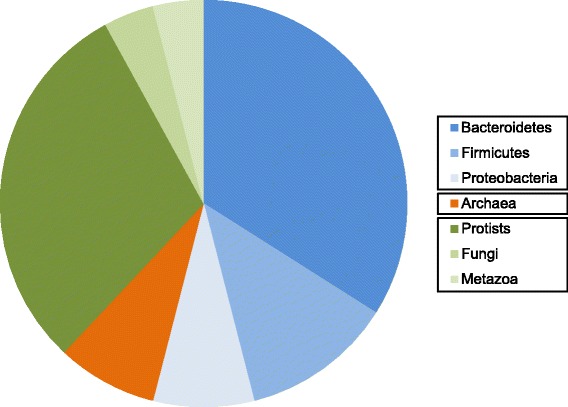
Ruminal digestion is carried out by large numbers of bacteria, archaea, protozoa and fungi. Understanding the microbiota is important because ruminal fermentation dictates the efficiency of feed utilisation by the animal and is also responsible for major emissions of the greenhouse gas, methane. Recent metagenomic and metatranscriptomic studies have helped to elucidate many features of the composition and activity of the microbiota. The metaproteome provides complementary information to these other -omics technologies. The aim of this study was to explore the metaproteome of bovine and ovine ruminal digesta using 2D SDS-PAGE.
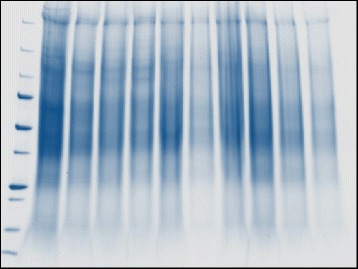
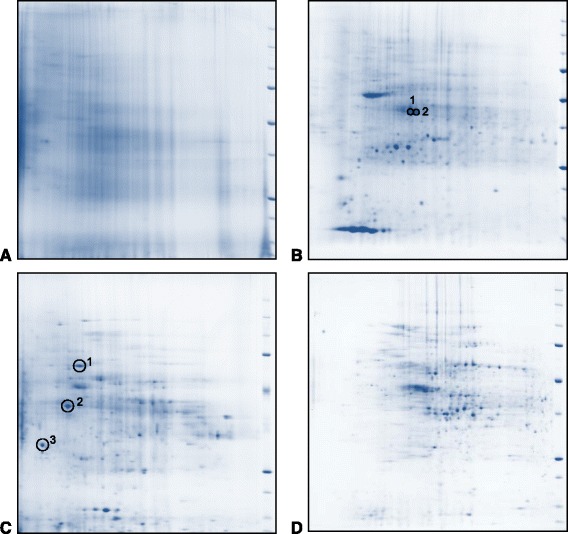
Digesta samples were taken via ruminal fistulae and by gastric intubation, or at slaughter, and stored in glycerol at -80 °C. A protein extraction protocol was developed to maximise yield and representativeness of the protein content. The proteome of ruminal digesta taken from dairy cows fed a high concentrate diet was dominated by a few very highly expressed proteins, which were identified by LC-MS/MS to be structural proteins, such as actin and α- and β-tubulins, derived from ciliate protozoa. Removal of protozoa from digesta before extraction of proteins revealed the prokaryotic metaproteome, which was dominated by enzymes involved in glycolysis, such as glyceraldehyde-3-phosphate dehydrogenase, phosphoenolpyruvate carboxykinase, phosphoglycerate kinase and triosephosphate isomerase. The enzymes were predominantly from the Firmicutes and Bacteroidetes phyla. Enzymes from methanogenic archaea were also abundant, consistent with the importance of methane formation in the rumen. Gels from samples from dairy cows fed a high proportion of grass silage were consistently obscured by co-staining of humic compounds. Samples from beef cattle and fattening lambs receiving a predominantly concentrate diet produced clearer gels, but the pattern of spots was inconsistent between samples, making comparisons difficult.
This work demonstrated for the first time that 2D-PAGE reveals key structural proteins and enzymes in the rumen microbial community, despite its high complexity, and that taxonomic information can be deduced from the analysis. However, technical issues associated with feed material contamination, which affects the reproducibility of electrophoresis of different samples, limits its value.
瘤胃消化由大量细菌、古菌、原生动物和真菌进行。了解微生物群很重要,因为瘤胃发酵决定了动物对饲料的利用效率,并且也是温室气体甲烷主要排放的原因。最近的宏基因组学和宏转录组学研究有助于阐明微生物群组成和活性的许多特征。元蛋白质组为这些其他组学技术提供了补充信息。本研究的目的是使用二维十二烷基硫酸钠聚丙烯酰胺凝胶电泳(2D SDS-PAGE)探索牛和羊瘤胃消化物的元蛋白质组。
通过瘤胃瘘管、胃插管或屠宰采集消化物样本,并储存在-80°C的甘油中。开发了一种蛋白质提取方案,以最大限度地提高蛋白质含量的产量和代表性。从饲喂高浓缩日粮的奶牛采集的瘤胃消化物蛋白质组由少数几个高表达的蛋白质主导,通过液相色谱-串联质谱(LC-MS/MS)鉴定为结构蛋白,如肌动蛋白以及来源于纤毛原生动物的α和β微管蛋白。在提取蛋白质之前从消化物中去除原生动物揭示了原核生物元蛋白质组,其主要由参与糖酵解的酶主导,如甘油醛-3-磷酸脱氢酶、磷酸烯醇式丙酮酸羧激酶、磷酸甘油酸激酶和磷酸丙糖异构酶。这些酶主要来自厚壁菌门和拟杆菌门。产甲烷古菌的酶也很丰富,这与瘤胃中甲烷形成的重要性一致。来自饲喂高比例青贮草的奶牛样本的凝胶始终被腐殖化合物的共染色所掩盖。来自主要饲喂浓缩日粮的肉牛和育肥羔羊的样本产生了更清晰的凝胶,但样本之间的斑点模式不一致,难以进行比较。
这项工作首次证明二维聚丙烯酰胺凝胶电泳(2D-PAGE)揭示了瘤胃微生物群落中的关键结构蛋白和酶,尽管其高度复杂,并且可以从分析中推断出分类信息。然而,与饲料原料污染相关的技术问题会影响不同样本电泳的重现性,限制了其价值。