Norita Rie, Suzuki Yasuhiro, Furutani Yutaka, Takahashi Kazuki, Yoshimatsu Yasuhiro, Podyma-Inoue Katarzyna A, Watabe Tetsuro, Sato Yasufumi
Department of Vascular Biology, Institute of Development Aging, and Cancer, Tohoku University, Sendai, Japan.
Micro-Signaling Regulation Technology Unit, RIKEN Center for Life Science Technologies, Saitama, Japan.
Cancer Sci. 2017 Mar;108(3):419-426. doi: 10.1111/cas.13157.
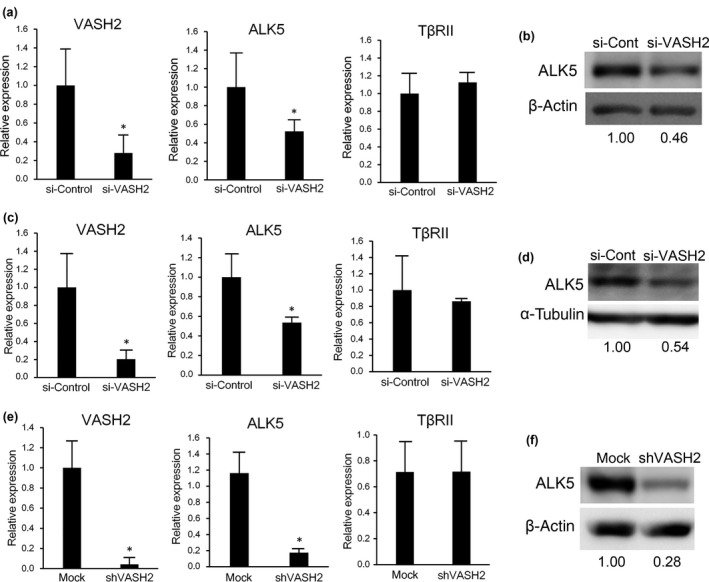
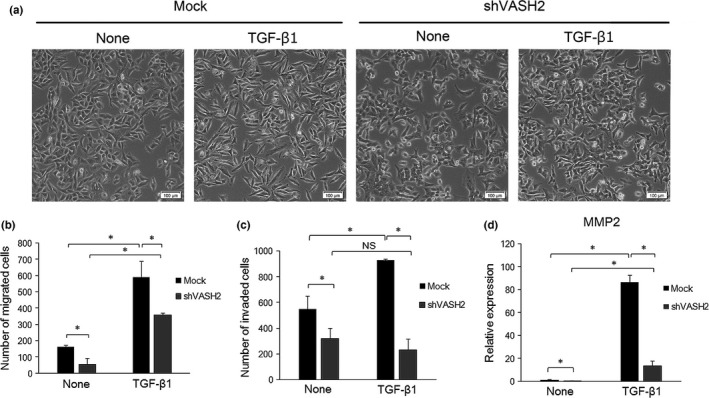
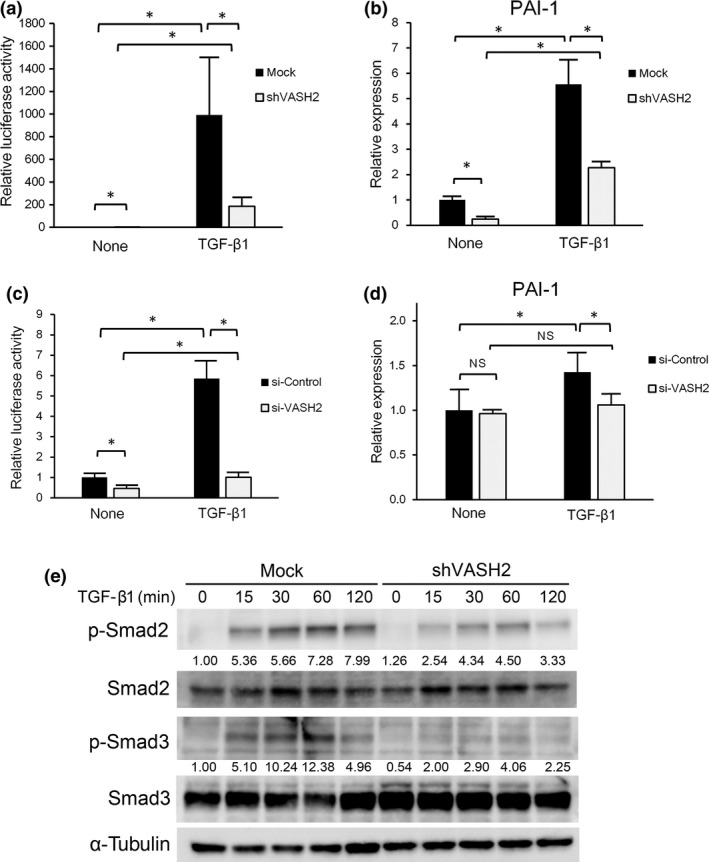
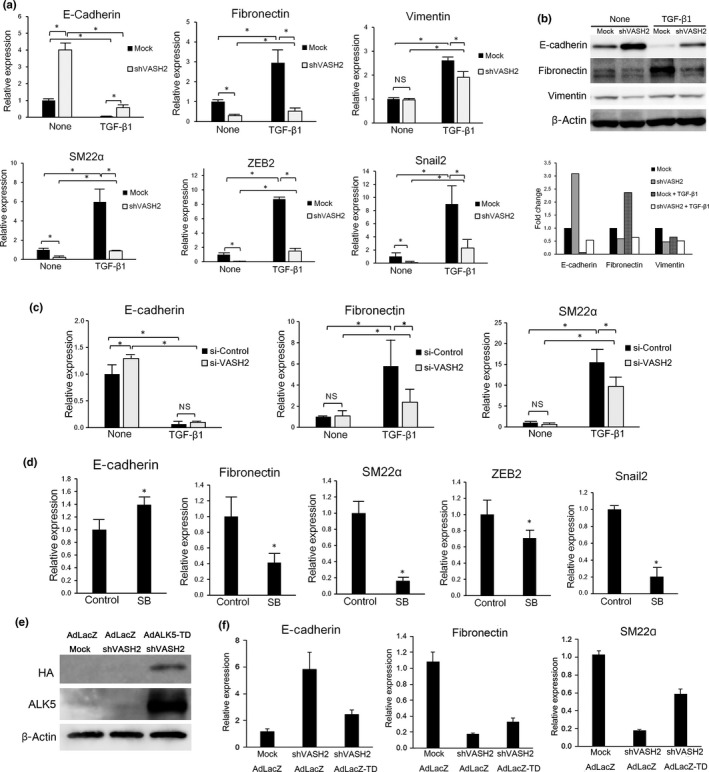
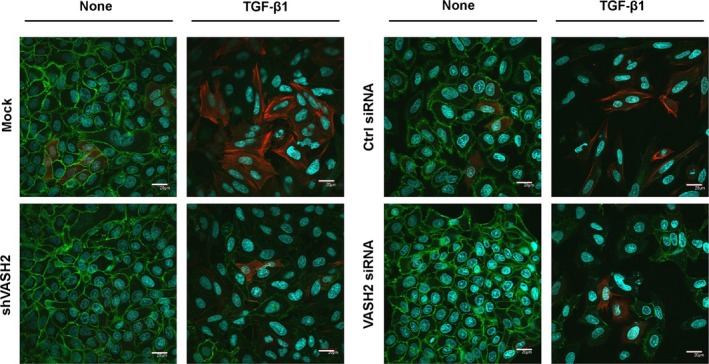
Vasohibin-2 (VASH2) is a homolog of VASH1, an endothelium-derived angiogenesis inhibitor. Vasohibin-2 is mainly expressed in cancer cells, and has been implicated in the progression of cancer by inducing angiogenesis and tumor growth. Although VASH2 has been recently reported to be involved in epithelial-mesenchymal transition (EMT), its precise roles are obscure. The aim of the present study was to clarify the role of VASH2 in the EMT of cancer cells in relation to transforming growth factor-β (TGF-β) signaling, which is a major stimulator of EMT. Decreased expression of VASH2 in ovarian cancer cells significantly repressed the expression of TGF-β type I receptor, namely activin receptor-like kinase 5. Transforming growth factor-β1-induced phosphorylation of Smad2 and Smad3 was markedly decreased in VASH2 knockdown cells while the expression of Smad2 and Smad3 was unchanged. Accordingly, the responses to TGF-β1 shown by promoter assay and plasminogen activator inhibitor type 1 expression were significantly attenuated in VASH2 knockdown cells. Furthermore, knockdown of VASH2 in cancer cells abrogated the TGF-β1-induced reduced expression of epithelial markers including E-cadherin, and the elevated expression of mesenchymal markers including fibronectin, ZEB2, and Snail2, suggesting that endogenous VASH2 is required for TGF-β1-induced EMT. In accordance with these results, the effects of TGF-β1 on cell morphology, migration, invasion, and MMP2 expression were also abrogated when VASH2 was knocked down. These results indicate that VASH2 played a significant role in the EMT by modulating the TGF-β signaling. We propose that VASH2 would be a novel molecular target for the prevention of EMT in cancers.
血管抑制素-2(VASH2)是内皮细胞衍生的血管生成抑制剂血管抑制素-1(VASH1)的同源物。VASH2主要在癌细胞中表达,并通过诱导血管生成和肿瘤生长参与癌症进展。尽管最近有报道称VASH2参与上皮-间质转化(EMT),但其确切作用尚不清楚。本研究的目的是阐明VASH2在癌细胞EMT中与转化生长因子-β(TGF-β)信号传导相关的作用,TGF-β信号传导是EMT的主要刺激因子。卵巢癌细胞中VASH2表达的降低显著抑制了TGF-β I型受体即激活素受体样激酶5的表达。在VASH2敲低的细胞中,转化生长因子-β1诱导的Smad2和Smad3磷酸化明显降低,而Smad2和Smad3的表达未改变。因此,在VASH2敲低的细胞中,启动子分析和纤溶酶原激活物抑制剂1表达所显示的对TGF-β1的反应显著减弱。此外,癌细胞中VASH2的敲低消除了TGF-β1诱导的包括E-钙黏蛋白在内的上皮标志物表达降低,以及包括纤连蛋白、ZEB2和Snail2在内的间质标志物表达升高,这表明内源性VASH2是TGF-β1诱导的EMT所必需的。与这些结果一致,当VASH2被敲低时,TGF-β1对细胞形态、迁移、侵袭和MMP2表达的影响也被消除。这些结果表明,VASH2通过调节TGF-β信号传导在EMT中发挥重要作用。我们提出,VASH2可能是预防癌症中EMT的一个新的分子靶点。