Heggdal Didrik, Fosse Roar, Hammer Jan
Division of Mental Health and Addiction, Vestre Viken Hospital Trust , Lier , Norway.
Front Psychiatry. 2016 Dec 19;7:198. doi: 10.3389/fpsyt.2016.00198. eCollection 2016.
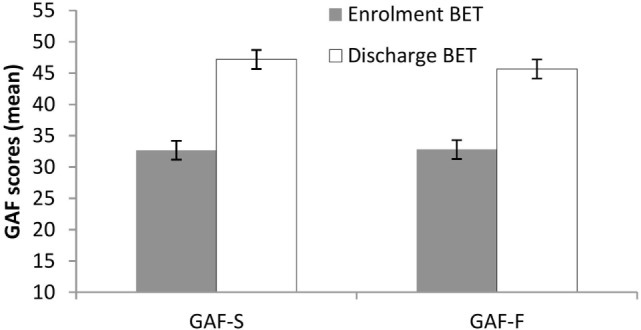
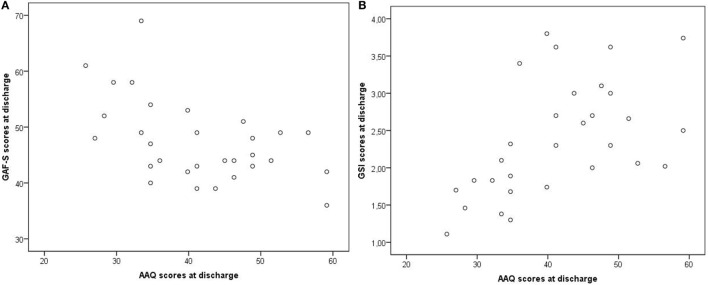
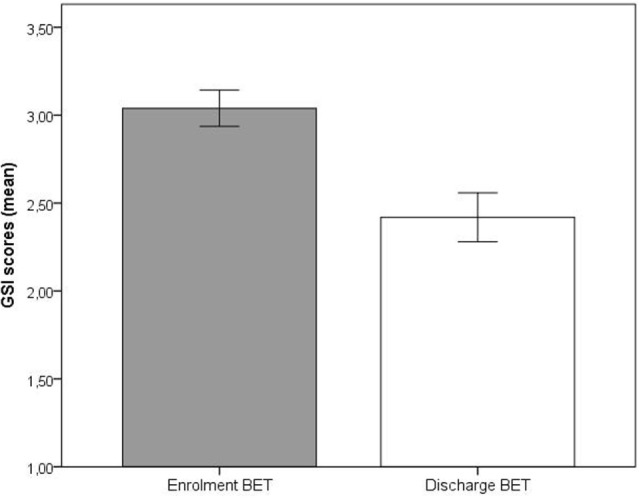
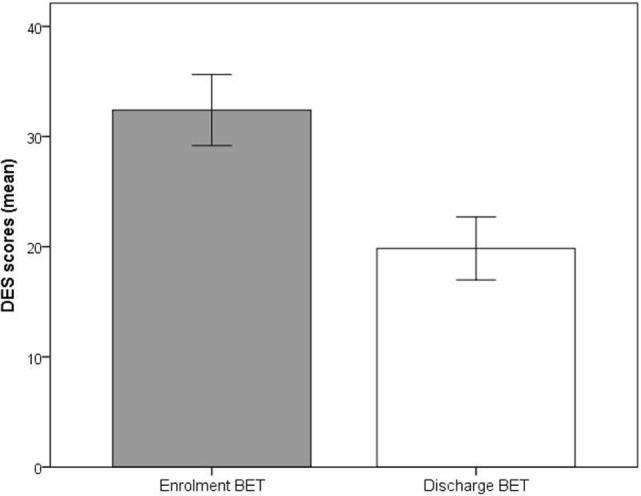
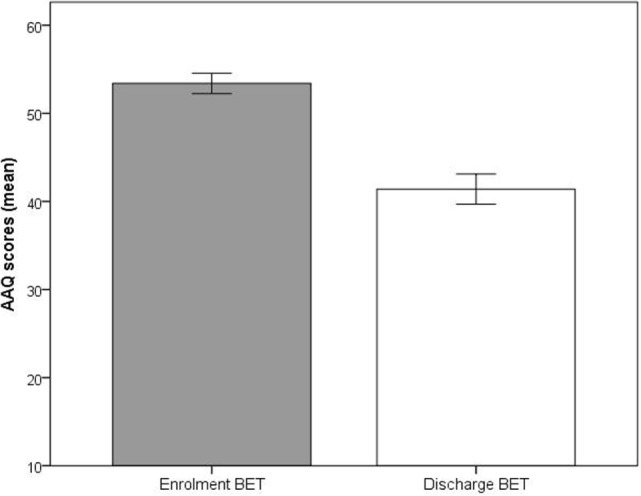
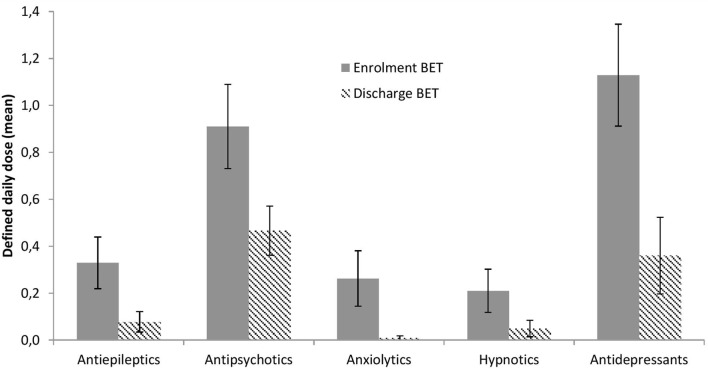
New treatment approaches are needed for patients with severe and composite mental disorders who are resistant to conventional treatments. Such treatment-resistant patients often have diagnoses of psychotic or bipolar disorders or severe personality disorders and comorbid conditions. In this study, we evaluate basal exposure therapy (BET), a novel ward-integrated psychotherapeutic approach for these patients. Central to BET is the conceptualization of undifferentiated existential fear as basic to the patients' problem, exposure to this fear, and the therapeutic platform complementary external regulation, which integrates and governs the totality of interventions throughout the treatment process. BET is administered at a locked-door ward with 6 patient beds and 13.5 full-time employees, including a psychiatrist and 2 psychologists. Thirty-eight patients who had completed BET were included, all but two being female, mean age 29.9 years. Fourteen patients had a diagnosis of schizophrenia or schizoaffective disorder (F20/25), eight had bipolar disorder or recurrent depressive disorder (F31/33), eight had diagnoses in the F40-48 domain (neurotic, stress-related, and somatoform disorders), five were diagnosed with emotionally unstable personality disorder (F60.3), and three patients had other diagnoses. Twenty of the patients (53%) had more than one ICD-10 diagnosis. Average treatment time in BET was 13 months, ranging from 2 to 72 months. Time-series data show significant improvements in symptoms and functioning from enrollment to discharge, with effect sizes at 0.76 for the Dissociation Experience Scale, 0.93 for the Brief Symptom Inventory, 1.47 for the Avoidance and Action Questionnaire, and 1.42 and 1.56, respectively, for the functioning and symptom subscales of the Global Assessment of Functioning Scale. In addition, the patients used significantly less antiepileptic, antipsychotic, anxiolytic, and antidepressant medications at discharge than at treatment enrollment. Patient improvement across treatment was associated with the following duration of time in BET, the successful completions of the exposure component of BET, positive changes in experiential avoidance as measured with the Acceptance and Action Questionnaire, and high symptom levels and low levels of functioning at treatment start. The findings indicate that BET may be a promising inpatient psychotherapeutic approach for previously treatment-resistant patients with severe and comorbid conditions.
对于那些对传统治疗有抵抗性的严重复合型精神障碍患者,需要新的治疗方法。这类治疗抵抗性患者通常被诊断为患有精神病性障碍、双相情感障碍或严重人格障碍以及共病情况。在本研究中,我们评估了基础暴露疗法(BET),这是一种针对这些患者的新型病房整合心理治疗方法。BET的核心是将未分化的存在性恐惧概念化为患者问题的基础,让患者暴露于这种恐惧之中,以及治疗平台——互补外部调节,它在整个治疗过程中整合并管理所有干预措施。BET在一个有6张病床的封闭病房实施,有13.5名全职员工,包括一名精神科医生和两名心理学家。纳入了38名完成BET治疗的患者,除两名患者外均为女性,平均年龄29.9岁。14名患者被诊断为精神分裂症或精神分裂情感性障碍(F20/25),八名患有双相情感障碍或复发性抑郁症(F31/33),八名在F40 - 48领域(神经症性、应激相关及躯体形式障碍)有诊断,五名被诊断为情绪不稳定人格障碍(F60.3),三名患者有其他诊断。20名患者(53%)有不止一项国际疾病分类第十版(ICD - 10)诊断。BET的平均治疗时间为13个月,范围从2个月到72个月。时间序列数据显示,从入组到出院,症状和功能有显著改善,解离体验量表的效应大小为0.76,简明症状量表为0.93,回避与行动问卷为1.47,功能评定量表的功能和症状子量表分别为1.42和1.56。此外,患者出院时使用的抗癫痫药、抗精神病药、抗焦虑药和抗抑郁药比治疗入组时显著减少。患者在整个治疗过程中的改善与在BET中的治疗时长、BET暴露部分的成功完成、用接受与行动问卷测量的经验性回避的积极变化以及治疗开始时的高症状水平和低功能水平相关。研究结果表明,对于先前有治疗抵抗性的严重共病患者,BET可能是一种有前景的住院心理治疗方法。