Agarwal E, Robb C M, Smith L M, Brattain M G, Wang J, Black J D, Chowdhury S
Eppley Institute for Research in Cancer, University of Nebraska Medical Center, Omaha, Nebraska, USA.
Department of Biochemistry and Molecular Biology, University of Nebraska Medical Center, Omaha, NE, USA.
Oncogene. 2017 Jun 1;36(22):3104-3118. doi: 10.1038/onc.2016.460. Epub 2017 Jan 9.
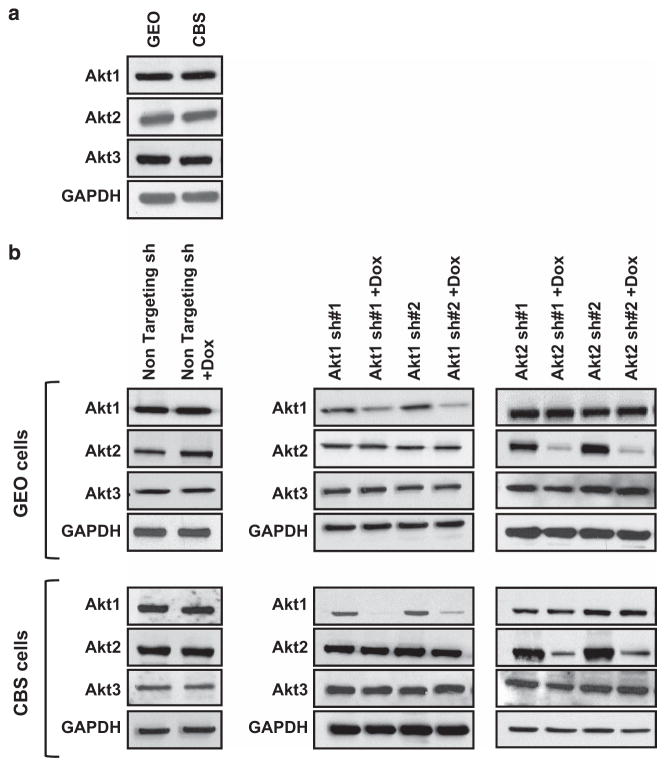
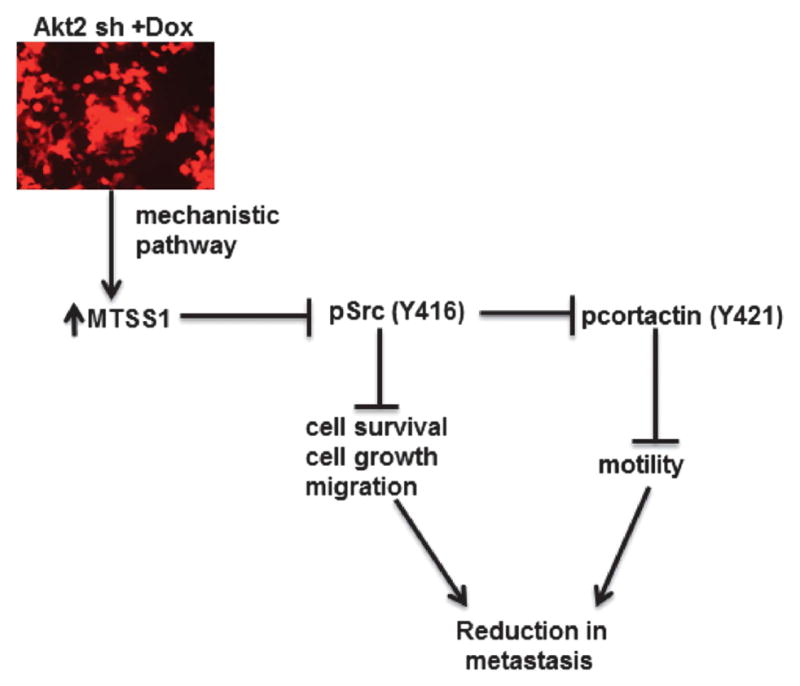
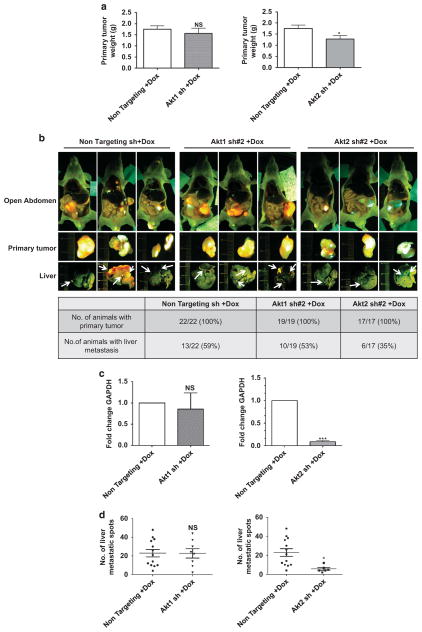
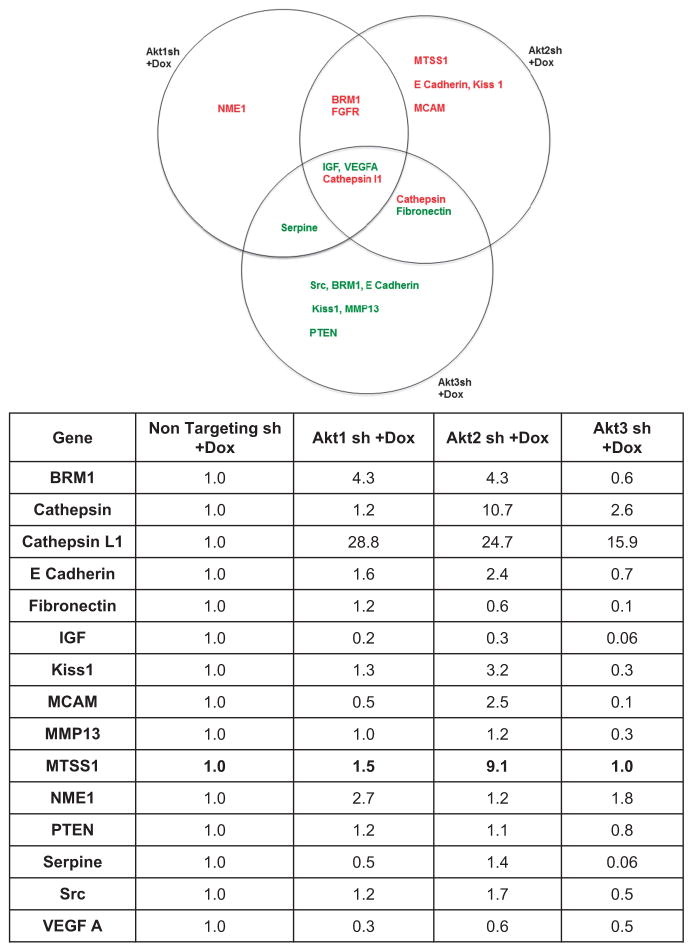
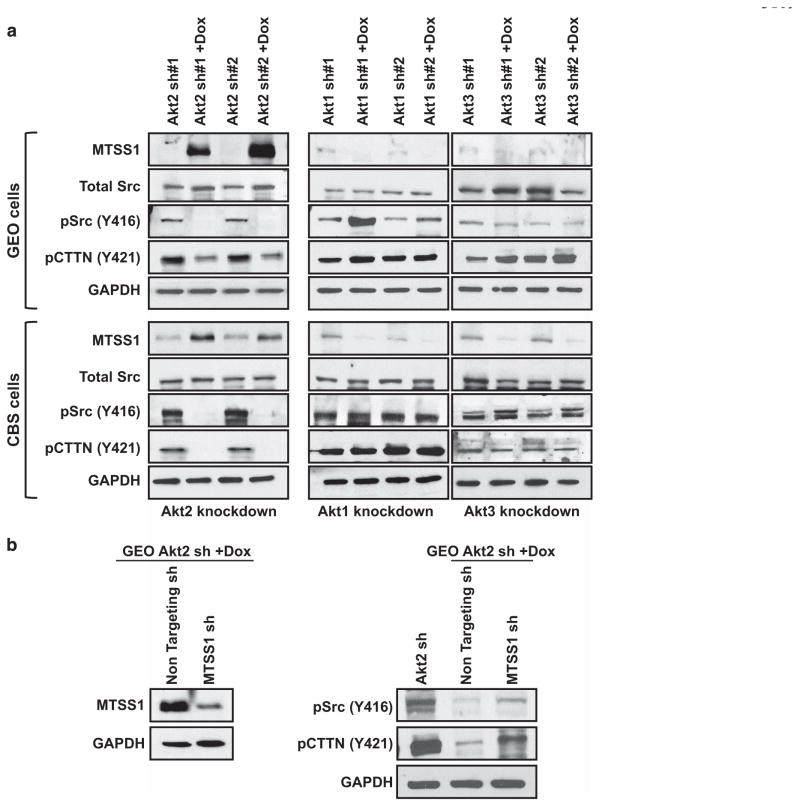
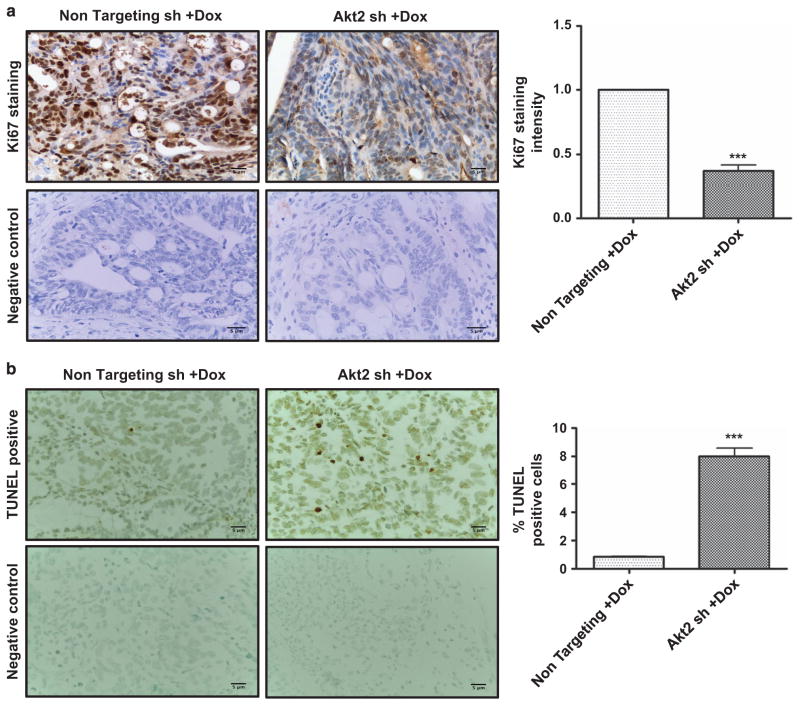
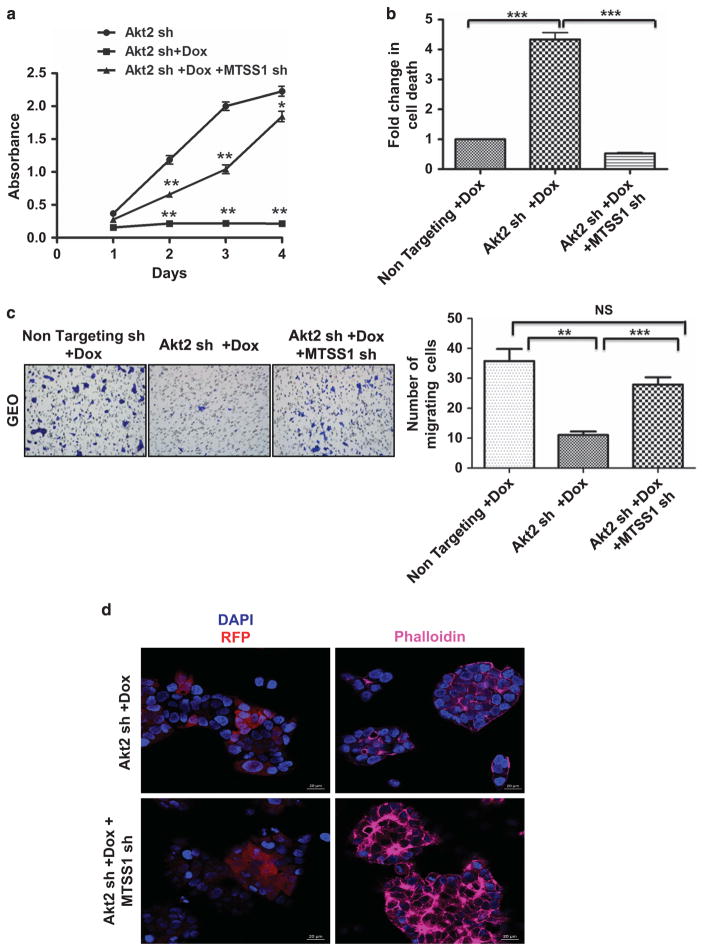
Survival signaling is critical for the metastatic program of cancer cells. The current study investigated the role of Akt survival proteins in colorectal cancer (CRC) metastasis and explored potential mechanisms of Akt-mediated metastasis regulation. Using an orthotopic implantation model in mice, which uniquely recapitulates the entire multistep process of CRC metastasis, combined with an inducible system of short hairpin RNA-mediated Akt isoform knockdown in human CRC cells, our studies confirm a role of Akt2 in CRC cell dissemination to distant organs in vivo. Akt2 deficiency profoundly inhibited the development of liver lesions in mice, whereas Akt1 had no effect under the experimental conditions used in the study. Array analysis of human metastatic genes identified the scaffolding protein metastasis suppressor 1 (MTSS1) as a novel Akt2-regulated gene. Inducible loss of Akt2 in CRC cells robustly upregulated MTSS1 at the messenger RNA and protein level, and the accumulated protein was functionally active as shown by its ability to engage an MTSS1-Src-cortactin inhibitory axis. MTSS1 expression led to a marked reduction in levels of functional cortacin (pcortactin Y421), an actin nucleation-promoting factor that has a crucial role in cancer cell invasion and metastasis. MTSS1 was also shown to mediate suppressive effects of Akt2 deficiency on CRC cell viability, survival, migration and actin polymerization in vitro. The relevance of these findings to human CRC is supported by analysis of The Cancer Genome Atlas (TCGA) and NCBI GEO data sets, which demonstrated inverse changes in expression of Akt2 and MTSS1 during CRC progression. Taken together, the data identify MTSS1 as a new Akt2-regulated gene, and point to suppression of MTSS1 as a key step in the metastasis-promoting effects of Akt2 in CRC cells.
生存信号对于癌细胞的转移程序至关重要。当前研究调查了Akt生存蛋白在结直肠癌(CRC)转移中的作用,并探索了Akt介导的转移调节的潜在机制。利用小鼠原位植入模型(该模型独特地概括了CRC转移的整个多步骤过程),结合人CRC细胞中短发夹RNA介导的Akt亚型敲低的诱导系统,我们的研究证实了Akt2在体内CRC细胞向远处器官播散中的作用。在本研究使用的实验条件下,Akt2缺陷显著抑制了小鼠肝脏病变的发展,而Akt1则没有影响。对人类转移基因的阵列分析确定支架蛋白转移抑制因子1(MTSS1)为一个新的Akt2调节基因。CRC细胞中Akt2的诱导性缺失在信使RNA和蛋白质水平上强力上调MTSS1,并且积累的蛋白质具有功能活性,这通过其参与MTSS1-Src-皮层肌动蛋白抑制轴的能力得以证明。MTSS1表达导致功能性皮层肌动蛋白(pcortactin Y421)水平显著降低,皮层肌动蛋白是一种肌动蛋白成核促进因子,在癌细胞侵袭和转移中起关键作用。MTSS1还被证明介导Akt2缺陷对体外CRC细胞活力、存活、迁移和肌动蛋白聚合的抑制作用。对癌症基因组图谱(TCGA)和NCBI基因表达综合数据库(GEO)数据集的分析支持了这些发现与人类CRC的相关性,该分析表明在CRC进展过程中Akt2和MTSS1的表达呈反向变化。综上所述,这些数据确定MTSS1为一个新的Akt2调节基因,并指出抑制MTSS1是Akt