Britschgi Adrian, Duss Stephan, Kim Sungeun, Couto Joana Pinto, Brinkhaus Heike, Koren Shany, De Silva Duvini, Mertz Kirsten D, Kaup Daniela, Varga Zsuzsanna, Voshol Hans, Vissieres Alexandra, Leroy Cedric, Roloff Tim, Stadler Michael B, Scheel Christina H, Miraglia Loren J, Orth Anthony P, Bonamy Ghislain M C, Reddy Venkateshwar A, Bentires-Alj Mohamed
Friedrich Miescher Institute for Biomedical Research, 4058 Basel, Switzerland.
Genomics Institute of the Novartis Research Foundation, San Diego, California 92121, USA.
Nature. 2017 Jan 26;541(7638):541-545. doi: 10.1038/nature20829. Epub 2017 Jan 9.
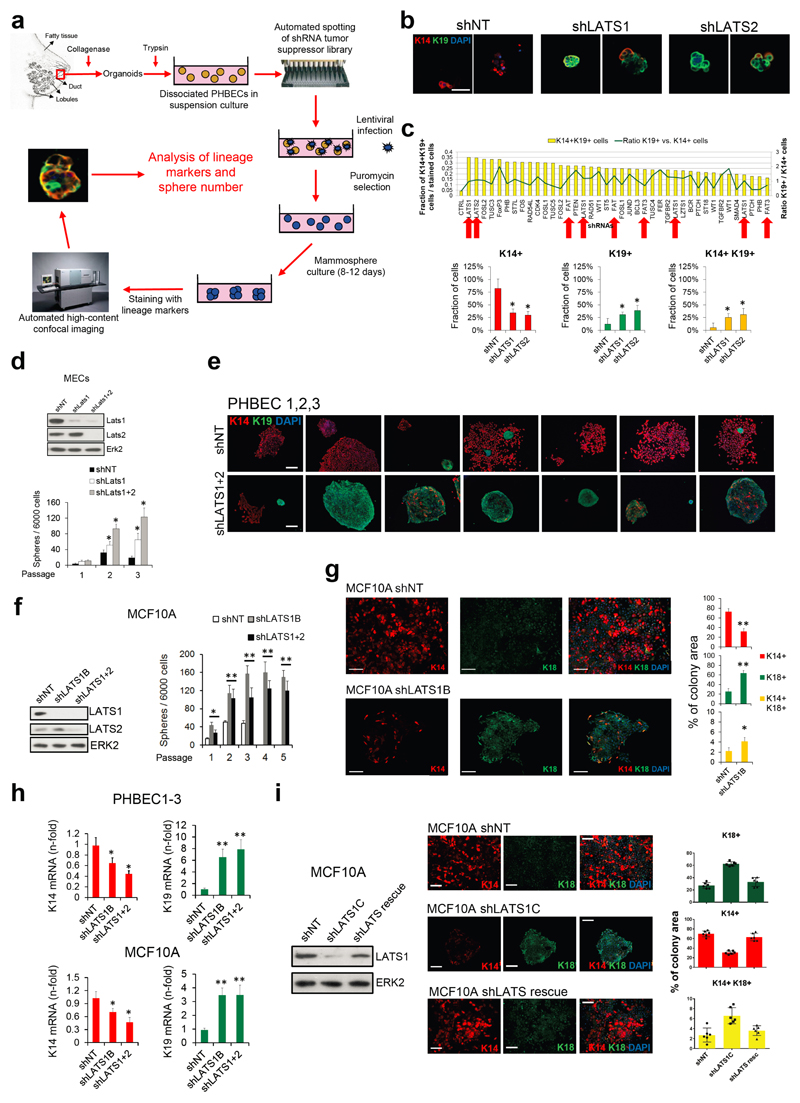
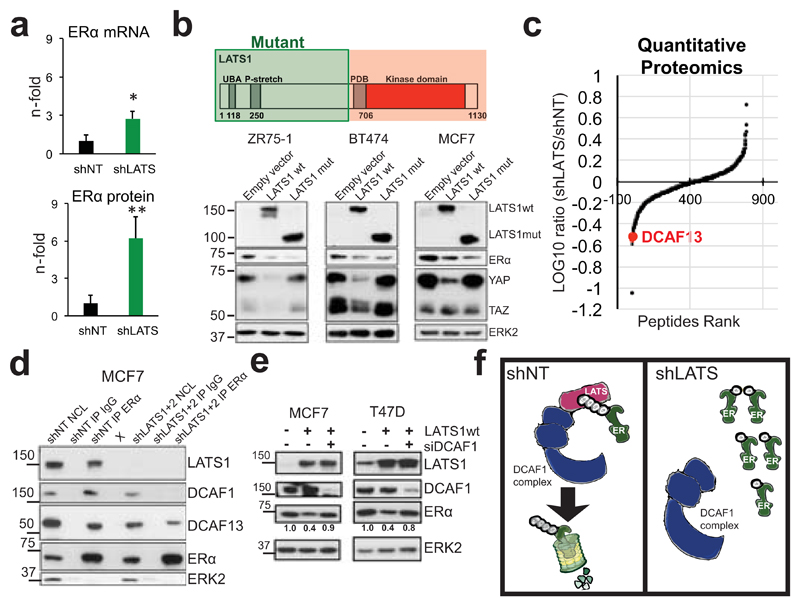
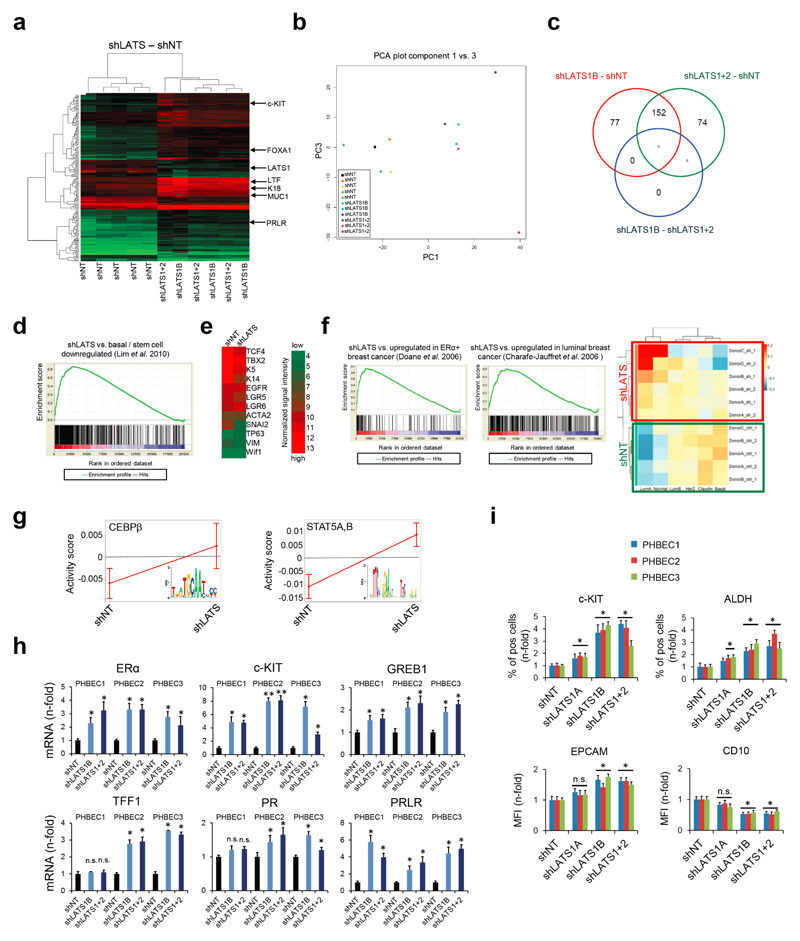
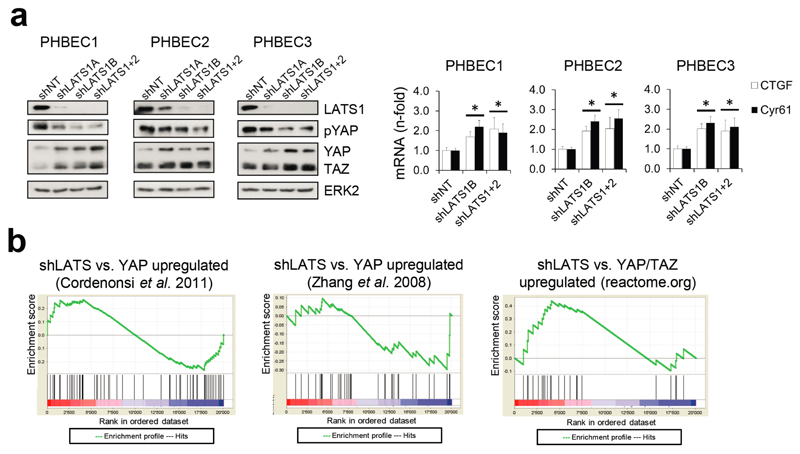
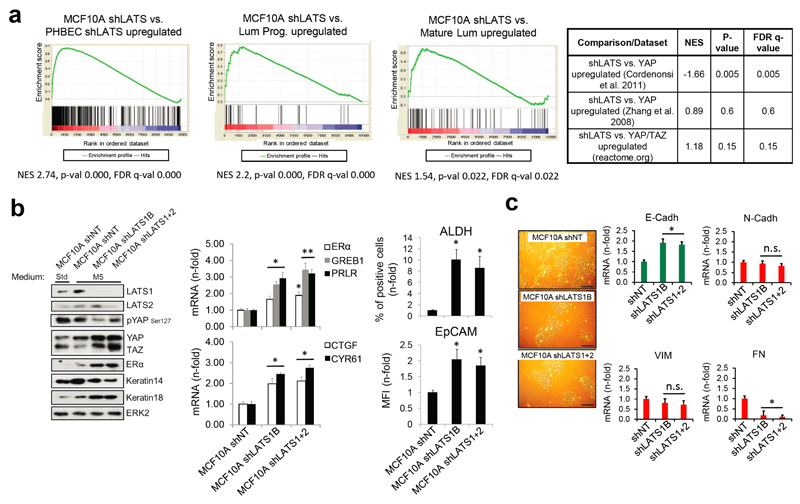
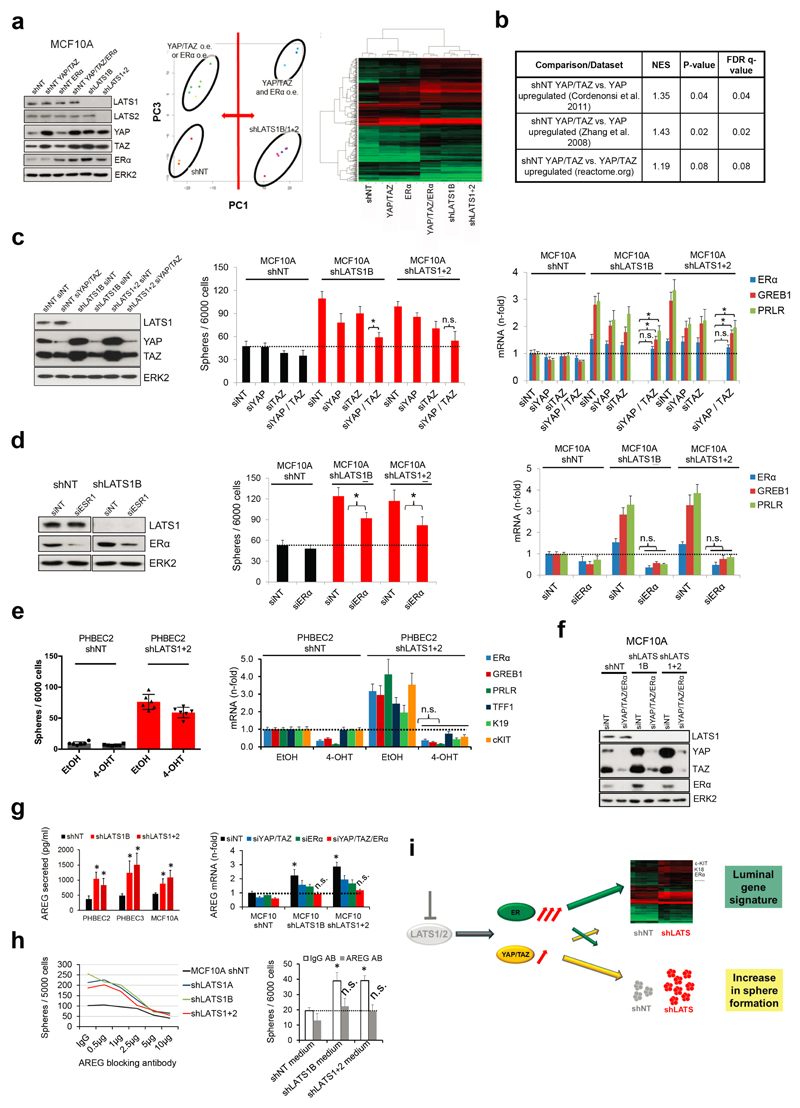
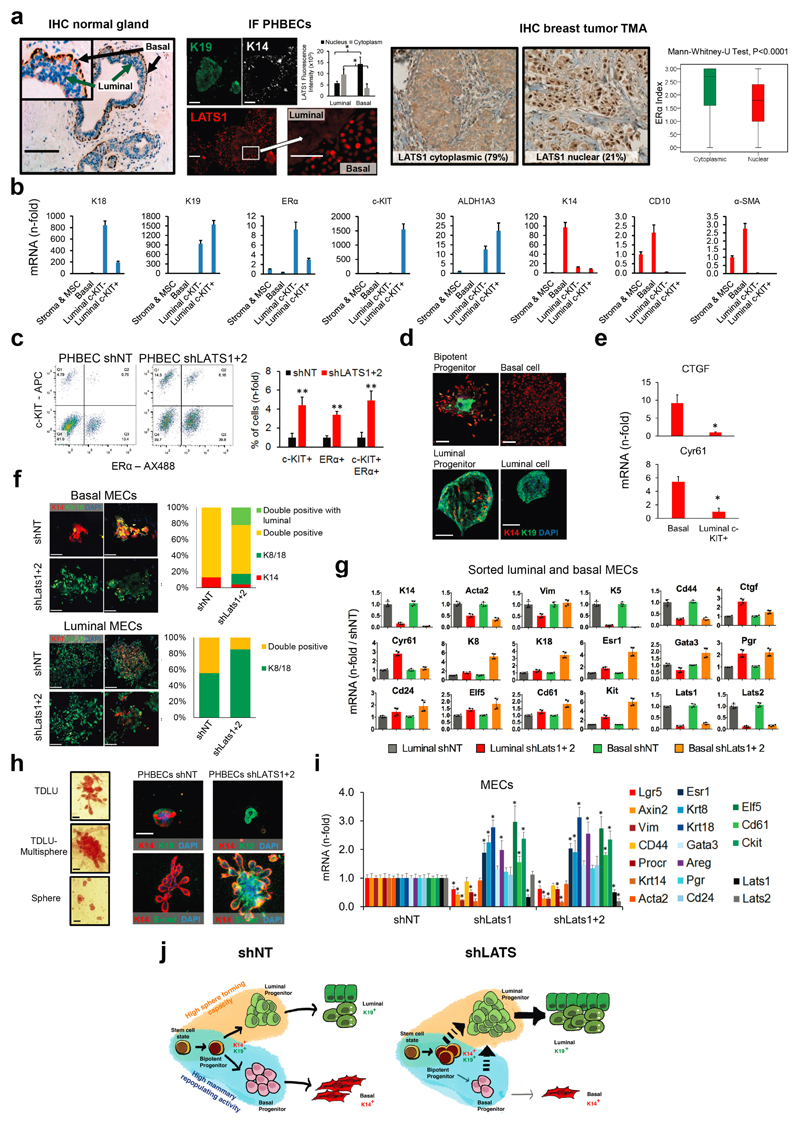
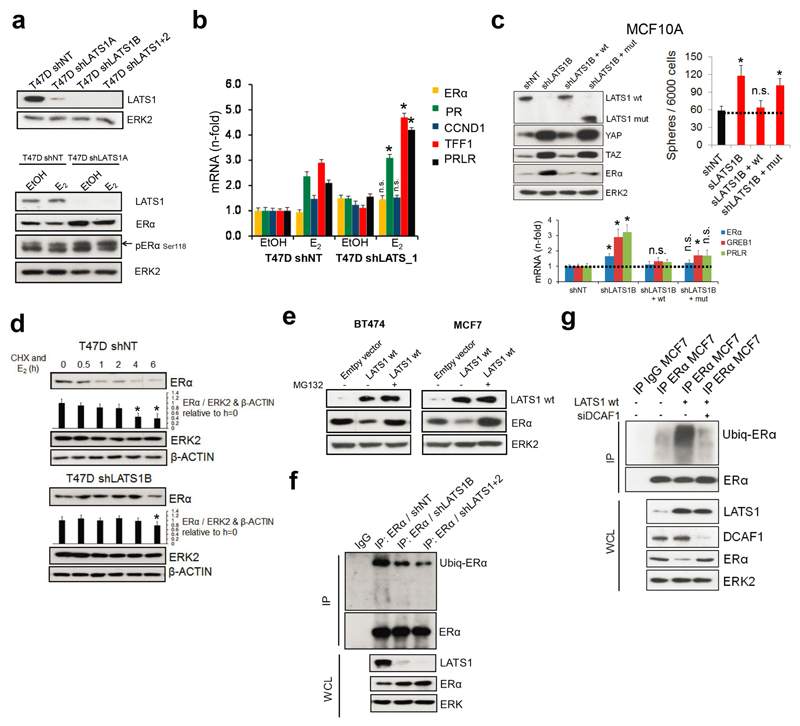
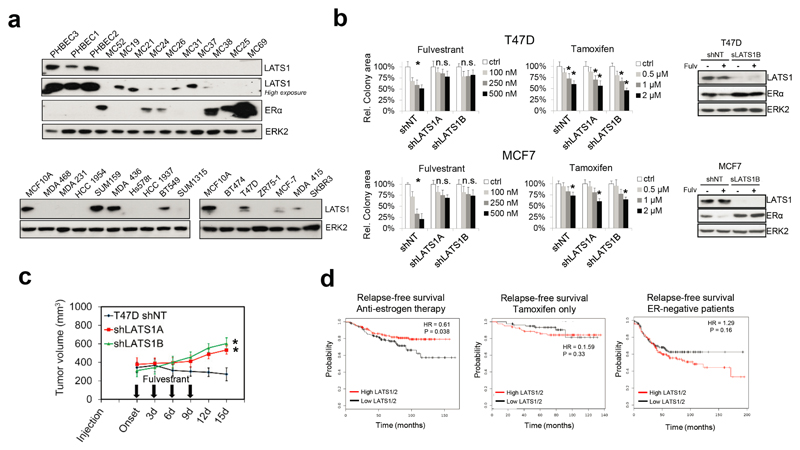
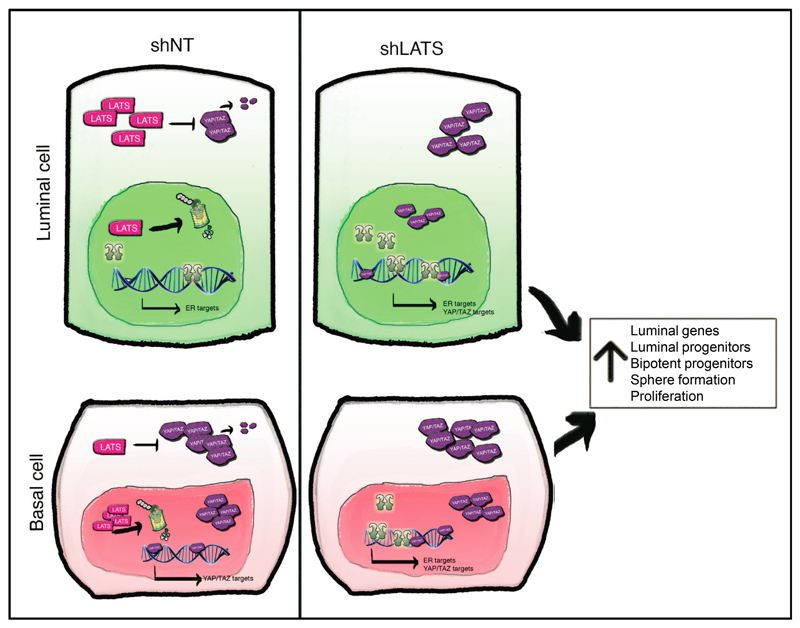
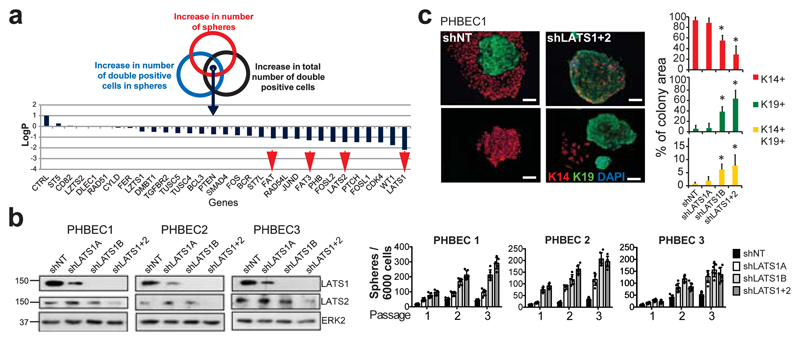
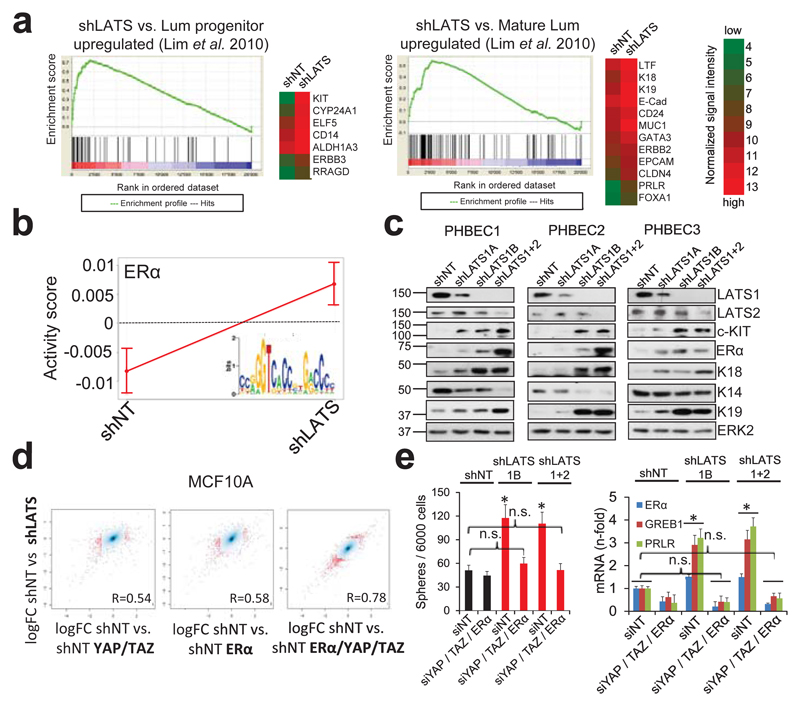
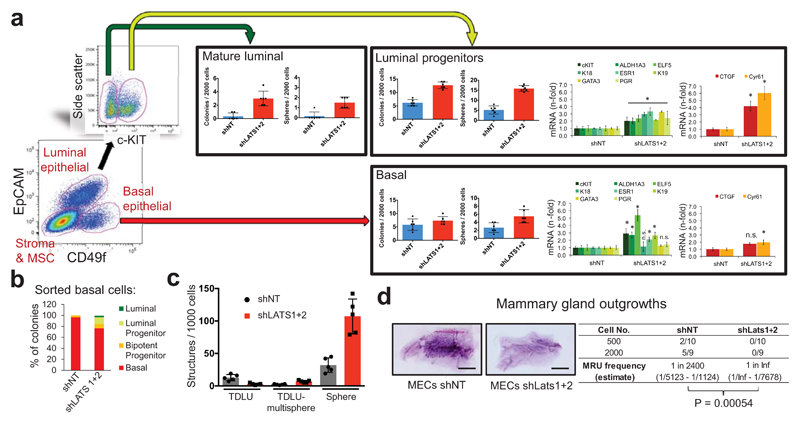
Cell fate perturbations underlie many human diseases, including breast cancer. Unfortunately, the mechanisms by which breast cell fate are regulated are largely unknown. The mammary gland epithelium consists of differentiated luminal epithelial and basal myoepithelial cells, as well as undifferentiated stem cells and more restricted progenitors. Breast cancer originates from this epithelium, but the molecular mechanisms that underlie breast epithelial hierarchy remain ill-defined. Here, we use a high-content confocal image-based short hairpin RNA screen to identify tumour suppressors that regulate breast cell fate in primary human breast epithelial cells. We show that ablation of the large tumour suppressor kinases (LATS) 1 and 2 (refs 5, 6), which are part of the Hippo pathway, promotes the luminal phenotype and increases the number of bipotent and luminal progenitors, the proposed cells-of-origin of most human breast cancers. Mechanistically, we have identified a direct interaction between Hippo and oestrogen receptor-α (ERα) signalling. In the presence of LATS, ERα was targeted for ubiquitination and Ddb1-cullin4-associated-factor 1 (DCAF1)-dependent proteasomal degradation. Absence of LATS stabilized ERα and the Hippo effectors YAP and TAZ (hereafter YAP/TAZ), which together control breast cell fate through intrinsic and paracrine mechanisms. Our findings reveal a non-canonical (that is, YAP/TAZ-independent) effect of LATS in the regulation of human breast cell fate.
细胞命运扰动是包括乳腺癌在内的许多人类疾病的基础。不幸的是,乳腺细胞命运的调控机制在很大程度上尚不清楚。乳腺上皮由分化的腔上皮细胞和基底肌上皮细胞,以及未分化的干细胞和更具限制性的祖细胞组成。乳腺癌起源于这种上皮组织,但乳腺上皮层次结构的分子机制仍不明确。在这里,我们使用基于共聚焦图像的高内涵短发夹RNA筛选来鉴定调节原代人乳腺上皮细胞中乳腺细胞命运的肿瘤抑制因子。我们发现,作为Hippo通路一部分的大肿瘤抑制激酶(LATS)1和2(参考文献5、6)的缺失,促进了腔表型,并增加了双能和腔祖细胞的数量,而这些细胞被认为是大多数人类乳腺癌的起源细胞。从机制上讲,我们发现Hippo与雌激素受体-α(ERα)信号传导之间存在直接相互作用。在有LATS的情况下,ERα被靶向泛素化,并通过Ddb1-接头蛋白4相关因子1(DCAF1)依赖的蛋白酶体降解。LATS的缺失使ERα以及Hippo效应因子YAP和TAZ(以下简称YAP/TAZ)稳定,它们共同通过内在和旁分泌机制控制乳腺细胞命运。我们的研究结果揭示了LATS在调节人类乳腺细胞命运中的一种非经典(即不依赖YAP/TAZ)效应。