Pavan Stefano, Marcotrigiano Angelo Raffaele, Ciani Elena, Mazzeo Rosa, Zonno Vito, Ruggieri Valentino, Lotti Concetta, Ricciardi Luigi
Department of Soil, Plant and Food Sciences, University of Bari "Aldo Moro", Via Amendola 165/A, 70126, Bari, Italy.
Department of Biosciences, Biotechnologies and Biopharmaceutics, University of Bari "Aldo Moro", Via Amendola 165/A, 70126, Bari, Italy.
BMC Genomics. 2017 Jan 9;18(1):59. doi: 10.1186/s12864-016-3429-0.
Melon (Cucumis melo L.) is one of the most important horticultural species, which includes several taxonomic groups. With the advent of next-generation sequencing, single nucleotide polymorphism (SNP) markers are widely used in the study of genetic diversity and genomics.
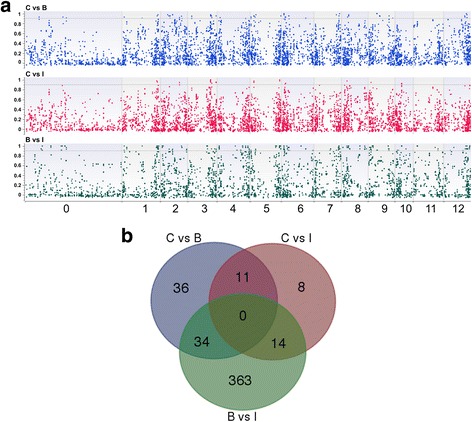
We report the first successful application of genotyping-by-sequencing (GBS) technology in melon. We detected 25,422 SNPs by the analysis of 72 accessions collected in Apulia, a secondary centre of diversity in Southern Italy. Analyses of genetic structure, principal components, and hierarchical clustering support the identification of three distinct subpopulations. One of them includes accessions known with the folk name of 'carosello', referable to the chate taxonomic group. This is one of the oldest domesticated forms of C. melo, once widespread in Europe and now exposed to the risk of genetic erosion. The second subpopulation contains landraces of 'barattiere', a regional vegetable production that was never characterized at the DNA level and we show was erroneously considered another form of chate melon. The third subpopulation includes genotypes of winter melon (C. melo var. inodorus). Genetic analysis within each subpopulation revealed patterns of diversity associated with fruit phenotype and geographical origin. We used SNP data to describe, for each subpopulation, the average linkage disequilibrium (LD) decay, and to highlight genomic regions possibly resulting from directional selection and associated with phenotypic variation.
We used GBS to characterize patterns of genetic diversity and genomic features within C. melo. We provide useful information to preserve endangered gene pools and to guide the use of germplasm in breeding. Finally, our findings lay a foundation for molecular breeding approaches and the identification of genes underlying phenotypic traits.
甜瓜(Cucumis melo L.)是最重要的园艺物种之一,包括几个分类群。随着下一代测序技术的出现,单核苷酸多态性(SNP)标记在遗传多样性和基因组学研究中得到广泛应用。
我们报道了测序基因分型(GBS)技术在甜瓜上的首次成功应用。通过对从意大利南部二级多样性中心普利亚收集的72份材料进行分析,我们检测到了25422个SNP。遗传结构、主成分分析和层次聚类分析支持识别出三个不同的亚群。其中一个亚群包括俗称为“carosello”的材料,属于夏甜瓜分类群。这是甜瓜最古老的驯化形式之一,曾经在欧洲广泛种植,现在面临基因侵蚀的风险。第二个亚群包含“barattiere”地方品种,这是一种从未在DNA水平上进行过特征描述的区域蔬菜品种,我们发现它曾被错误地认为是夏甜瓜的另一种形式。第三个亚群包括冬瓜(C. melo var. inodorus)的基因型。每个亚群内的遗传分析揭示了与果实表型和地理起源相关的多样性模式。我们使用SNP数据描述了每个亚群的平均连锁不平衡(LD)衰减情况,并突出了可能因定向选择而产生且与表型变异相关的基因组区域。
我们使用GBS技术来表征甜瓜的遗传多样性模式和基因组特征。我们提供了有用的信息,以保护濒危基因库并指导种质在育种中的应用。最后,我们的研究结果为分子育种方法和表型性状潜在基因的鉴定奠定了基础。