Griffin James I, Benchimol Michael J, Simberg Dmitri
The Skaggs School of Pharmacy and Pharmaceutical Sciences, University of Colorado Anschutz Medical Campus, 12850 East Montview Blvd., Aurora, CO 80045, USA.
Sonrgy Inc., 10655 Sorrento Valley Rd., San Diego, CA 92121, USA.
J Control Release. 2017 Feb 10;247:167-174. doi: 10.1016/j.jconrel.2017.01.006. Epub 2017 Jan 6.
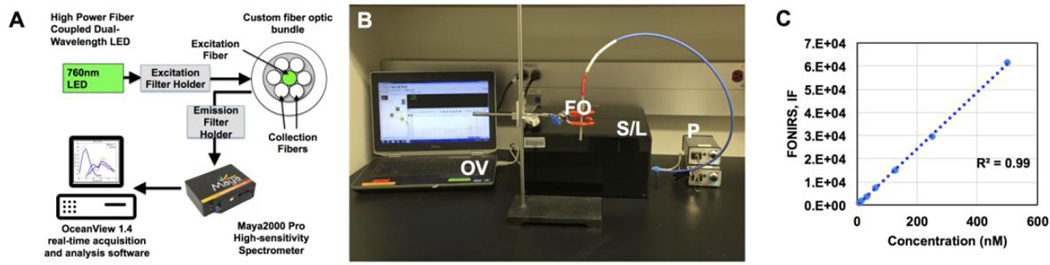
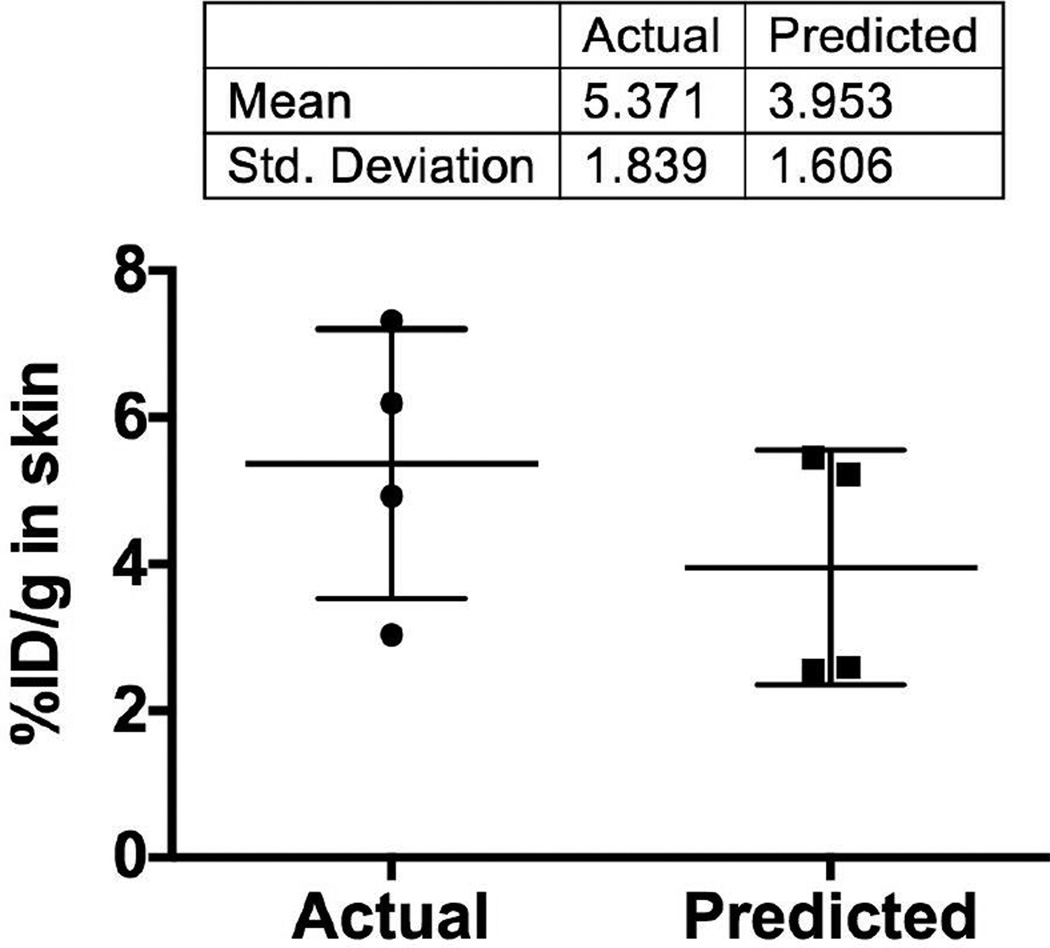
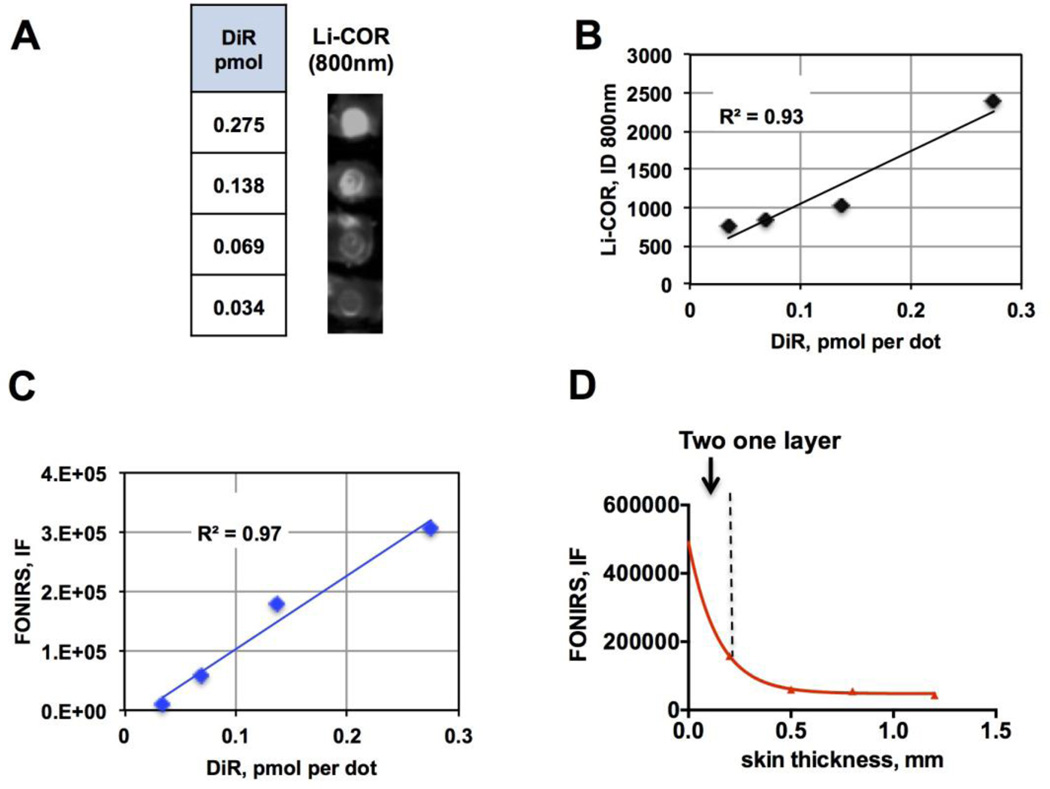
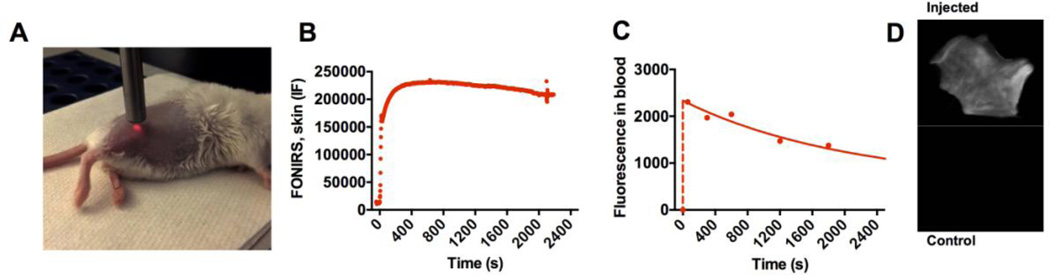
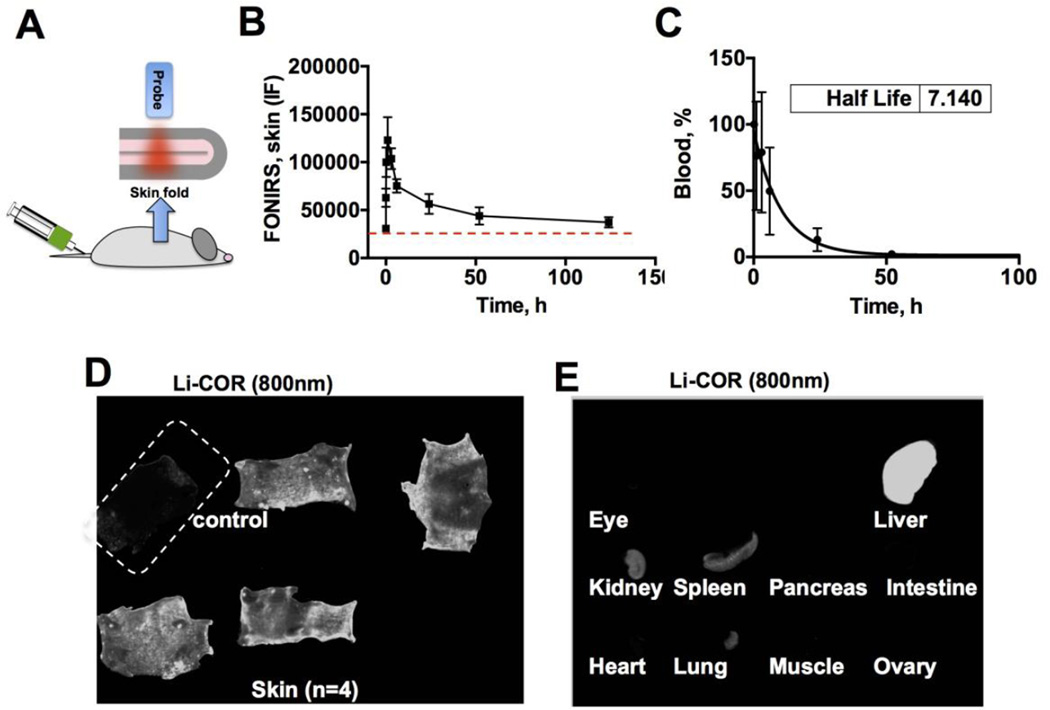
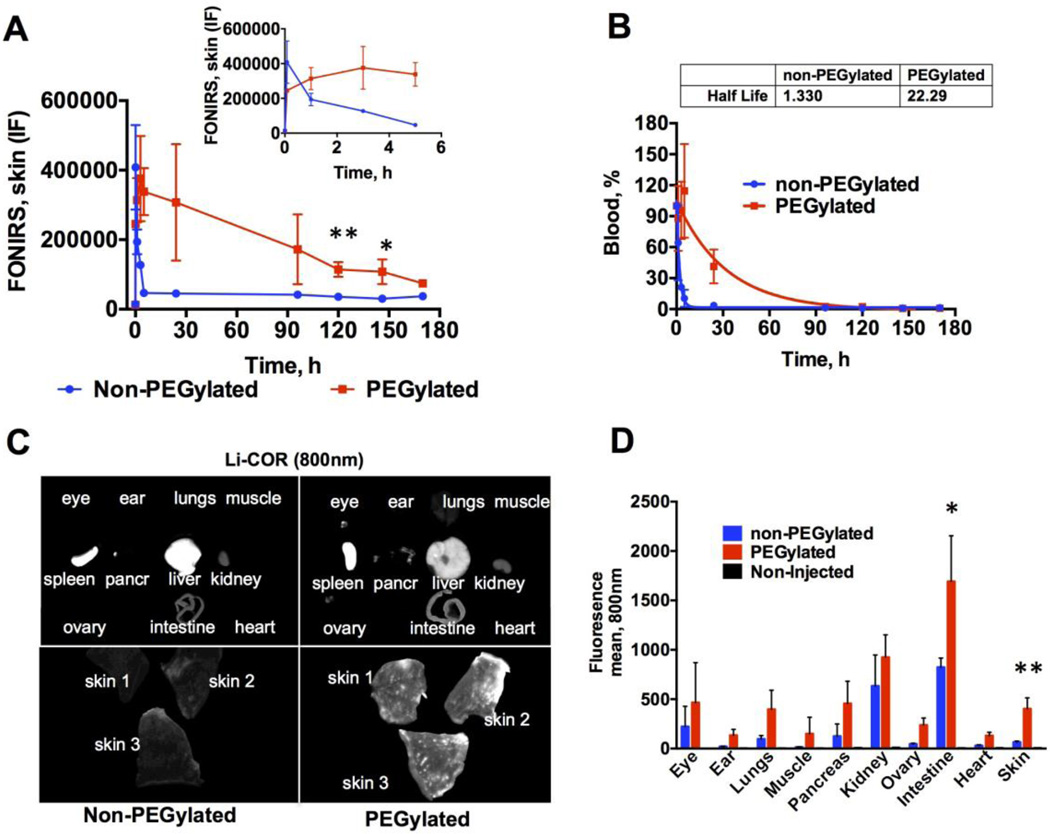
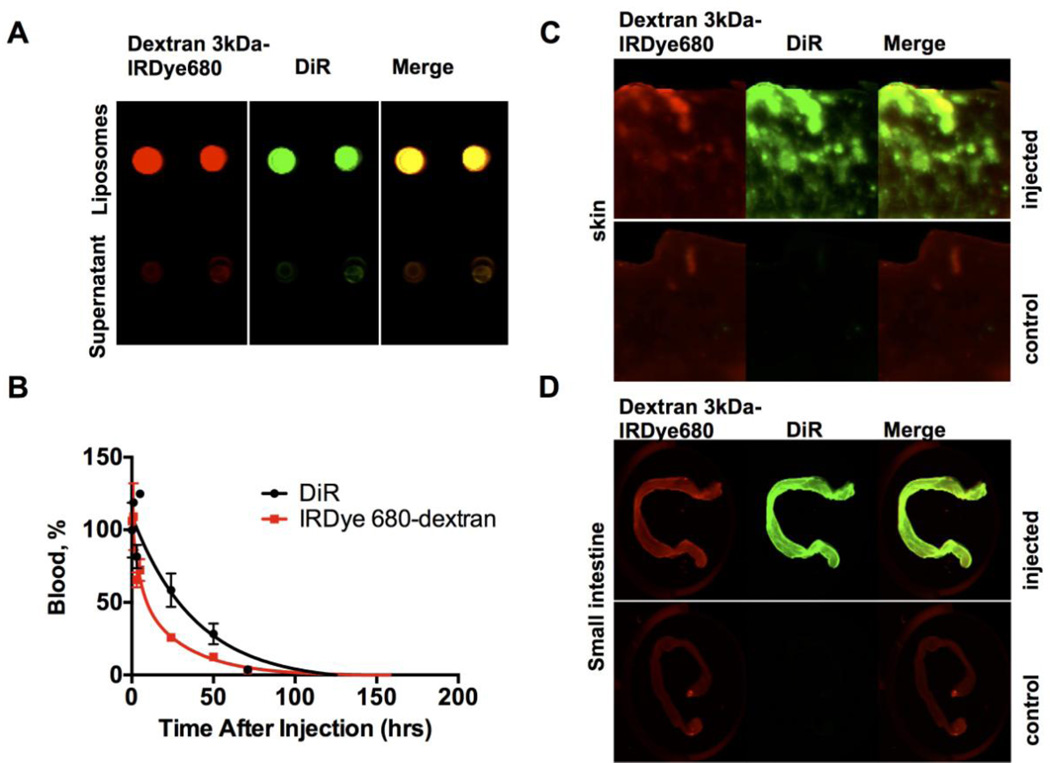
Systemically injected drug delivery systems distribute into various organs and tissues, including liver, spleen and kidneys. Recent reports pointed out a significant accumulation of systemically injected nanoparticles in the skin. Skin constitutes the largest organ in the body with important immune functions, and accumulation of drug delivery systems could have significant implications for skin toxicity in living subjects. Fiber optic-based near-infrared spectroscopy (FONIRS) setup was developed and tested for measuring of NIR (760nm excitation) emission spectra in the skin. Ex vivo spectral measurements of NIR fluorescence through the skin showed linear response down to 34 femtomole of dye DiR. Following systemic injection of IRDye 800 labeled 500kDa dextran, FONIRS detected an immediate and stable accumulation of fluorescence in the skin. Longitudinal monitoring of skin accumulation and elimination of IRDye 800-labeled therapeutic anti-epidermal growth factor antibody (cetuximab) showed significant signal in the skin after the antibody cleared from circulation. Comparison of skin accumulation of DiR labeled, long-circulating PEGylated liposomes with short-circulating non-PEGylated liposomes showed much higher accumulation of PEGylated liposomes that persisted several days after the liposomes cleared from blood. Measurements with FONIRS enabled to estimate skin concentration of liposomes (percent of injected dose per gram). This simple and practical approach can be used to monitor accumulation of drug delivery systems in preclinical and clinical studies.
全身注射给药系统会分布到各个器官和组织,包括肝脏、脾脏和肾脏。最近的报告指出,全身注射的纳米颗粒会在皮肤中大量蓄积。皮肤是人体最大的器官,具有重要的免疫功能,给药系统在皮肤中的蓄积可能会对活体受试者的皮肤毒性产生重大影响。基于光纤的近红外光谱(FONIRS)装置被开发并用于测量皮肤中的近红外(760nm激发)发射光谱。通过皮肤进行的近红外荧光离体光谱测量显示,对于染料DiR,低至34飞摩尔时呈线性响应。在全身注射IRDye 800标记的500kDa葡聚糖后,FONIRS检测到皮肤中荧光立即且稳定地蓄积。对IRDye 800标记的治疗性抗表皮生长因子抗体(西妥昔单抗)在皮肤中的蓄积和清除进行纵向监测,结果显示在抗体从循环中清除后,皮肤中仍有显著信号。比较DiR标记的长循环聚乙二醇化脂质体和短循环非聚乙二醇化脂质体在皮肤中的蓄积情况,结果显示聚乙二醇化脂质体的蓄积量要高得多,且在脂质体从血液中清除后仍持续数天。用FONIRS进行测量能够估算脂质体在皮肤中的浓度(每克注射剂量的百分比)。这种简单实用的方法可用于在临床前和临床研究中监测给药系统的蓄积情况。