Tauro Marilena, Shay Gemma, Sansil Samer S, Laghezza Antonio, Tortorella Paolo, Neuger Anthony M, Soliman Hatem, Lynch Conor C
Tumor Biology Department, H. Lee Moffitt Cancer Center and Research Institute, Tampa, Florida.
Translational Research Core and, H. Lee Moffitt Cancer Center and Research Institute, Tampa, Florida.
Mol Cancer Ther. 2017 Mar;16(3):494-505. doi: 10.1158/1535-7163.MCT-16-0315-T. Epub 2017 Jan 9.
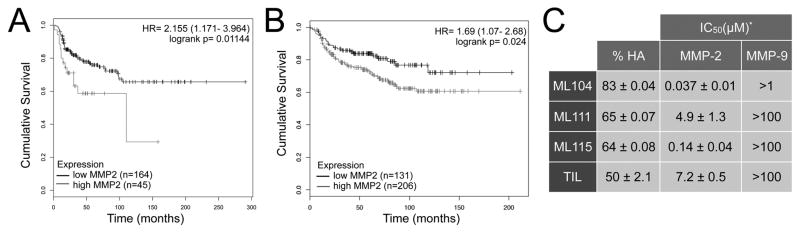
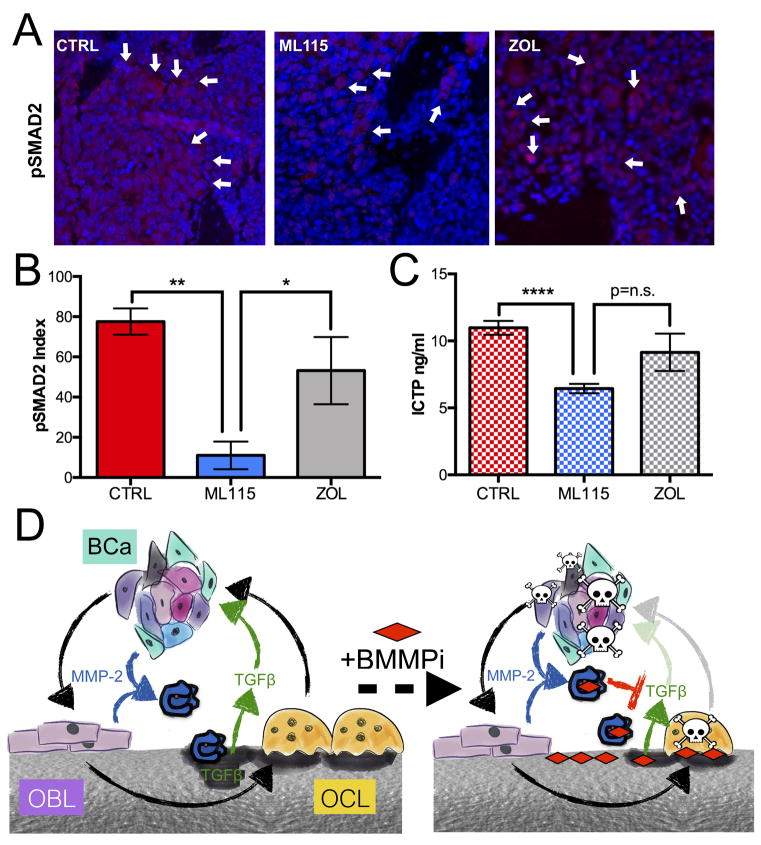
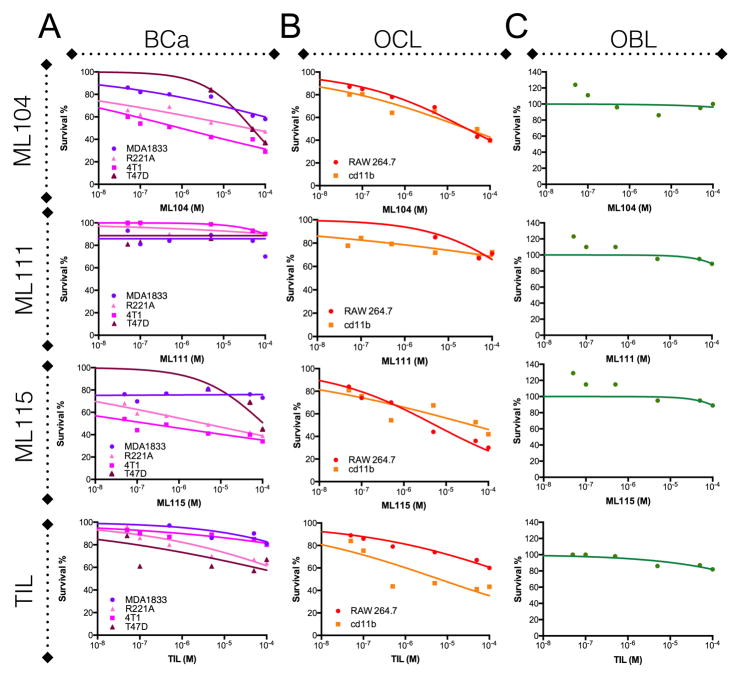
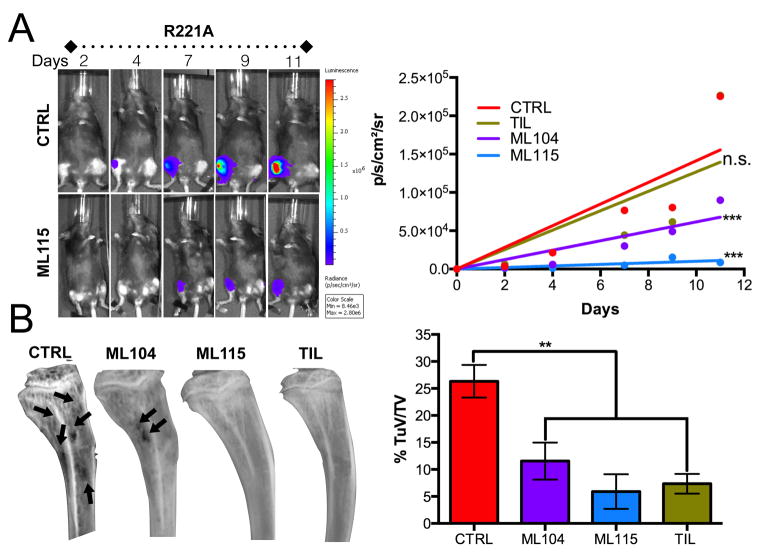
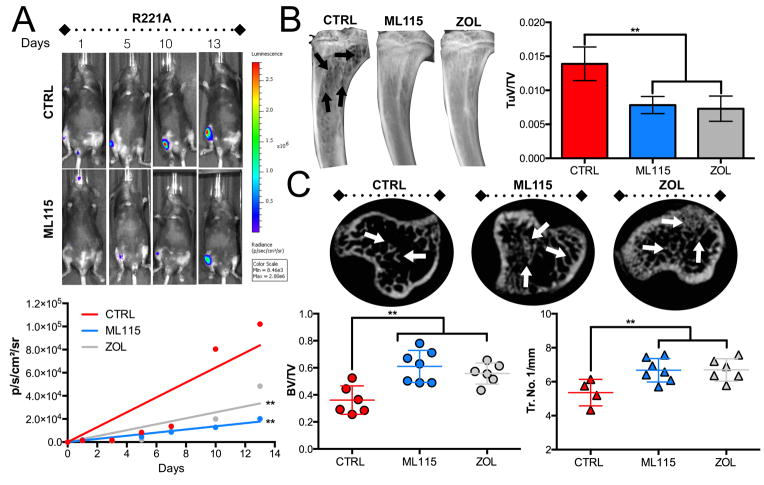
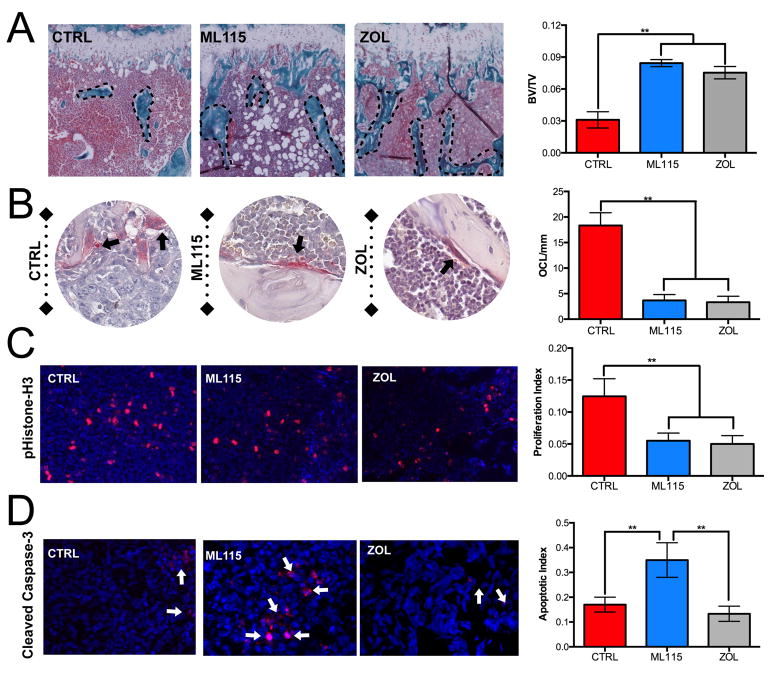
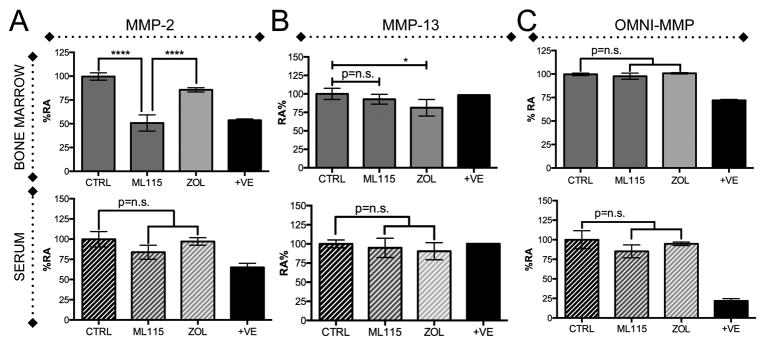
Bone metastasis is common during breast cancer progression. Matrix metalloproteinase-2 (MMP-2) is significantly associated with aggressive breast cancer and poorer overall survival. In bone, tumor- or host-derived MMP-2 contributes to breast cancer growth and does so by processing substrates, including type I collagen and TGFβ latency proteins. These data provide strong rationale for the application of MMP-2 inhibitors to treat the disease. However, , MMP-2 is systemically expressed. Therefore, to overcome potential toxicities noted with previous broad-spectrum MMP inhibitors (MMPIs), we used highly selective bisphosphonic-based MMP-2 inhibitors (BMMPIs) that allowed for specific bone targeting. , BMMPIs affected the viability of breast cancer cell lines and osteoclast precursors, but not osteoblasts. , we demonstrated using two bone metastatic models (PyMT-R221A and 4T1) that BMMPI treatment significantly reduced tumor growth and tumor-associated bone destruction. In addition, BMMPIs are superior in promoting tumor apoptosis compared with the standard-of-care bisphosphonate, zoledronate. We demonstrated MMP-2-selective inhibition in the bone microenvironment using specific and broad-spectrum MMP probes. Furthermore, compared with zoledronate, BMMPI-treated mice had significantly lower levels of TGFβ signaling and MMP-generated type I collagen carboxy-terminal fragments. Taken together, our data show the feasibility of selective inhibition of MMPs in the bone metastatic breast cancer microenvironment. We posit that BMMPIs could be easily translated to the clinical setting for the treatment of bone metastases given the well-tolerated nature of bisphosphonates. .
骨转移在乳腺癌进展过程中很常见。基质金属蛋白酶-2(MMP-2)与侵袭性乳腺癌及较差的总生存率显著相关。在骨组织中,肿瘤来源或宿主来源的MMP-2通过处理包括I型胶原和转化生长因子β(TGFβ)潜伏蛋白在内的底物,促进乳腺癌生长。这些数据为应用MMP-2抑制剂治疗该疾病提供了有力依据。然而,MMP-2是全身表达的。因此,为了克服先前广谱MMP抑制剂(MMPIs)所指出的潜在毒性,我们使用了高度选择性的双膦酸盐类MMP-2抑制剂(BMMPIs),其能够实现特异性的骨靶向。BMMPIs影响乳腺癌细胞系和破骨细胞前体的活力,但不影响成骨细胞。此外,我们使用两种骨转移模型(PyMT-R221A和4T1)证明,BMMPI治疗显著降低了肿瘤生长和肿瘤相关的骨破坏。此外,与标准治疗双膦酸盐唑来膦酸相比,BMMPIs在促进肿瘤凋亡方面更具优势。我们使用特异性和广谱MMP探针在骨微环境中证明了MMP-2的选择性抑制。此外,与唑来膦酸相比,接受BMMPI治疗的小鼠的TGFβ信号传导水平和MMP产生的I型胶原羧基末端片段水平显著更低。综上所述,我们的数据表明在骨转移性乳腺癌微环境中选择性抑制MMPs具有可行性。鉴于双膦酸盐耐受性良好的特性,我们认为BMMPIs可以很容易地转化到临床用于治疗骨转移。