Chamberlain Kelly A, Chapey Kristen S, Nanescu Sonia E, Huang Jeffrey K
Department of Biology and.
Interdisciplinary Program in Neuroscience, Georgetown University, Washington, District of Columbia 20057.
J Neurosci. 2017 Feb 8;37(6):1479-1492. doi: 10.1523/JNEUROSCI.1941-16.2016. Epub 2017 Jan 9.
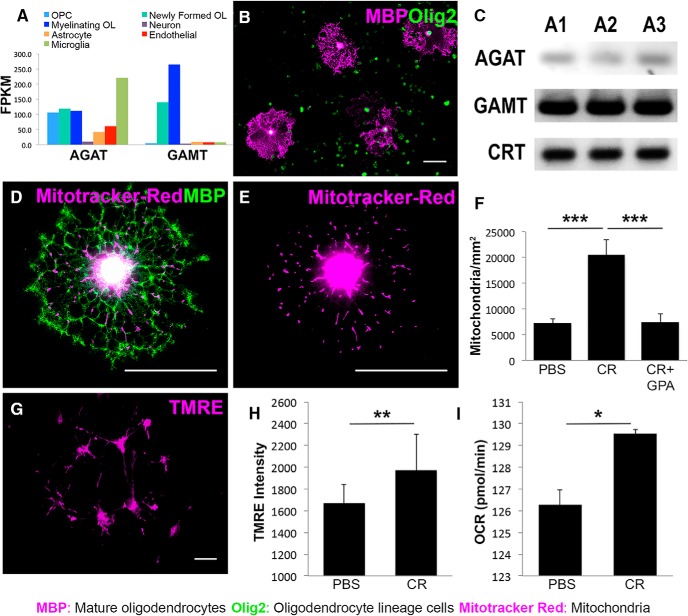
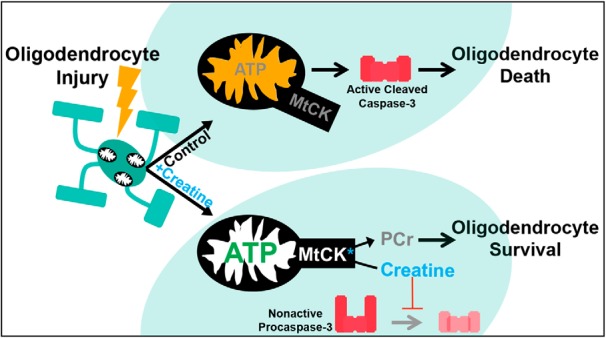
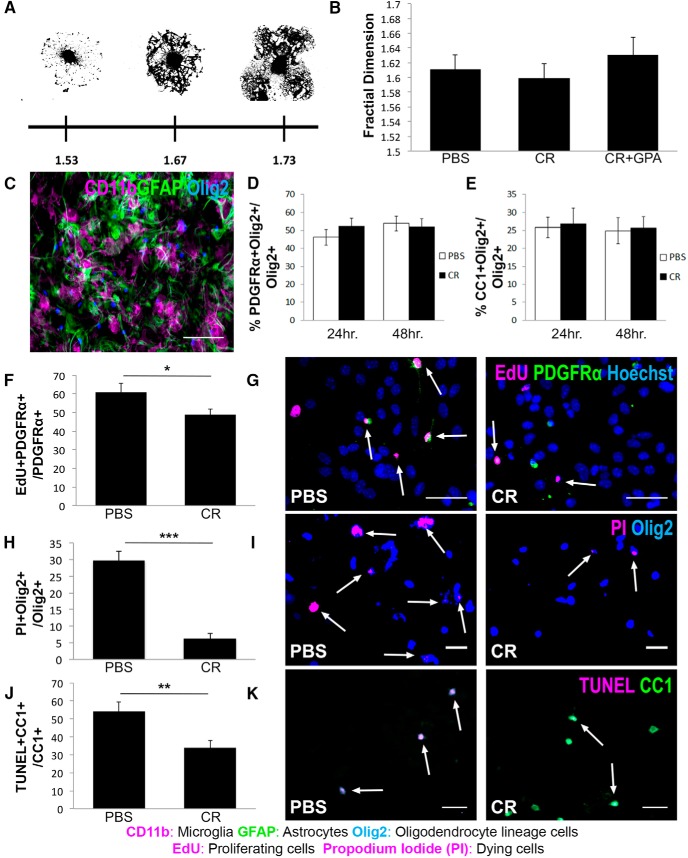
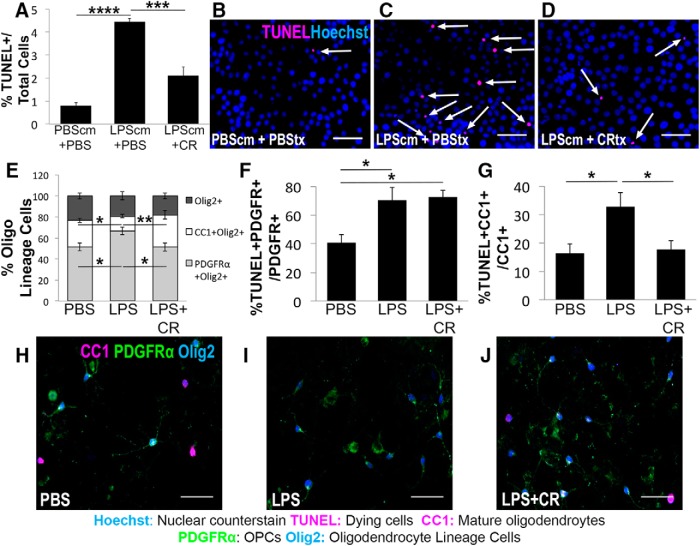
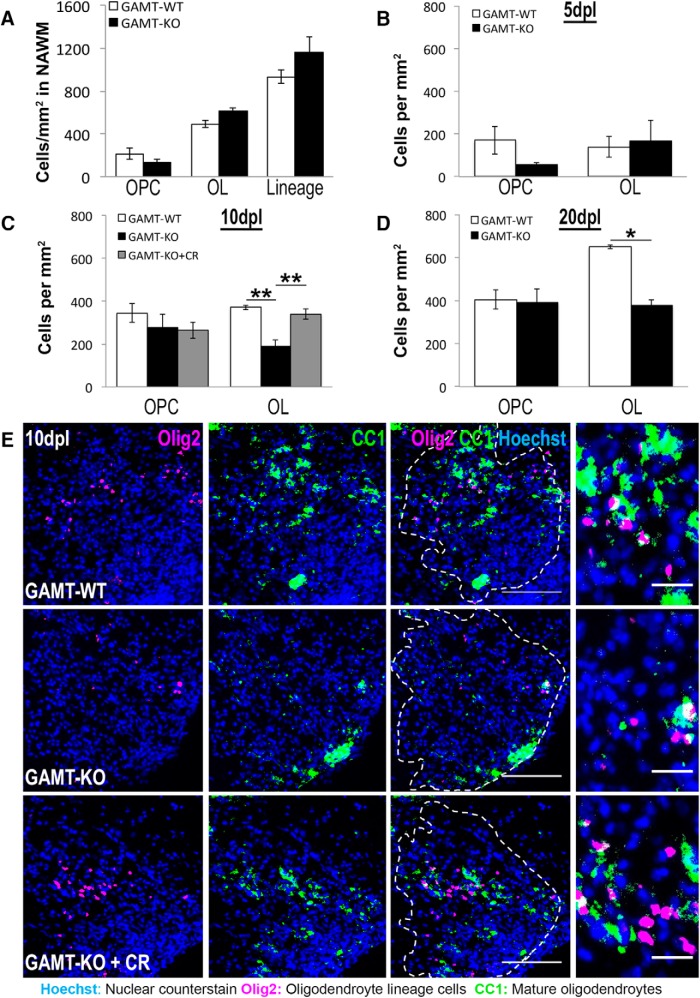
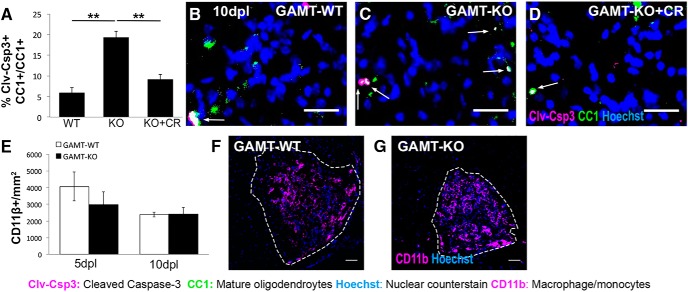
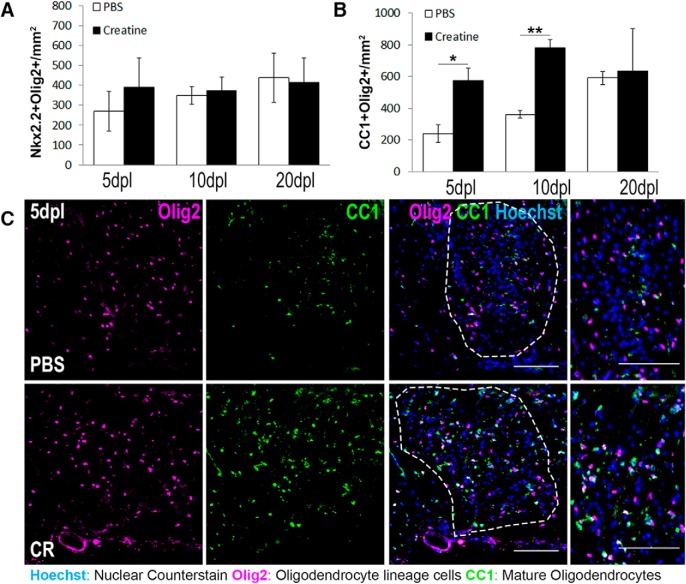
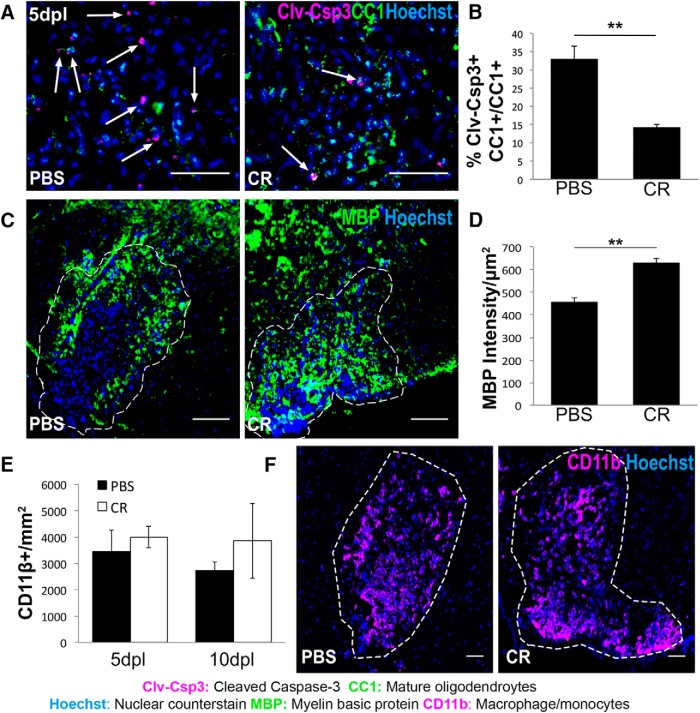
Chronic oligodendrocyte loss, which occurs in the demyelinating disorder multiple sclerosis (MS), contributes to axonal dysfunction and neurodegeneration. Current therapies are able to reduce MS severity, but do not prevent transition into the progressive phase of the disease, which is characterized by chronic neurodegeneration. Therefore, pharmacological compounds that promote oligodendrocyte survival could be beneficial for neuroprotection in MS. Here, we investigated the role of creatine, an organic acid involved in adenosine triphosphate (ATP) buffering, in oligodendrocyte function. We found that creatine increased mitochondrial ATP production directly in oligodendrocyte lineage cell cultures and exerted robust protection on oligodendrocytes by preventing cell death in both naive and lipopolysaccharide-treated mixed glia. Moreover, lysolecithin-mediated demyelination in mice deficient in the creatine-synthesizing enzyme guanidinoacetate-methyltransferase () did not affect oligodendrocyte precursor cell recruitment, but resulted in exacerbated apoptosis of regenerated oligodendrocytes in central nervous system (CNS) lesions. Remarkably, creatine administration into -deficient and wild-type mice with demyelinating injury reduced oligodendrocyte apoptosis, thereby increasing oligodendrocyte density and myelin basic protein staining in CNS lesions. We found that creatine did not affect the recruitment of macrophages/microglia into lesions, suggesting that creatine affects oligodendrocyte survival independently of inflammation. Together, our results demonstrate a novel function for creatine in promoting oligodendrocyte viability during CNS remyelination. We report that creatine enhances oligodendrocyte mitochondrial function and protects against caspase-dependent oligodendrocyte apoptosis during CNS remyelination. This work has important implications for the development of therapeutic targets for diseases characterized by oligodendrocyte death, including multiple sclerosis.
慢性少突胶质细胞丢失发生在脱髓鞘疾病多发性硬化症(MS)中,会导致轴突功能障碍和神经退行性变。目前的治疗方法能够降低MS的严重程度,但无法阻止疾病进入以慢性神经退行性变为特征的进展期。因此,促进少突胶质细胞存活的药物化合物可能对MS的神经保护有益。在此,我们研究了肌酸(一种参与三磷酸腺苷(ATP)缓冲的有机酸)在少突胶质细胞功能中的作用。我们发现,肌酸直接增加了少突胶质细胞谱系细胞培养物中的线粒体ATP生成,并通过防止未处理和脂多糖处理的混合胶质细胞中的细胞死亡,对少突胶质细胞发挥了强大的保护作用。此外,在缺乏肌酸合成酶胍基乙酸甲基转移酶()的小鼠中,溶血卵磷脂介导的脱髓鞘并不影响少突胶质前体细胞的募集,但会导致中枢神经系统(CNS)病变中再生少突胶质细胞的凋亡加剧。值得注意的是,向患有脱髓鞘损伤的-缺陷型和野生型小鼠施用肌酸可减少少突胶质细胞凋亡,从而增加CNS病变中的少突胶质细胞密度和髓鞘碱性蛋白染色。我们发现,肌酸不影响巨噬细胞/小胶质细胞向病变部位的募集,这表明肌酸独立于炎症影响少突胶质细胞的存活。总之,我们的结果证明了肌酸在中枢神经系统再髓鞘化过程中促进少突胶质细胞存活的新功能。我们报告称,肌酸可增强少突胶质细胞的线粒体功能,并在中枢神经系统再髓鞘化过程中保护少突胶质细胞免受半胱天冬酶依赖性凋亡。这项工作对开发以少突胶质细胞死亡为特征的疾病(包括多发性硬化症)的治疗靶点具有重要意义。