Arnal Audrey, Jacqueline Camille, Ujvari Beata, Leger Lucas, Moreno Céline, Faugere Dominique, Tasiemski Aurélie, Boidin-Wichlacz Céline, Misse Dorothée, Renaud François, Montagne Jacques, Casali Andreu, Roche Benjamin, Mery Frédéric, Thomas Frédéric
CREEC MIVEGEC UMR IRD/CNRS/UM 5290 911 Avenue Agropolis, BP 64501 34394 Montpellier Cedex 5 France.
Centre for Integrative Ecology School of Life and Environmental Sciences Deakin University Waurn Ponds Vic. Australia.
Ecol Evol. 2016 Dec 20;7(1):272-276. doi: 10.1002/ece3.2571. eCollection 2017 Jan.
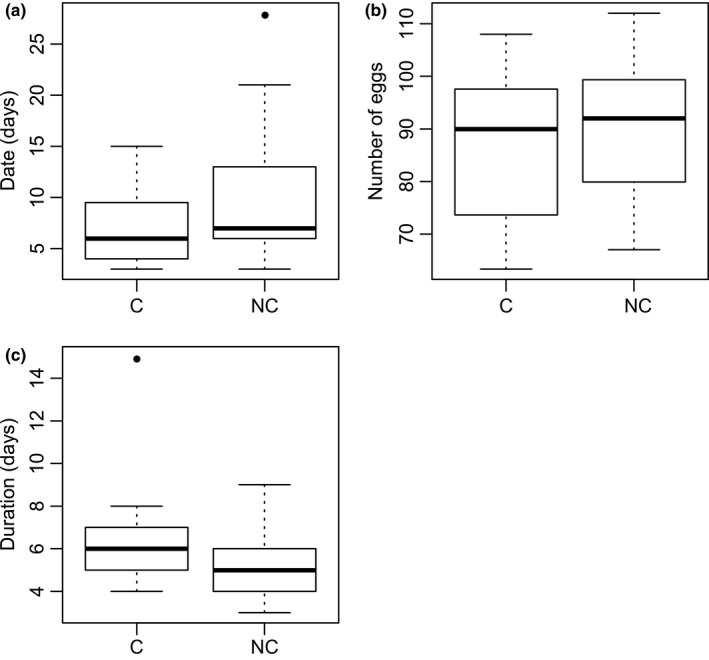
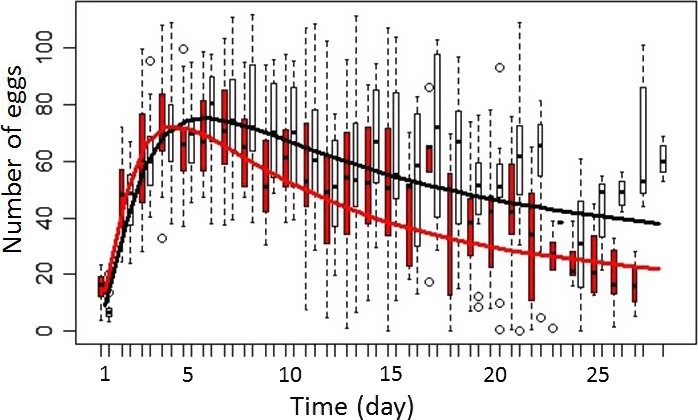
Hosts often accelerate their reproductive effort in response to a parasitic infection, especially when their chances of future reproduction decrease with time from the onset of the infection. Because malignancies usually reduce survival, and hence potentially the fitness, it is expected that hosts with early cancer could have evolved to adjust their life-history traits to maximize their immediate reproductive effort. Despite the potential importance of these plastic responses, little attention has been devoted to explore how cancers influence animal reproduction. Here, we use an experimental setup, a colony of genetically modified flies which develop colorectal cancer in the anterior gut, to show the role of cancer in altering life-history traits. Specifically, we tested whether females adapt their reproductive strategy in response to harboring cancer. We found that flies with cancer reached the peak period of oviposition significantly earlier (i.e., 2 days) than healthy ones, while no difference in the length and extent of the fecundity peak was observed between the two groups of flies. Such compensatory responses to overcome the fitness-limiting effect of cancer could explain the persistence of inherited cancer-causing mutant alleles in the wild.
宿主通常会因寄生虫感染而加快繁殖努力,尤其是当它们未来繁殖的机会随着感染开始后的时间推移而减少时。由于恶性肿瘤通常会降低存活率,进而可能影响适应性,因此预计患有早期癌症的宿主可能已经进化出调整其生活史特征的能力,以最大化其当前的繁殖努力。尽管这些可塑性反应具有潜在的重要性,但很少有人关注癌症如何影响动物繁殖。在这里,我们使用一种实验装置,即一群在前肠发生结直肠癌的转基因果蝇,来展示癌症在改变生活史特征中的作用。具体来说,我们测试了雌性果蝇是否会因患癌而调整其繁殖策略。我们发现,患癌果蝇的产卵高峰期比健康果蝇显著提前(即提前2天),而两组果蝇在繁殖力高峰期的长度和范围上没有差异。这种克服癌症适应性限制效应的补偿性反应可以解释野生环境中遗传性致癌突变等位基因的持续存在。