Oh Ju Kyoung, Pajarillo Edward Alain B, Chae Jong Pyo, Kim In Ho, Yang Dong Soo, Kang Dae-Kyung
Department of Animal Resources Science, Dankook University, 119 Dandae-ro, Cheonan, 31116 Republic of Korea.
Abson BioChem, Inc, 10-1 Yangjimaeul-gil, Sangrok-gu, Ansan, 15524 Republic of Korea.
J Anim Sci Biotechnol. 2017 Jan 5;8:1. doi: 10.1186/s40104-016-0130-8. eCollection 2017.
The chicken gastrointestinal tract contains a diverse microbiota whose composition and structure play important roles in gut functionality. In this study, microbial shifts resulting from feed supplementation with CSL2 were evaluated in broilers challenged and unchallenged with Gallinarum. To analyse bacterial community composition and functionality, 454 GS-FLX pyrosequencing of 16S rRNA gene amplicons was performed.
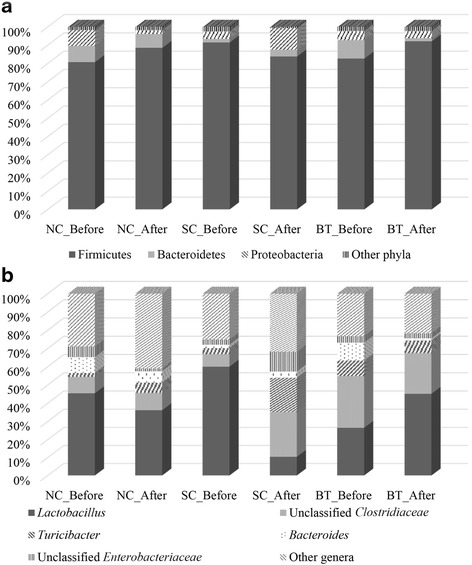
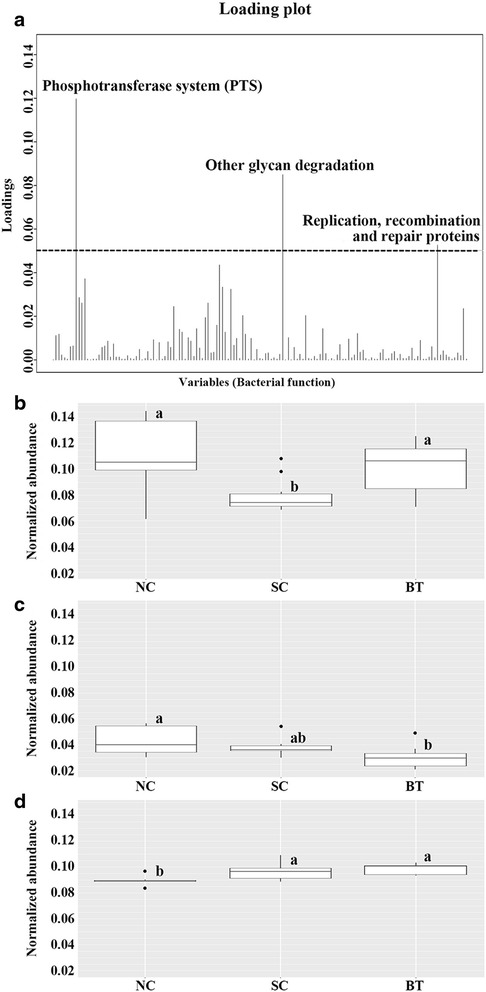
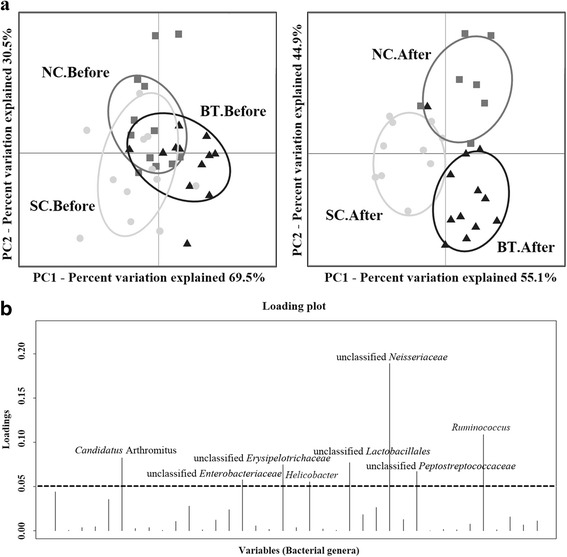
The Quantitative Insights into Microbial Ecology (QIIME) pipeline was used to analyse changes in the faecal microbiota over a 24-h period. A total of 718,204 sequences from broiler chickens were recorded and analysed. At the phylum level, Firmicutes, Bacteroidetes, and Proteobacteria were the predominant bacterial taxa. In -infected chickens (SC), Bacteroidetes were more highly abundant compared to control (NC) and -treated (BT) chickens. At the genus level, in the NC and BT groups, was present at high abundance, and the abundance of , unclassified , and increased in SC broilers. Furthermore, taxon-independent analysis showed that the SC and BT groups were compositionally distinct at the end of the 24-h period. Further analysis of functional properties showed that CSL2 administration increased gut-associated energy supply mechanisms (i.e. carbohydrate transport and metabolism) to maintain a stable microbiota and protect gut integrity.
This study demonstrated that Gallinarum infection and CSL2 supplementation in the diet of broiler chickens influenced the diversity, composition, and functional diversity of the faecal microbiota. Moreover, the findings offer significant insights to understand potential mechanisms of infection and the mode of action of probiotics in broiler chickens.
鸡的胃肠道含有多种微生物群,其组成和结构对肠道功能起着重要作用。在本研究中,评估了在感染和未感染鸡白痢沙门氏菌的肉鸡中添加CSL2饲料所导致的微生物变化。为了分析细菌群落组成和功能,对16S rRNA基因扩增子进行了454 GS-FLX焦磷酸测序。
使用微生物生态学定量洞察(QIIME)管道分析24小时内粪便微生物群的变化。共记录并分析了来自肉鸡的718,204条序列。在门水平上,厚壁菌门、拟杆菌门和变形菌门是主要的细菌类群。在感染鸡(SC)中,拟杆菌门的丰度高于对照(NC)和处理(BT)鸡。在属水平上,NC组和BT组中,[具体属名]的丰度较高,而在SC肉鸡中,[其他属名]、未分类的[属名]和[属名]的丰度增加。此外,非分类学分析表明,在24小时结束时,SC组和BT组在组成上有所不同。功能特性的进一步分析表明,添加CSL2可增加肠道相关能量供应机制(即碳水化合物运输和代谢),以维持稳定的微生物群并保护肠道完整性。
本研究表明,鸡白痢沙门氏菌感染和在肉鸡日粮中添加CSL2会影响粪便微生物群的多样性、组成和功能多样性。此外,这些发现为理解鸡白痢沙门氏菌感染的潜在机制和益生菌在肉鸡中的作用方式提供了重要见解。