Carabotti Marilia, Lahner Edith, Esposito Gianluca, Sacchi Maria Carlotta, Severi Carola, Annibale Bruno
Department of Internal Medicine and Medical Specialties, University Sapienza, viale del Policlinico 155, 00161, Rome, Italy Department of Medical and Surgical Sciences and Traslational Medicine, University Sapienza, Via di Grottarossa 1035, 00189, Rome, Italy.
Medicine (Baltimore). 2017 Jan;96(1):e5784. doi: 10.1097/MD.0000000000005784.
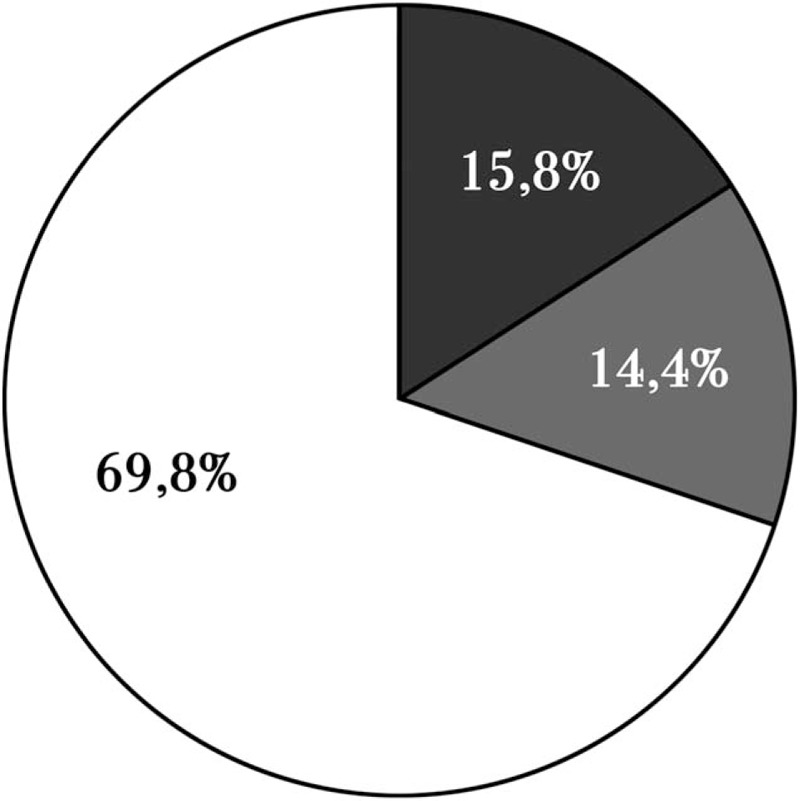
Autoimmune gastritis is often suspected for its hematologic findings, and rarely the diagnosis is made for the presence of gastrointestinal symptoms. Aims of this cross-sectional study were to assess in a large cohort of patients affected by autoimmune gastritis the occurrence and the pattern of gastrointestinal symptoms and to evaluate whether symptomatic patients are characterized by specific clinical features.Gastrointestinal symptoms of 379 consecutive autoimmune gastritis patients were systematically assessed and classified following Rome III Criteria. Association between symptoms and anemia pattern, positivity to gastric autoantibodies, Helicobacter pylori infection, and concomitant autoimmune disease were evaluated.In total, 70.2% of patients were female, median age 55 years (range 17-83). Pernicious anemia (53.6%), iron deficiency anemia (34.8%), gastric autoantibodies (68.8%), and autoimmune disorders (41.7%) were present. However, 56.7% of patients complained of gastrointestinal symptoms, 69.8% of them had exclusively upper symptoms, 15.8% only lower and 14.4% concomitant upper and lower symptoms. Dyspepsia, subtype postprandial distress syndrome was the most represented, being present in 60.2% of symptomatic patients. Univariate and multivariate analyses showed that age <55 years (OR 1.6 [CI:1-2.5]), absence of smoking habit (OR 2.2 [CI:1.2-4]), and absence of anemia (OR 3.1 [CI:1.5-6.4]) were independent factors associated to dyspepsia.Autoimmune gastritis is associated in almost 60% of cases with gastrointestinal symptoms, in particular dyspepsia. Dyspepsia is strictly related to younger age, no smoking, and absence of anemia.
自身免疫性胃炎常因其血液学表现而被怀疑,很少因胃肠道症状而确诊。本横断面研究的目的是评估一大群自身免疫性胃炎患者胃肠道症状的发生情况和模式,并评估有症状的患者是否具有特定的临床特征。按照罗马III标准,对379例连续的自身免疫性胃炎患者的胃肠道症状进行了系统评估和分类。评估了症状与贫血模式、胃自身抗体阳性、幽门螺杆菌感染及合并自身免疫性疾病之间的关联。
总共70.2%的患者为女性,中位年龄55岁(范围17 - 83岁)。存在恶性贫血(53.6%)、缺铁性贫血(34.8%)、胃自身抗体(68.8%)和自身免疫性疾病(41.7%)。然而,56.7%的患者有胃肠道症状,其中69.8%仅有上消化道症状,15.8%仅有下消化道症状,14.4%上下消化道症状均有。消化不良,餐后不适综合征亚型最为常见,在有症状的患者中占60.2%。单因素和多因素分析显示,年龄<55岁(比值比1.6 [可信区间:1 - 2.5])、无吸烟习惯(比值比2.2 [可信区间:1.2 - 4])和无贫血(比值比3.1 [可信区间:1.5 - 6.4])是与消化不良相关的独立因素。
近60%的自身免疫性胃炎病例伴有胃肠道症状,尤其是消化不良。消化不良与年轻、不吸烟和无贫血密切相关。